Welcome to my Blog - Ruud Leeuw


2022 Q4 | 2023 Q1 | 2023 Q2 | 2023 Q3 | 2023 Q4 | 2024 Q1 | 2024 Q2 | 2024 Q3 | 2024 Q4 | 2025 Q2 | 2025 Q3 |
2025 Q4 | 2026 Q1 | 2026 Q2 |

2020 Q1 | 2020 Q2 | 2020 Q3 | 2020 Q4 | 2021 Q1 | 2021 Q2 | 2021 Q3 | 2021 Q4 | 2022 Q1 | 2022 Q2 | 2022 Q3 |
2019 Q4 | 2019 Q3 | 2019 Q2 | 2019 Q1 | 2018 Q4 | 2018 Q3 | 2018 Q2 | 2018 Q1 | 2017 Q4 | 2017 Q3 | 2017 Q2 |
2017 Q1 | 2016 Q4 | 2016 Q3 | 2016 Q2 | 2016 Q1 | 2015 Q4 | 2015 Q3 | 2015 Q2 | 2015 Q1 | 2014 Q4 | 2014 Q3 |
2014 Q2 | 2014 Q1 | 2013 Q4 | 2013 Q3 | 2013 Q2 | 2013 Q1 | 2012 Q4 | 2012 Q3 | 2012 Q2 | 2012 Q1 | 2011 Q4 |
2011 Q3 | 2011 Q2 | 2011 Q1 | 2010 Q4 | 2010 Q3 | 2010 Q2 | 2010 Q1 | 2009 Q4

Welcome to my Blog!The lion roars!!!
I hope to share here my irrepressible thoughts on news, music, books, arts, history, cultural events and such like.
In general these will be items, events and issues which I feel have no place on my website (which focusses on aviation history and my travel photography).

The item immediately below this would be the latest posting.

"Anybody, providing he knows how to be amusing, has the right to talk about himself. - Charles Baudelaire
Esse est percipi (To be is to be perceived)" ¬Bishop George Berkeley

"Not even I understand everything I am" ¬Aurelius Augustinus of Hippo

"I'm only myself in front of my typewriter" ¬Joan Didion (I'd replace 'typewriter' by 'desktop PC'..)
"I always think that the quickest way to understand someone is to look at what's on their bookshelfes." ¬Matt Haig


In 2013 I started a series of photo albums on Blurb.com, named '36Exp' (a subject adressed in 36 exposures, a reference to the exposures on most common rolls of 35 mm film: 12, 24 & 36.) back in the day.
The books can be ordered directly from the Blurb.com or Amazon.
www.blurb.com/user/ruudleeuw

CURRENT BLOG


TRANSCRIPTIE by KATE ATKINSON | BOOKS CRIME FICTION

Transcription by Kate Atkinson

The second world war and the self-conscious tricks of fiction; these are the twin themes that shaped Atkinson's two most recent, award-winning books, Life After Life and A God in Ruins.
Transcription continues this exploration of the lies and inventions that make up a life, particularly during a time when all prior certainties – including identity – have been upended.

Juliet Armstrong has more than her share of such lies. Recruited to the Secret Service at the beginning of the war (1940), she has learned to shift between various names and personae.

The inventions she inhabits are created for her by others, mostly her male handlers at MI5, all of whom appear to be living fiendishly complex double or triple lives themselves.
In the aftermath of war (1950, a 2nd timeline), trying to locate the source of an anonymous threat, Juliet finds the multiple deceptions she has practised, and had practised upon her, accumulate to create a creeping paranoia in which "things are seldom what they seem", as one man remarks.

I must admit that it took me a long time to become fascinated by the (rather dull) narrative; perhaps books by women with a female protagonist are not for me. I liked Atkinson's books with Jackson Brodie much, much better.

www.theguardian.com/books/ - - - /transcription-kate-atkinson
en.wikipedia.org:_Kate_Atkinson_(writer)

[28AUG2026]

 
CITY AT PLAY - HELEN LEVITT | PHOTOGRAPHY EXHIBITION KUNSTHAL

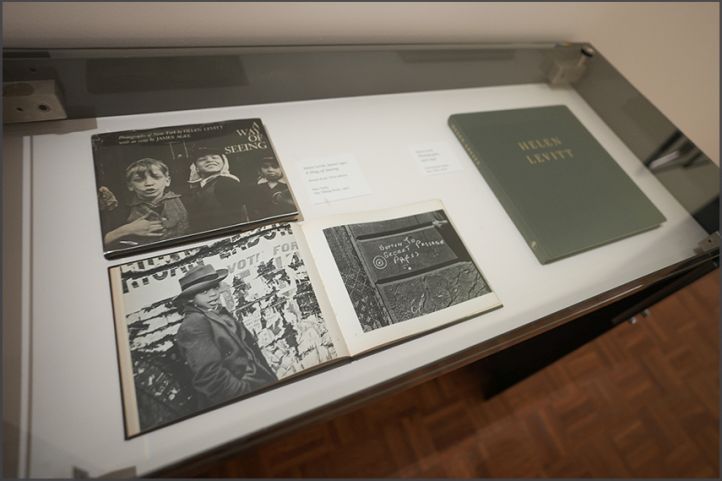
Helen Levitt - City at Play (@Kunsthal Rotterdam)

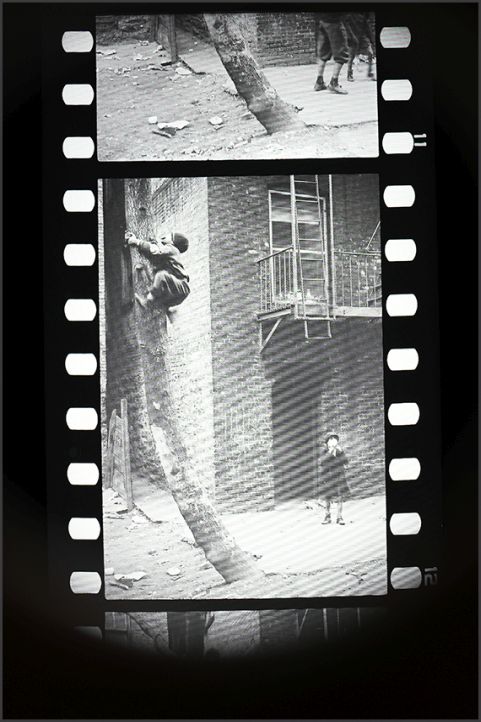
Helen Levitt - City at Play (@Kunsthal Rotterdam)

Helen Levitt - City at Play (@Kunsthal Rotterdam)

Helen Levitt - City at Play (@Kunsthal Rotterdam)

Helen Levitt - City at Play (@Kunsthal Rotterdam)

Helen Levitt - City at Play (@Kunsthal Rotterdam)

Helen Levitt - City at Play (@Kunsthal Rotterdam)

Helen Levitt - City at Play (@Kunsthal Rotterdam)

Helen Levitt - City at Play (@Kunsthal Rotterdam)
The exhibition Helen Levitt - City at Play is organized by Fundación Mapfre in close
collaboration with Kunsthal Rotterdam.

Enjoyed a comprehensive overview of the work of Helen Levitt (1913–2009) at Kunsthal Rotterdam, one of the most important street photographers of the 20th century.
With over 220 photographs, a film and colour slides, drawn for the first time from her complete archive, City at Play brings more than 50 years of work together in one exhibition.
Throughout her career, Levitt photographed life on the streets of New York: children playing under an open fire hydrant, women whispering in a doorway, a couple in the subway. Never posed or sensational, but full of subtle humour, tenderness and an eye for the everyday.​​​​​​​​​​​​​​​​

Levitt is one of the most influential photographers of her generation.
Early in her career she already had a solo exhibition at the Museum of Modern Art, at a time when photography was barely recognised as an art form. Yet she preferred to stay in the background.
She said little about her work: "Just what you see. If it were easy to talk about, I'd be a writer".

The streets of New York.
The exhibition opens with Levitt's early 1930s work: intimate, unstaged images of daily life in Harlem, the Lower East Side and Hell's Kitchen.
Traces of chalk.
From 1937, Levitt taught children in East Harlem as part of the Federal Art Project. On her way to school she photographed chalk drawings made by children on walls and pavements.
Determined gaze.
Between 1938 and 1940 Levitt created her most iconic work and developed her distinctive photographic style.
Mexico.
Moved by the photographs that Cartier-Bresson had taken there earlier, Levitt decided to travel to Mexico-City in 1941 – one of her rare trips abroad. She stayed for five months!
Film and book.
In the mid-1940s Levitt made the short black-and-white film In the Street together with Janice Loeb and James Agee. She also collaborated with Agee on A Way of Seeing, a book featuring her New York photographs. Due to setbacks, the book would not be published until 1965.
The radical choice to use colour.
At the end of the 1950s Levitt turned to colour, at a time when black and white was still the standard in art photography. Her colour photographs from the 1960s - to early 1990s are presented here exactly as she intended: as prints and as projected slides. A bright red car against a weathered facade, pastel tones on sidewalks...
Later years.
From the 1980s, as life moved increasingly off the street, Levitt photographed less frequently. Yet she kept going well into old age.
She died in New York in 2009, aged 95.

www.kunsthal.nl/en/ - - /exhibitions/helen-levitt/
en.wikipedia.org:_Helen_Levitt

[19AUG2026]

 
DE TAWL by PHILIP DRÖGE | BOOKS HISTORY

De Tawl - Philip Dröge (Jersey Dutch)
EN: 'How the Dutch language (almost) conquered Amerika'

De Tawl - Philip Dröge (Jersey Dutch)

De Tawl - Philip Dröge (Jersey Dutch)

For three centuries, people all over the states of New York and New Jersey spoke Tawl (Dutch: De Taal), the American version of Dutch.
It's a relic from the time when New York was still called New Amsterdam and you couldn't get anywhere on the East Coast of America without Dutch.
The United States even had a Dutch-speaking president, Martin Van Buren. It wasn't until the 20th century that Netherlandic American fell out of use, and in 1962 the last speaker of this strange Dutch dialect passed away...
But many Dutch words survived: stoop, cookies and many more.

In De Tawl, historian Philip Dröge cycles along American roads in search of what remains of that Dutch-speaking past.
A remarkable story about the Dutch origin (e.g. words like OK) and about crazy judges, slavery, comedians, and con artists.

I hope to read more of this author!
His work is often described as historical literary non-fiction. For Dröge, they are just stories that beg to be told. From the dizzying power of the Tambora volcano, to the bizarre existence in the no-man's-land of Moresnet, and the amazing history of the crazy city of Jakarta, he's quite addicted to beautiful (and sometimes not-so-beautiful) stories.

https://philipdroge.nl/ (NL)

[18AUG2026]

 
THE FAMILY OF MIGRANTS | EXHIBITION PHOTOGRAPHY HISTORY

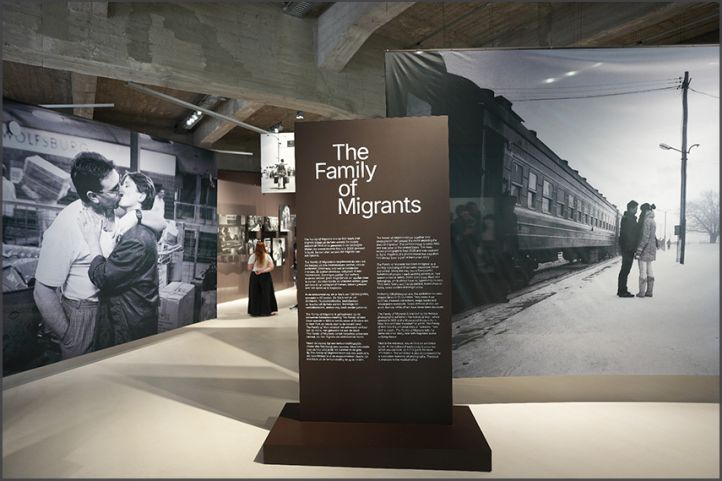
Family of Migrants exhibition @Rotterdam
FENIX: The art museum about migration, in Rotterdam.

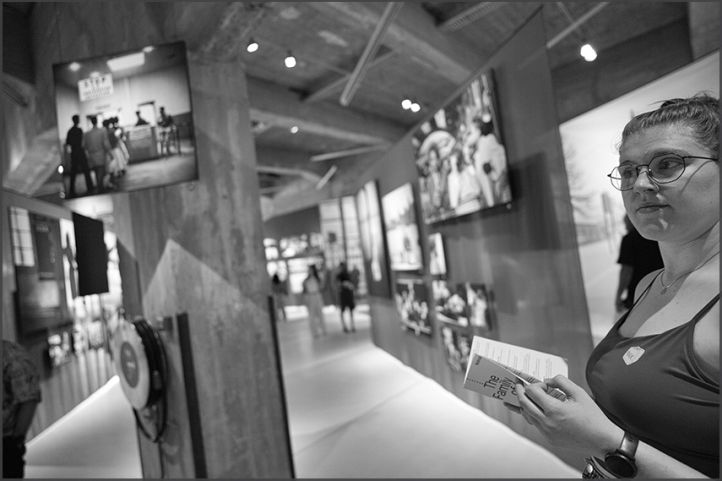
Family of Migrants exhibition @Rotterdam

Family of Migrants exhibition @Rotterdam

Family of Migrants exhibition @Rotterdam

Family of Migrants exhibition @Rotterdam

Family of Migrants exhibition @Rotterdam
Labyrinth of suitcases...

Family of Migrants exhibition @Rotterdam
Artists with their impressions on 'migration'.

Family of Migrants exhibition @Rotterdam

Family of Migrants exhibition @Rotterdam
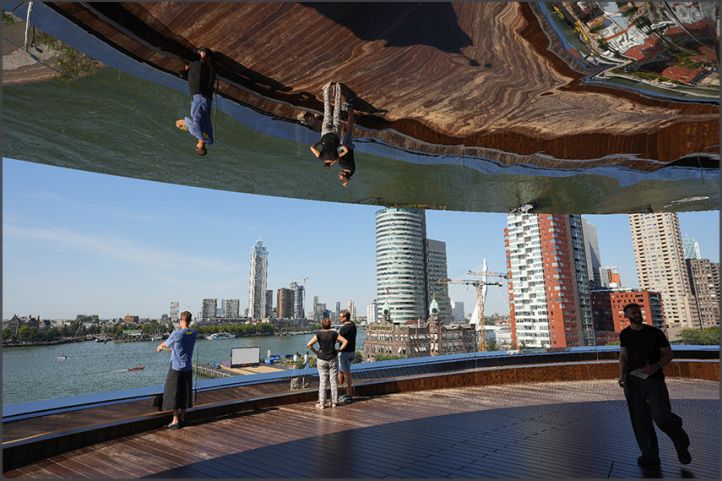
Following the chrome 'Tornado' to the roof for this view over Rotterdam's harbour.

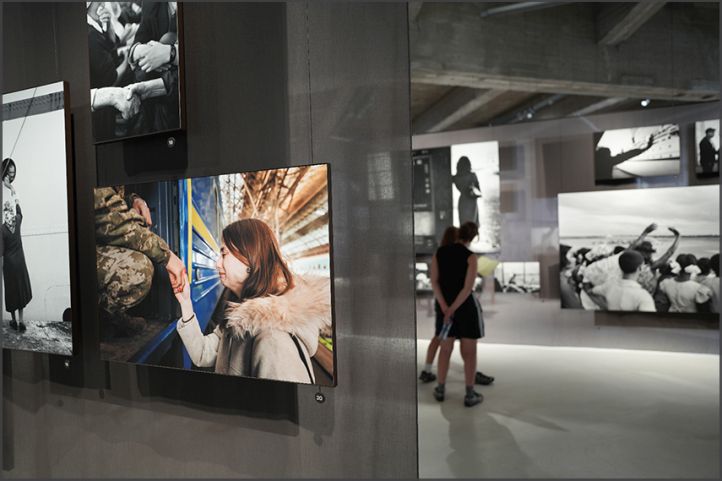
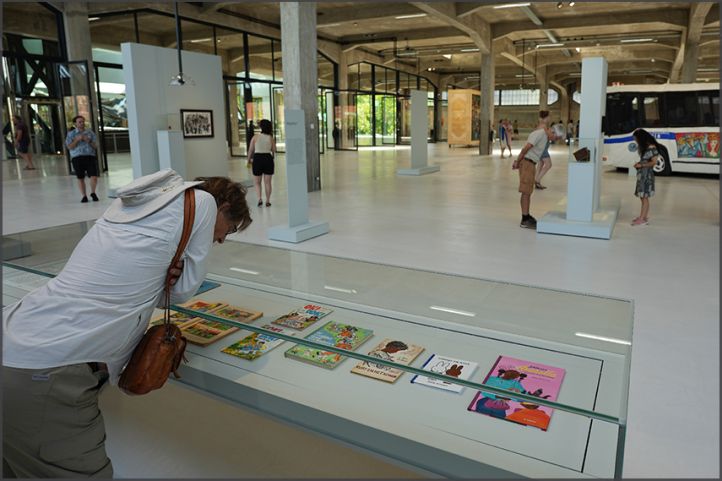
'The Family of Migrants'. Departures, journeys and arrivals in c.200 photographs.
This exhibition brings together 136 (!) photographers from around the world, presenting both iconic and lesser-known images that illustrate migration as a timeless phenomenon – and, above all, a deeply human story.
In 1914, Gurdit Singh sailed from Hong Kong to Canada, only to be denied entry. Over a century later, in 2022, Volodymyr bid farewell to his girlfriend at Lviv station before heading to the front lines after Russia’s invasion of Ukraine...

The images in The Family of Migrants document people on the move, in search of better opportunities, adventure, or safety – a fresh start.
Some pack their bags, while others have little chance to take anything with them.
They leave behind family and friends, board trains, cross borders and start anew.
These photographs tell stories of farewells, loss, love, family and hope.

The Family of Migrants charts the history of photography, from the late 19th century to the present – a rich mix of documentary images, portraits, and photojournalism sourced from international archives, museum collections, image banks and newspapers.
Fenix curated this exhibition in collaboration with photographers, archivists, curators and image editors from around the world.
Together, they selected work by renowned individuals including Abbas, Eva Besnyö, Chien-Chi Chang, Robert de Hartogh, Fouad Elkoury, Lewis Hine, Ata Kandó, Dorothea Lange, Yasuhiro Ogawa, Emin Özmen, Sergey Ponomarev, Eddy van Wessel, Ernst Haas, and Alfred Stieglitz.

www.fenix.nl

[18AUG2026]

 
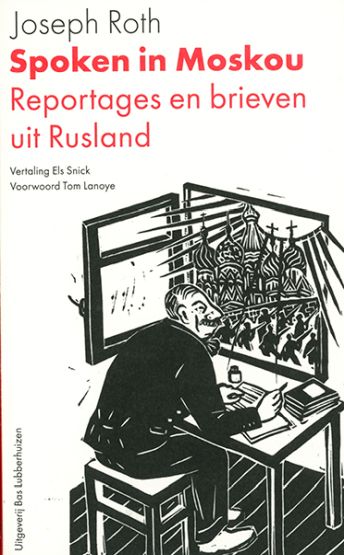
SPOKEN IN MOSKOU by JOSEPH ROTH | BOOKS LITERATURE

Spoken in Moskou - Joseph Roth

In 1926, Joseph Roth travels through the Soviet Union for the Frankfurter Zeitung, from Kiev to Moscow and Odessa.
Roth is curious about the social experiment meant to lead to a new world, and he is welcomed with open arms by the revolutionary government.
Roth meets farmers, teachers, workers, priests, actors, and prostitutes, and sees how disastrous the new regime turns out to be.
The dream quickly falls apart, and Roth writes about it in a sharp, sensual style where curiosity and disappointment clash.

From his reports, letters, and diary entries it also becomes clear how lonely he feels and how much he longs for his loved ones.
In 'Ghosts in Moscow: Reports and Letters from Russia', we follow a master journalist who, with deep humanity, sees through one of the greatest illusions of his time.

Moses Joseph Roth (Austrian German, b.02Sep1894 – d.27May1939) was an Austro-Hungarian journalist and novelist, best known for his family saga Radetzky March (1932), about the decline and fall of the Austro-Hungarian Empire.
Also his novel of Jewish life Job (1930) and his seminal essay "Juden auf Wanderschaft" (1927; translated into English as The Wandering Jews), a fragmented account of the Jewish migrations from eastern to western Europe in the aftermath of World War I and the Russian Revolution.
In the 21st century, publications in English of Radetzky March and of collections of his journalism from Berlin and Paris created a revival of interest in Roth.

en.wikipedia.org:_Joseph_Roth

[16AUG2026]

 
INSIDE ROME | TRAVEL ITALY

Inside Rome | Tiger Books (1991)
Text by Paolo Fontana | Tiger Books (1991)

Inside Rome | Tiger Books (1991)

Inside Rome | Tiger Books (1991)

Inside Rome | Tiger Books (1991)

Inside Rome | Tiger Books (1991)

Inside Rome | Tiger Books (1991)
Book design by Patrizia Balocco

Rome represents one of the greatest expressions of Western civilization. This book communicates both its beauty and grandeur by means of a series of photographs and explanatory text.
The colours are too garish and the focus is too much on the well travelled tourist highlights, but I like those of the 'streets' and the text had some interesting details too.
Bought it in a church fundraiser recently.

See my most recent trip to Rome (2022)

[12AUG2026]

 
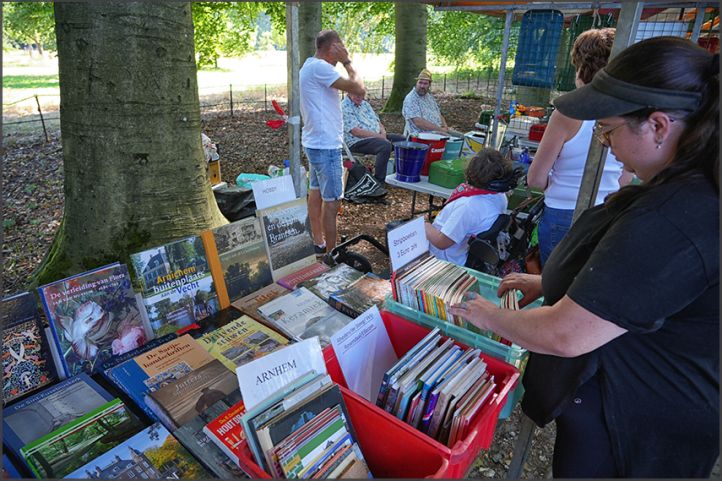
CURIOSA / ANTIQUES MARKET @CASTLE MIDDACHTEN

Antiques market at Kasteel Middachten

Antiques market at Kasteel Middachten

Antiques market at Kasteel Middachten
One asks for a price "on that one", next the haggling with the trader begins. Good stuff here.

Middachten Estate (Castle & Gardens) in De Steeg is getting a market again with antiques, curiosities, and
bric-a-brac. This Sunday, August 9th, there were c.150 stalls on the estate and admission was free.

Among other things, antique furniture, retro items, vintage clothing, and jewelry were to be found.
The market is aimed at collectors and visitors who are interested in heritage and old/vintage objects.
We searched a few hours (including a coffee&cakes break) among historical and used items, and I came away with a nice frame of a Japanese theme.

My 2026 streetphotography COLOUR + BLACK/WHITE

[09AUG2026]

 
NEW YORK - STREET DIARIES by PHIL PENMAN | PHOTOGRAPHY PHOTOBOOKS

Phil Penman - New York (Street Diaries)

Phil Penman - New York (Street Diaries)

Phil Penman - New York (Street Diaries)

Phil Penman - New York (Street Diaries)

Phil Penman - New York (Street Diaries)

Phil Penman - New York (Street Diaries)

The British-born, New York-based photographer Phil Penman has documented the ever-changing scene of New York City’s streets for more than 25 years!
In his career as a news and magazine photographer, with a large body of work in such publications as The Guardian, The Independent, The New York Review of Books, among others, he has photographed major public figures and historical events.

His work covering the pandemic lockdown in New York City has been acquired by the U.S. Library of Congress, whose collection holds work by such great Depression-era documentarians as Walker Evans and Dorothea Lange.
Besides showing at Leica galleries in New York, Washington, D.C., Boston, and London, Penman’s signature street photography has appeared in international exhibitions as far afield as Venice, Berlin, and Sydney.

He also tours the world teaching workshops on photography for Leica Akademie. He was recently named among the "52 Most Influential Street Photographers", alongside such legends as Henri Cartier-Bresson, and Garry Winogrand.
Penman’s first book, Street, published in 2019, became a best-seller and was featured at the Museum of Modern Art in New York.

The pictures were taken partly during the great snowstorm and partly during the Corona Lockdown and are thus contemporary witnesses of the pandemic restrictions that completely turned our previously-known world upside down.
Born in Great Britain (Poole, Dorset), he has been photographing the streets of New York for well over two decades now.

“Phil Penman uses Leica cameras. His go to cameras are the Leica M11 and M11 Monochrom cameras. He also uses a Leica SL2 camera for rough weather conditions, e.g. photographing in the snow. He uses Leica lenses. Anything from a 21mm wide angle all the way up to a 105 - 280mm zoom lens. His go to lenses are the 35mm F1.4 Summilux lens and the 75mm F1.25 Nocitilux lens.”

www.all-about-photo.com/photographers/ - /phil-penman
www.philpenman.com

[09AUG2026]

 
CAMERA LOOPT by JAAP VAN DEURZEN | BOOKS BIOGRAPHY NEWS REPORTING

Camera Loopt - Derting Jaar op Rapportage voor RTL Nieuws: Jaap van Deurzen

Camera Loopt - Derting Jaar op Rapportage voor RTL Nieuws: Jaap van Deurzen

Camera Loopt - Derting Jaar op Rapportage voor RTL Nieuws: Jaap van Deurzen

Camera Loopt - Derting Jaar op Rapportage voor RTL Nieuws: Jaap van Deurzen

Camera Rolling..!
A biography mostly spanning thirty years reporting for (Dutch television), RTL Nieuws.
How many times Jaap van Deurzen, war correspondent for RTL Nieuws, has heard this phrase over the past 30 years is impossible to count.
For more than 30 years, Van Deurzen has been flying from one hotspot to another, reporting in an unmatched way on the horrors of the wars in former Yugoslavia.
At the same time, he has witnessed the sectarian misery in Belfast, the madness of the genocide in Rwanda, and the devastating impact of the tsunami in Sumatra.

The day that changes his life forever is September 11th, 2001, when Al Qaeda terrorists destroy the Twin Towers in New York. The ‘War on Terror’ that follows is devastating...
In Pakistan, Afghanistan, and Iraq, Van Deurzen reports on the fight against the Taliban and ISIS in his own distinctive way.
After seeing so much human suffering, he also talks plainly about the impact it has on his personal life. A very upstanding (pun intended, versus 'standupper'), honest book. He does not spare himself.
A translation of a quote van Deurzen ends the books with is: "It has been seen, it did not go by unnoticed".

www.walburgpers.nl/ - - - /camera-loopt
jaapvandeurzen.com/camera-loopt

[07AUG2026]

 
SAIGOKU by CEES NOOTEBOOM (TEXT) & SIMONE SASSEN (PHOTOS) | JAPAN

SAIGOKU - Cees Nooteboom & Simone Sassen
'Pilgrimage to the 33 temples near Kyoto'

SAIGOKU - Cees Nooteboom & Simone Sassen
Kimii-Dera

SAIGOKU - Cees Nooteboom & Simone Sassen

SAIGOKU - Cees Nooteboom & Simone Sassen

SAIGOKU - Cees Nooteboom & Simone Sassen

SAIGOKU - Cees Nooteboom & Simone Sassen

SAIGOKU - Cees Nooteboom & Simone Sassen
Kiyomizu-Dera

SAIGOKU - Cees Nooteboom & Simone Sassen
Every temple will see a signature and stamps for the pilgrim

The Saigoku pilgrimage is the most important, longest, and toughest of all pilgrimages you can undertake in Japan...
The route passes no fewer than 33 Buddhist temples, all dedicated to Kannon, the goddess of mercy.
Some temples are located in and around Kyoto, the former capital of the Heian era (794–1185).
Others are high up in the mountains or on an island and are hard to reach.

Writer Cees Nooteboom and photographer Simone Sassen have ventured on the pilgrimage to the beautiful Saigoku twice.
The pair traveled by bus, train, and on foot. They walked for long distances and sometimes climbed more than 800 steps.
Simone Sassen photographed the temples in different seasons. In this way, she was able to capture poetic images of snow, cherry blossoms, and autumn leaves.
Some of the temples they visited date back to the Heian period, which Nooteboom connects to the classic Japanese text The Tale of Genji by M.
His texts also offer a remarkable insight into the 'Japanese being'.

en.wikipedia.org:_Saigoku_Kannon_Pilgrimage

[04AUG2026]

 
DEVENTER ANNUAL BOOKMARKET 2026 | BOOKS

Deventer annual (2026) bookmarket
Books, books and more books!

Deventer annual (2026) bookmarket

Deventer annual (2026) bookmarket

Deventer annual (2026) bookmarket

Deventer annual (2026) bookmarket

Deventer annual (2026) bookmarket
See y'all you next year!

The largest book market in Europe!
On Sunday, 02Aug2026, the 36th edition of the Deventer Book Market kicked off in the charming booktown and Hanseatic city of Deventer.
Thousands of books from renowned booksellers and antiquarians from all over the Netherlands and (e.g. Germany, Belgium) were present again to provide the best literary offerings. As well as lighter reading.

Although the book market officially starts at 9:30 am, the first visitors were already eager to enter the market as early as 7:00 o'clock... It did also serve to avoid the increasing heat (33°+)

The Deventer Book Market attracts thousands of visitors every year, allowing them to indulge in a range of genres. From children's books (as well as an increasing amount for young adults) to poetry, from literature to comics, and from art to topography as well as self publishers, there is something for everyone.
If one is interested in photobooks don't miss stand 12-14, near the bridge, Kadebooks. Quite pleased again with my purchase there.
It worked out quite well for my street photography as well!

My 2026 streetphotography COLOUR + BLACK/WHITE
www.flickr.com/photos/ - /bookmarkets in DVTR
www.deventerboekenmarkt.nl/boekenmarkt-2026

[03AUG2026]

 
101 MOOISTE PLEKKEN VAN ITALIË - SASKIA BALMAEKERS | TRAVEL

101 Mooiste Plekken van Italië - Saskia Balmaekers

101 Mooiste Plekken van Italië - Saskia Balmaekers

101 Mooiste Plekken van Italië - Saskia Balmaekers
Venice, of course!

101 Mooiste Plekken van Italië - Saskia Balmaekers

101 Mooiste Plekken van Italië - Saskia Balmaekers

101 Mooiste Plekken van Italië - Saskia Balmaekers

Discover the land of pasta puttanesca and limoncello, of artists like Da Vinci, of charming streets, and of a long, impressive history.
Saskia Balmaekers has shared many insider tips on her popular blog CiaoTutti.nl.
Especially for 101 most beautiful places in Italy, she selected the best-kept secrets.
Venice, Rome, Naples: each place has its own charms and unique secrets.
I found myself inspired by the excellent photos of centuries-old monuments, magnificent churches, and cozy terraces. Revisits to Italy guaranteed!

ciaotutti.nl

[29JUL2026]

 
LETIZIA BATTAGLIA - PHOTOBOOKS / PHOTOGRAPHY

Letizia Battaglia | Photography Photobooks
The book on the left I bought when I was in Sicily. The book on the right
was published on occasion of the recent exhibition 'Life, Love and Death in Sicily'.

Letizia Battaglia | Photography Photobooks
While Letizia Battaglia is rather famous for Sicily's struggle with the mafia, selected from
these 2 books those concerning 'Life on Sicily'.

Letizia Battaglia | Photography Photobooks

Letizia Battaglia | Photography Photobooks

Letizia Battaglia | Photography Photobooks

Letizia Battaglia | Photography Photobooks

Letizia Battaglia | Photography Photobooks

Letizia Battaglia (b.05March1935 – d.13April2022) was an Italian photographer and photojournalist.
Her photos document a wide spectrum of Sicilian life, including for her work on the Mafia.
A documentary film based on her life, Shooting the Mafia, was released in 2019.

en.wikipedia.org:_Letizia_Battaglia

[29JUL2026]

 
THE ACCUMULATION OF BOOKS, AND MORE BOOKS.. | TSUNDOKU OKU DOKU

Books, and more books..

Books, and more books..

Sometimes, I find I simply cannot read as much as I would like to. Life has a habit of filling every available hour with 'stuff'.
My usual consolation is to buy the book anyway and let backlog build up. The purchase is oddly satisfying.
Some might call this clutter. The Japanese have a far more elegant word for it: tsundoku. The term describes the habit of acquiring books and allowing them to accumulate unread. It combines the idea of stacking things up (tsunde), leaving something for later (oku) and reading (doku).
The result is a concept that captures the quiet optimism of a pile of books. Far from being a sign of being time poor or lacking in discipline, tsundoku may reveal something surprisingly important about how the brain responds to anticipation...

When we encounter something that promises enjoyment or discovery, the brain’s reward system becomes active. One important pathway runs from the ventral tegmental area, a dopamine-producing region in the midbrain involved in motivation, to the nucleus accumbens, a structure that helps generate feelings of reward.
Dopamine is often described as a pleasure chemical, but that is too simple. One of its key roles is helping the brain identify opportunities worth pursuing. Rather than rewarding us only after something beneficial has happened, the brain often rewards us in advance, encouraging behaviour that are likely to prove valuable.

The anticipation of a pleasurable experience can activate reward pathways long before the experience takes place. An unread book is a good example. It may remain closed for weeks or months, but the brain has already recognised its potential value, enjoying the prospect before the first page has been turned. The hippocampus, a structure deep within the brain best known for its role in memory, also plays an important part.

When you picture yourself finally reading that book on a summer holiday, during a long train journey or curled up on the sofa on a rainy afternoon, the hippocampus begins to assemble that future experience.
It binds together fragments of previous experiences stored across the brain – the warmth of sunshine, the smell of coffee, the sound of turning pages, the comfort of your favourite chair or couch – into a coherent mental scene.
In effect, the brain uses memories of the past to rehearse pleasures that have yet to happen.
This ability may be more important than we realise.
Psychologists increasingly recognise positive anticipation as a contributor to wellbeing. Looking forward to enjoyable experiences can improve mood.

It is perhaps no coincidence that this behaviour feels strongest in bookshops rather than online. Physical browsing engages the brain more fully, drawing on sensory, spatial and reward systems that make discovery feel richer and more memorable.

theconversation.com/why-you-keep-buying-books-

[26JUL2026]

 
WORLD PRESS PHOTO 2026 | EXHIBITION PHOTOJOURNALISM

World Press Photo -Exhibition- 2026
WPP Exhibition @Walburgiskerk in Zutphen

World Press Photo -Exhibition- 2026

World Press Photo -Exhibition- 2026
'How much do we have to see to understand what is happening?'

World Press Photo -Exhibition- 2026

World Press Photo -Exhibition- 2026

World Press Photo -Exhibition- 2026

World Press Photo -Exhibition- 2026
WPP Winner: Seperated by ICE.

Today went to the impressive Walburgis church in Zutphen (Gelderland) for the World Press Photo 2026 Exhibition, saved me a trip to Amsterdam.

The annual World Press Photo Contest recognizes and honors the best photojournalism and documentary photography produced over the last year.
Selected from 57.376 photographs submitted by 3.747 photographers in 141 countries, it was exciting to see the winners here in Zutphen of the 69th annual World Press Photo Contest!

One does have to accept the rather penetrating realities we see documented here, globally; marked by fracture, urgency and yet an innate resilience.
They reveal the global overreach of power, the escalating climate crisis, and the human cost of conflict, while also bringing into focus stories of resistance, rebuilding, recovery, and the quiet, enduring dignity of those who persevere.
The 42 winners were selected by an independent jury based on visual excellence, storytelling approach, and commitment to diversity; celebrating local voices, dedication, and a range of styles.

Kudos for the commitment and courage of all the photographers to document these matters!

www.worldpressphoto.org/

[25JUL2026]

 
CHUMS by SIMON KUPER | HISTORY OXFORD OXBRIDGE

Chums by Simon Kuper

Boris Johnson, Michael Gove, David Cameron, George Osborne, Theresa May, Dominic Cummings, Daniel Hannan, Jacob Rees-Mogg: Oxford has produced most of the prominent Conservative politicians of our time.
The university newspapers of 30 years ago are full of recognisable names in news stories, photos of social events, and Bullingdon Club reports. Many walked straight out of the world of student debates onto the national stage.
Unfortunately, they brought their university politics with them. Eleven of the fifteen postwar British prime ministers went to Oxford. This narrowest of talent pools has shaped the modern country.
In Chums, Simon Kuper traces how the rarefied and privileged atmosphere of Oxford University - and the friendships and worldviews it created - helped give us today's Britain, including Brexit.

It's quite unnerving to read how most of these people led a country without a proper education to do so; this elite without being in touch with working class (or even middle class) people bluffed their politics over the vast majority of British people and had their snouts in the trough of wealth with total disregard to the common people: they laughed themselves all the way to the bank.

An excellent document, however unnerving...

Simon Gad Kuper is a British, and naturalised French, author and journalist, best known for his work at the Financial Times and as a football commentator.
Born in Uganda to South African parents, Kuper spent most of his childhood in the Netherlands and lives in Paris.
After studies at the University of Oxford, Harvard University and the Technische Universität Berlin, Kuper started his career in journalism at the Financial Times in 1994, where he writes about a wide range of topics, such as politics, society, culture, arts and sports.
He also writes for other publications and has written a number of books.

www.goodreads.com/book/ -chums
en.wikipedia.org:_Simon_Kuper

[23JUL2026]

 
CATS IN VENICE (2022) | PHOTOGRAPHY VENEZIA CATS

Cats in Venice | Marianna Zampieri (2022)
'Pictures and stories of cats roaming the streets of Venice'

Cats in Venice | Marianna Zampieri (2022)
I bought 3 titles (€18 each, 2-2026) in the Acqua Alta bookshop; am missing one title. Next time!

Cats in Venice | Marianna Zampieri (2022)
I like cats and I love Venice - with its campo's, canals & bridges

Cats in Venice | Marianna Zampieri (2022)

Marianne Zampieri
Cats in Venice | Marianna Zampieri (2022)
You'll find @ MyBlog_2026q1 + MyBlog_2026q2 two of these 'Cats in Venice'-series discussed.

In 2017, Marianna Zampieri addressed the Venetians directly, receiving numerous reports plus wide and unexpected enthusiasm for the idea of a project in which the photographs are correlated by a description of the cat portrayed, which explains a little about its history and personality.
The idea was born from the reports received: in most cases they were not just cats but 'famous' cats with their own name and a particular area of 'competence'.

There is a fascinating intertwining of stories, personalities, decisions and freedom that these cats tell that represents the great beauty of this project. All enriched by the respect and pride with which Venetians tell and welcome their cats.
The stylistic choice of black and white photography manages to "clean" them of distractions, making the emotions more alive and giving the right emphasis to the subject of the photo which, in this case, has the luck of a timeless background like Venice.

www.mariannazampieri.it


[22JUL2026]

 
NEW YORK IN COLOR 1952-1962 by ERNST HAAS | PHOTOGRAPHY PHOTOBOOKS

New York in Color 1952-1962 | Ernst Haas (photography)
Untitled, 1962
Foreword by Alex Haas | Essay by Philip Prodger | Prestel, 2025 (7th print)

New York in Color 1952-1962 | Ernst Haas (photography)
Left: Times Square Reflection, 1952 | Right: Taxis on Park Avenue, 1958

New York in Color 1952-1962 | Ernst Haas (photography)
Both 'Untitled, 1958'

New York in Color 1952-1962 | Ernst Haas (photography)
Left: Yellow Pages, 1962 | Right: Street Poster, 1962

New York in Color 1952-1962 | Ernst Haas (photography)
Both 'Untitled, 1957'

New York in Color 1952-1962 | Ernst Haas (photography)
Left: The Washington Square Outdoor Art Exhibit, c.1962 | Right: Same, c.1958

New York in Color 1952-1962 | Ernst Haas (photography)
Untitled, 1952

New York in Color 1952-1962 | Ernst Haas (photography)
Left: Brooklyn View, 1952 | Right: Central Park Playground, 1952

Ernst Haas (b.1921–d.1986) is acclaimed as one of the most celebrated and influential photographers of the 20th century and considered one of the pioneers of color photography.
Haas was born in Vienna in 1921 and took up photography after WW2.
His early work on Austrian returning prisoners of war brought him to the attention of LIFE magazine.
He declined a job offer as staff photographer in order to keep his independence. At the invitation of Robert Capa, Haas joined Magnum in 1949, developing close associations with Capa, Henri Cartier-Bresson, and Werner Bishof.
Personally, his (color) work reminded me of Alex Webb and Harry Gruyaert...
When Ernst Haas moved from Vienna to New York City in 1951, he left behind a war-torn continent and a career producing black-and-white images. For Haas, the new medium of color photography was the only way to capture a city pulsing with energy and humanity.

After he moved to the United States he soon after began experimenting with Kodachrome color film.
At the time the film was very slow and Haas used this also to create moving colors!
These images demonstrate Haas’s tremendous virtuosity and confidence with Kodachrome film and the technical challenges of color printing.
Unparalleled in their depth and richness of color, absolute brimming with dramatic tension, these images reveal a photographer at the height of his career.

He went on to become the premier color photographer of the 1950s. In 1953 LIFE magazine published his groundbreaking 24-page color photo essay on New York City.
This was the first time such a large color photo feature was published by LIFE!
In 1962 a retrospective of his work was the first color photography exhibition held at New York’s Museum of Modern Art.

Throughout his career, Haas traveled extensively, photographing for LIFE, Vogue, and Look, to name a few of many influential publications. He authored four books during his lifetime: The Creation (1971), In America (1975), In Germany (1976), and Himalayan Pilgrimage (1978).

The first book by master photographer Ernst Haas sees his work dedicated to both his classic and newly discovered New York City, color photographs of the 1950s and 1960s.
Ernst Haas’s color works reveal the photographer’s remarkable genius and remind us on every page why we are fascinated by New York.
Browsing the book for the 3rd and 4th time increased my admiration for the images.

Ernst Haas received the Hasselblad award in 1986, the year of his death.
He has continued to be the subject of museum exhibitions and publications such as Ernst Haas, Color Photography (1989), Ernst Haas in Black and White (1992), and Color Correction (2011). The Ernst Haas Studio, located in New York, continues to manage Haas’s legacy, aiding researchers and overseeing all projects related to his work.

Hardcover: 208 pages + Publisher: Prestel (October 6, 2020) + Language: English +
ISBN-13: 978-3791386546

www.exibartstreet.com/ - /ernst-haas-new-york-in-color-1952-1962
Ernst-Haas.com
en.wikipedia.org:_Ernst_Haas

[15JUL2026]

 
A WALK ACROSS ENGLAND by RICHARD LONG | PHOTOGRAPHY

A Walk Across England by Richard Long

A Walk Across England by Richard Long

A Walk Across England by Richard Long

A Walk Across England by Richard Long

A Walk Across England by Richard Long

A Walk Across England by Richard Long

A Walk Across England by Richard Long

"I went down to the sea to start
A walk across England as art.
Along lanes pas flowers
In sunshine and showers
Carrying a stone each day close to my heart" ¬Richard Long, Bristol 1995

Starting at the edge of the Atlantic Ocean, on the Devon coast, and finishing on the edge of the North Sea in East Anglia, Richard Long has created a work of art out of an eleven-day (!) walk across England.

Recorded here in a series of lyrical photographs and short texts, his journey avoided large towns and urban areas, and concentrated on the landscape we think of as quintessentially English – summer cornfields, country pubs and churches, lanes running between hedgerows and little villages.
[Yes, I recognize and love the views over the endless hills / single track roads / isolated hamlets, seen by me and my wife since the 1970s and as recent as a few weeks ago. But Richard Long adds interesting details, observations and humour ☺]

Long is an artist who has helped to redefine the boundaries of art practice, making much of his art as he moves through the different land surfaces which cover the planet, or bringing the environment into the gallery itself, in the form of stone, wood, clay or water.
Long brings to 'Land Art' a poetic quality that points us to the world around us and reexamine the surroundings that we thought we knew so well.

Artist: Richard Long Author: Richard Long
Format: paperback
Year published: 1997, Thames and Hudson Publisher
Total Pages: 192 & 130 colour illustrations.

pallantbookshop.com/ - /a-walk-across-england-by-richard-long/

[12JUL2026]

 
NASTYA IN CHARKIV by JAAP SCHOLTEN | WORLD WAR UKRAINE

Nastya in Charkiv / Jaap Scholten & Eddy van Wessel
"Naar de Frontlinie van Europa"
To the Frontline of Europe"

Nastya in Charkiv / Jaap Scholten & Eddy van Wessel
Photos by Eddy van Wessel

Nastya in Charkiv / Jaap Scholten & Eddy van Wessel

Nastya in Charkiv / Jaap Scholten & Eddy van Wessel

Nastya in Charkiv / Jaap Scholten & Eddy van Wessel

Nastya in Charkiv / Jaap Scholten & Eddy van Wessel

Nastya in Charkiv / Jaap Scholten & Eddy van Wessel
M10Boeken, 2025

Dutch writer Jaap Scholten founded Protect Ukraine in 2022 and has since led convoys to the country together with Tommy Wieringa, among others.
He delivers defensive and medical supplies for the army.
In this book, Nastya in Kharkiv, he shares his experiences in Ukraine alongside photographer Eddy van Wessel, who went straight to Kyiv in 2022 to document the effects of the war.
The book includes numerous black-and-white photos and fascinating stories about the various convoys.

The trips with the convoys are adventurous and require a lot of improvising. Jaap Scholten says:
"In the autumn of my life, I’m learning things I’ve never been very good at: asking for help, setting boundaries, making decisions."

The book is a captivating account of encounters with people in Ukraine who experience the effects of the war on a daily basis. Jaap Scholten also gets close to the front lines and talks to soldiers there.

In Ukraine, he meets Nastya, a young woman who is working hard to support the Ukrainian army. She represents many women who are actively involved in the war.
Nastya trains medics, and tellingly, all 50 people she trained have now died.

With lots of quotes, Jaap Scholten gives an intense and powerful picture of the war that has been tormenting the country for more than three years now. The quotes come from conversations, text messages, books, and articles.
An amazing books that reaches into the depths of your soul!

boekenkrant.com/recensie/nastya-in-charkiv/ (NL)
www.hebban.nl/boek/nastya-in-charkiv-jaap-scholten (NL)
ProtectUkraine.nl/ DONATE!

[11JUL2026]

 
DAIDO MORIYAMA by TAKESHI NAKAMOTO | PHOTOGRAPHY PHOTOGRAPHER

Daido Moriyama - How I Take Photographs / Takeshi Nakamoto
"How I Take Photographs"

Daido Moriyama - How I Take Photographs / Takeshi Nakamoto

Daido Moriyama - How I Take Photographs / Takeshi Nakamoto

Daido Moriyama - How I Take Photographs / Takeshi Nakamoto

Daido Moriyama - How I Take Photographs / Takeshi Nakamoto
This book from Laurence King Publishing (2018) examines how the legendary Japanese
photographer Daido Moriyama works. Here, the author Takeshi Nakamoto introduces us to
his 'snapshot' style. A photo of Mr Moriyama shows him holding a Ricoh GR camera.

By the hand of Takeshi Nakamoto we take an inspiring walk with legendary Japanese street photographer Daido Moriyama as he himself explains his groundbreaking approach to street photography.
For over half a century, Moriyama has provided a distinct vision of Japan and its people.
In 'Daido Moriyama: How I Take Photographs', he offers a unique opportunity for fans to learn about his methods, the cameras (analogue versus digital, no brands mentioned) he uses, and the journeys he takes with a camera.

I am not unfamiliar of Mr Moriyama's work, I have seen his work displayed and have some of his work in my bookcase already. I particularly admire how he crosses bounderies in the universe of photography.

Daidō Moriyama (b. 10 Oct1938) is a Japanese photographer best known for his black-and-white street photography and association with the avant-garde photography magazine Provoke.
Moriyama began his career as an assistant to photographer Eikoh Hosoe, a co-founder of the avant-garde photo cooperative Vivo, and made his mark with his first photobook Japan: A Photo Theater, published in 1968.
His formative work in the 1960s boldly captured the darker qualities of urban life in postwar Japan in rough, unfettered fashion, filtering the rawness of human experience through sharply tilted angles, grained textures, harsh contrast, and blurred movements through the photographer's wandering gaze.

Although the photobook is a favored format of presentation among Japanese photographers, Moriyama was particularly prolific: he has produced more than 150 photobooks since 1968!
His creative career has been honored by a number of solo exhibitions by major institutions, along with his two-person exhibition with William Klein at Tate Modern in 2012–13.
He has received numerous accolades throughout his career, including the Hasselblad Award in 2019 and the International Center of Photography Infinity Award in 2012.

“You take one, then one more, then one more, and so on. The more you take, the more you want to take. It's like you're continually stimulating yourself, increasing your desire, just by looking at that little screen. You want to try it this way and then that.” ― Quote from Takeshi Nakamoto in Daido Moriyama: How I Take Photographs.

en.wikipedia.org:_Daido_Moriyama
www.goodreads.com/ - /quotes/Takeshi_Nakamoto


[09JUL2026]

 
back to top...


EMAIL


Created: 09-Jul-2026 | UPDATED 28-Aug-2026