CHINON CASTLE |
 Photos © Ruud Leeuw
We continue on the trail of the Plantagenets! Chinon is a commune located in the Indre-et-Loire department in the Region Centre, France. The regional area is called the Touraine, which is known as the 'garden of France'. It is well known for its wines as well as its castle (the 'Château de Chinon') and historic town. Chinon played an important and strategic role during the Middle Ages, having served both French and English kings. We had only time to visit the Château de Chinon! |
 The historic town of Chinon is on the banks of the Vienne river, about 10 kms from where it joins the Loire. Settlement here dates from prehistoric times, with a pronounced importance for both French and English history in the Middle Ages. |
|


 |
|


|
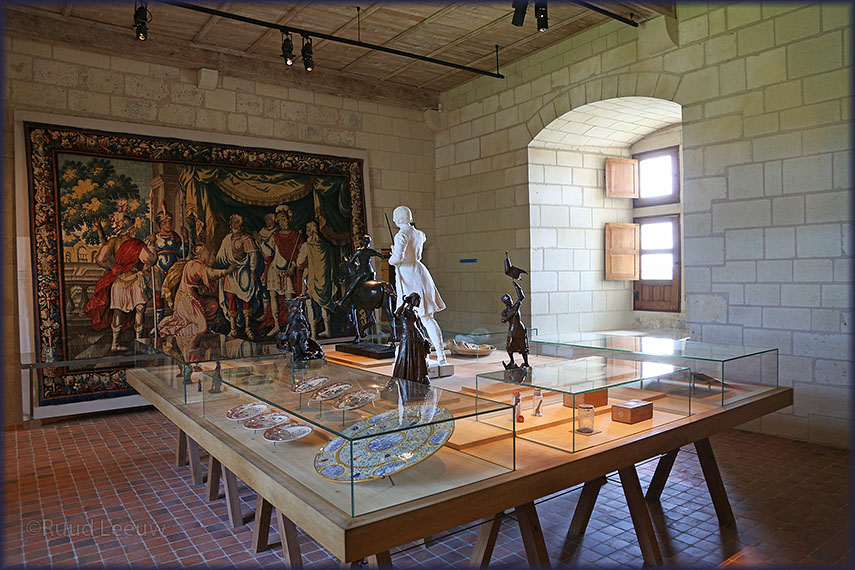


Recognising the future King - 17th century Aubusson tapestry
|


Chinon's medieval strategic importance is clearly seen here: it offers an easy crossing point by means of a central island in the Vienne,
and the rocks dominating the shore provided not only a natural fort, but also protection against the annual flooding of the river.
|

