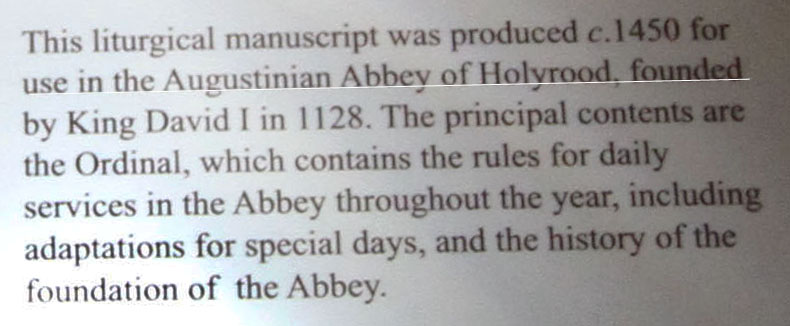
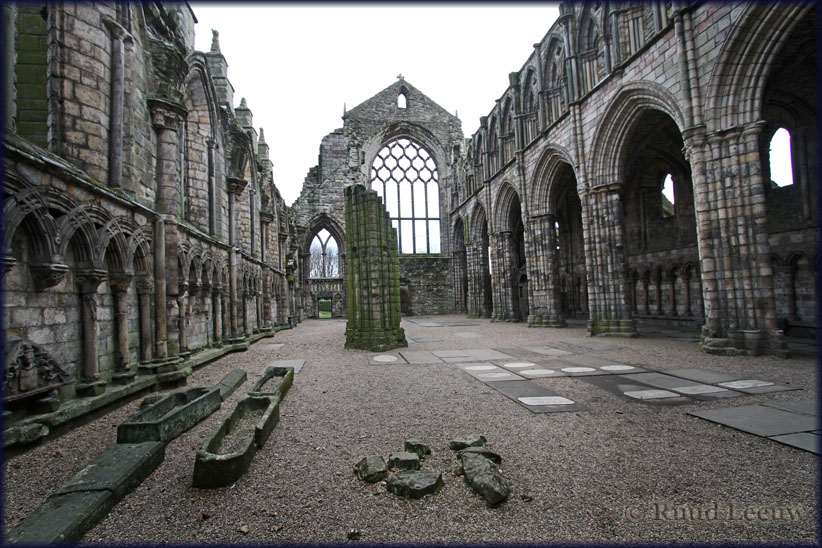
Next is a visit to Edinburgh Castle..
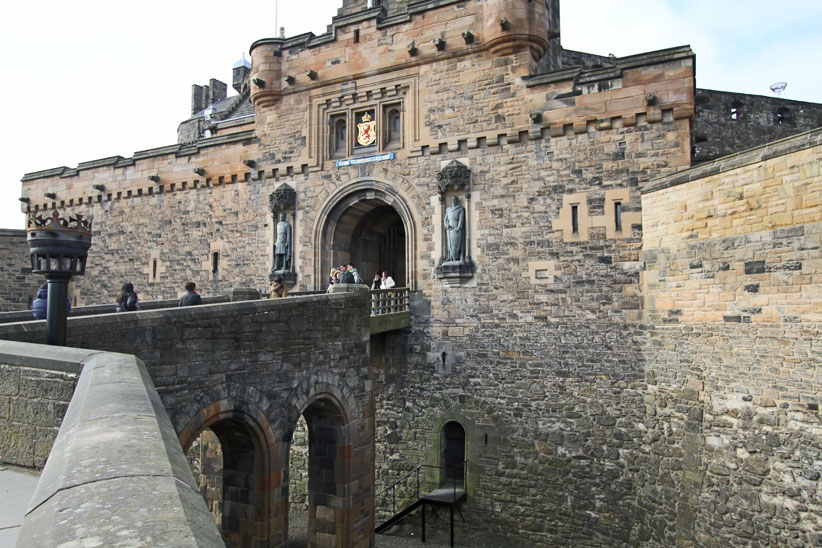
Edinburgh Castle is a fortress which dominates the skyline of the city of Edinburgh, Scotland, from its position atop the volcanic Castle Rock. Human habitation of the site is dated back as far as the 9th century BC, although the nature of early settlement is unclear.

Calodonia's Queen is changed,
Since on her dusky summit ranged,
Within its steepy limits pent,
By bulwark, line, and battlement,
And flanking towers, and laky flood,
Guarded and garrison'd she stood,
Denying entrance or resort,
Save at each tall embattled port;
Above whose arch, suspended, hung,
Portcullis spiked with iron prong.
That long is gone, - but not so long,
Since, early closed, and opening late,
Jealous revolved the studded gate,
Whose task, from eve to morning tide,
A wicket churlishly supplied.
Stern then, and steel-girt was thy brow,
Dunedin! O, how alter'd now,
When safe amid thy mountain court
Thou sitt'st, like empress at her sport,
And liberal, unconfined, and free,
Flinging thy white arms to the sea,
For thy dark cloud, with umber'd lower,
That hung o' er cliff, and lake, and tower,
Thou gleam'st against the western ray
Ten thousand lines of brighter day.
'Edinburgh' -Walter Scott (from Marmion) |
Edinburgh Castle has been involved in many historical conflicts, from the Wars of Scottish Independence in the 14th century, up to the Jacobite Rising of 1745, and has been besieged, both successfully and unsuccessfully, on several occasions. From the later 17th century, the castle became a military base, with a large garrison.

Original plans to create a New Town in Edinburgh date back to a general concept considered by King James VII and II in the late 17th century.
The decision to construct a New Town was taken by the city fathers, after overcrowding inside the Old Town city walls reached breaking point and to prevent an exodus of wealthy citizens from the city to London.The Age of Enlightenment had arrived in Edinburgh, and the outdated city fabric did not suit the modern thinkers who lived there.
Lord Provost George Drummond succeeded in extending the boundary of the Royal Burgh to encompass the fields to the north of the Nor Loch, the heavily polluted water body which occupied the valley immediately north of the city. A scheme to drain the Loch was put in to action, although the process was not fully completed until 1817.
Crossing points were built to access the new land; the North Bridge in 1772, and the Earthen Mound, which began as a tip for material excavated during construction of the New Town. The Mound, as it is known today, reached its present proportions in the 1830s.
As the successive stages of the New Town were developed, the rich moved northwards from cramped tenements in narrow closes into grand Georgian homes on wide roads. However, the poor remained in the Old Town.
[Source: Wikipedia] |

The Irish annals record that in 638, after the events related in Y Gododdin, "Etin" was besieged by the Angles under Oswald of Northumbria, and the Gododdin were defeated.
The territory around Edinburgh then became part of the Kingdom of Northumbria, which was itself absorbed by England in the 10th century, when Athelstan of England, according to the Annals of Clonmacnoise, "spoiled the Kingdom of Edinburgh".
The first documentary reference to a castle at Edinburgh is in John of Fordun's account of the death of King Malcolm III.
During the reign of Malcolm III, Dunfermline rather than Edinburgh was the primary royal residence. This began to change though during the reign of his youngest son, King David I (ruled 1124–1153).
King David's largest contribution to the development of Edinburgh as a site of royal power undoubtedly lay in his administrative reforms. However, he is also credited with effecting more tangible changes to the fabric of the castle. Any buildings or defences would probably have been of timber, although two 12th-century stone buildings are known. Of these, St. Margaret's Chapel remains at the summit of the rock.
In 1174, David's successor King William "the Lion" (ruled 1165–1214) was captured by the English at the Battle of Alnwick.
The castle was occupied by the English for twelve years, until 1186, when it was returned to William as the dowry of his English bride, Ermengarde de Beaumont, who had been chosen for him by King Henry.
[Wikipedia. more..] |


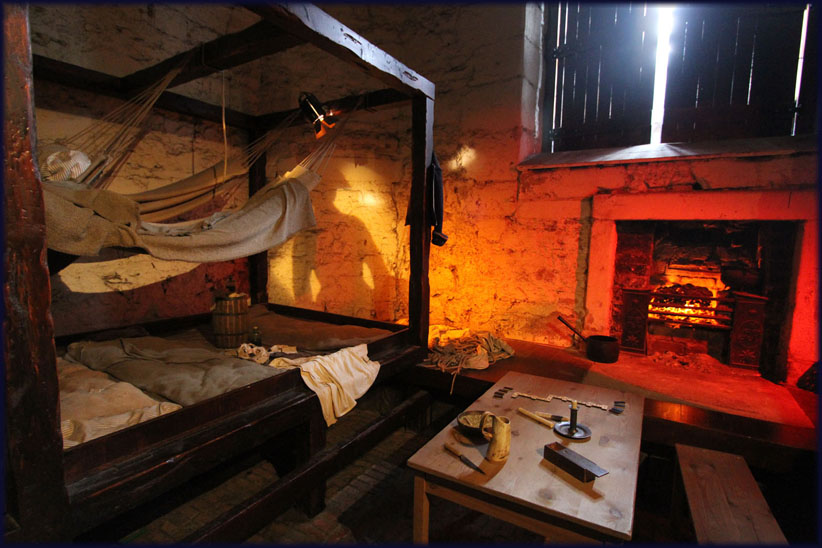
From the Great Hall we move down to the prison quarters..

|


 w






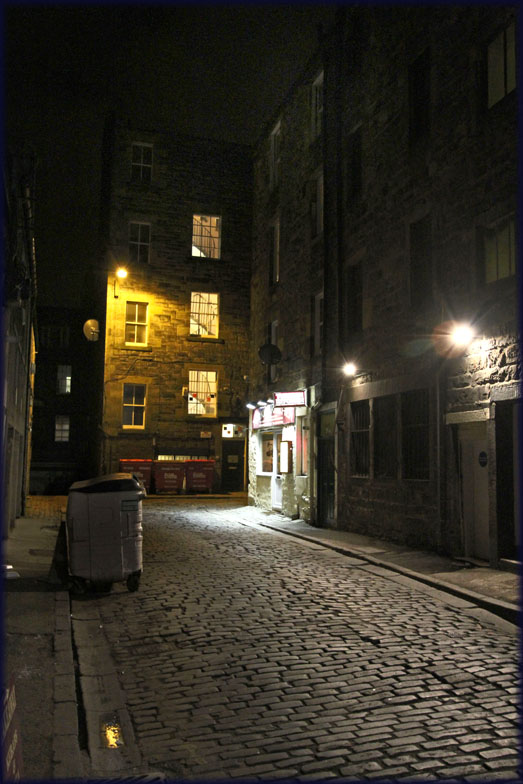
 One always ends up with the castle...


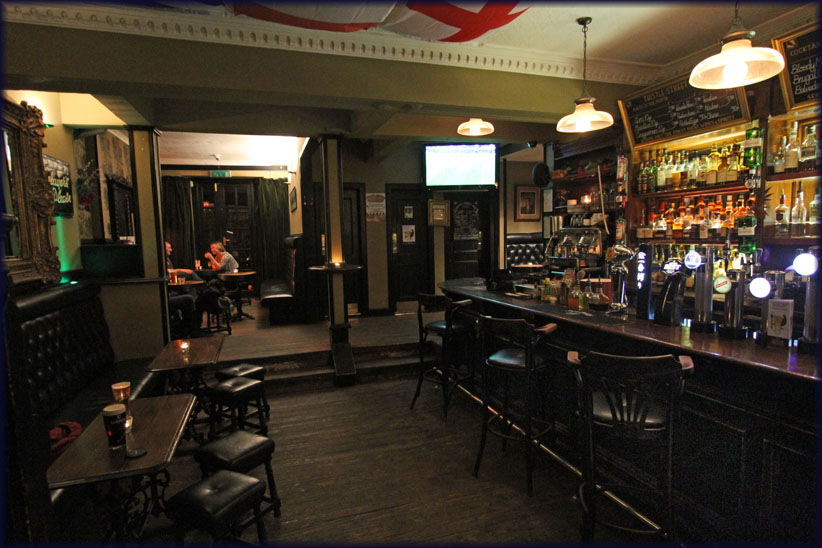

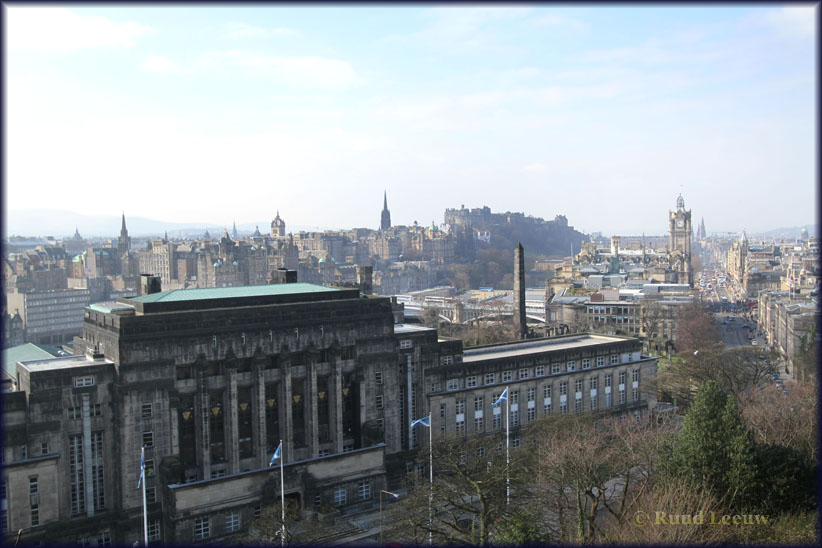


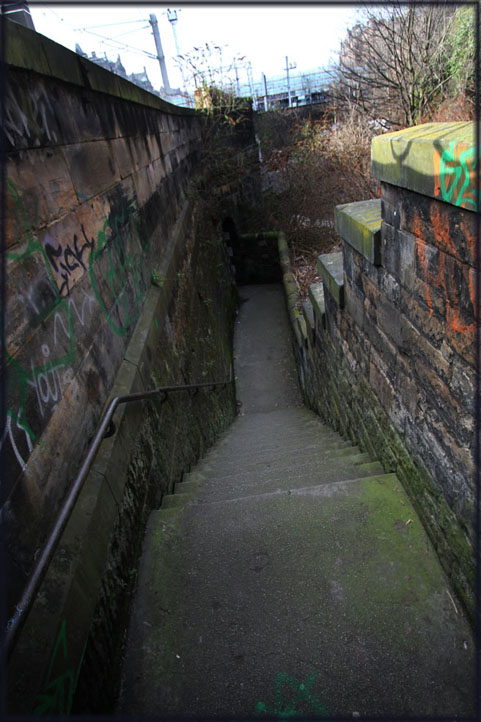




 Press were standing by, but it took me too long so I left. On tv later that night I learned a mother, Theresa Riggi, had killed her three small children and that was what the press had gathered for.