MOSCOW, RUSSIA
|
This is how the day and actually the visit to Moscow started: the view from our room at the Holiday Inn Sokolniki. In the distance is Park Sokolniki (alas, had no time to explore) and the small building dead center of the photo is the subway entrance to Sokolniki station. Only 6 stops away from the Red Square, 10-12 minutes. The round extension of the building on the left is the entrance to a mall which conveniently housed a 24-hour supermarket and also a Starbucks coffeecorner. Beneath the highrise apartments on the right was a small Subway restaurant, but none of the staff spoke English, so there was much pointing of fingers involved in ordering. |
|
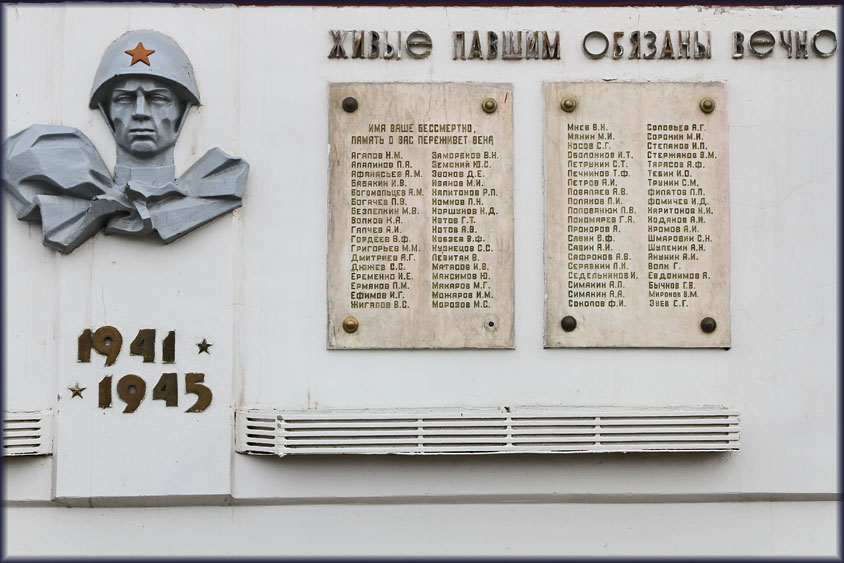
Red Square (Krásnaya plóshchad)The first visit into town inevitably is to the Red Square. Quite a bit of work was going on in preparation of festivities for Moscow's Victory Day Parade on May 09th, to commemorate the 66th anniversary of the capitulation of Nazi Germany in 1945. The parade marked the Soviet Union's victory in the Great Patriotic War. Unfortunately we were long gone by then, something for another visit perhaps.
MORE PHOTOS OF MINE TAKE AT MOSCOW'S RED SQUARE The Red Square information on Wikipedia
|
GUMGUM (Russian: ГУМ, pronounced as goom, as abbreviation of the Russian: Главный универсальный магазин Glavnyi Universalnyi Magazin, meaning 'main universal store') is the name of the main department store in many cities of the former Soviet Union, known as State Department Store (Russian: Государственный универсальный магазин, Gosudarstvennyi Universalnyi Magazin) during the Soviet times.Similar-named stores were in some Soviet republics and post-Soviet states. The most famous GUM is this large store in the Kitai-gorod part of Moscow, facing Red Square. It is actually a shopping mall. Prior to the 1920s the place was known as the Upper Trading Rows. Elsewhere I have seen this store also referred to as GOeM.
By the time of the Russian Revolution of 1917, the building contained some 1,200 stores. After the Revolution, the GUM was nationalised and continued to be used as a department store until Joseph Stalin converted it into office space in 1928 for the committee in charge of his first Five Year Plan. After the suicide of Stalin's wife Nadezhda during 1932, the GUM was used briefly to display her body. After reopening as a department store during 1953, the GUM became one of the few stores in the Soviet Union that did not have shortages of consumer goods, and the queues of shoppers were long, often extending entirely across Red Square. Many of the stores feature fashionable brand names familiar in the West; locals refer to these as the 'exhibitions of prices', the joke being that no one could afford actually to buy any of the items displayed. In fact we saw little shopping going on, window-shopping perhaps, though the surrounding streets had a high number of Lexus and other extravagant cars parked. More info on Wikipedia..
|
|
|
|
|
|
|
|
Back to the streets, over and under...
|
|
Actually taken somewhere else, but it seems fitting to include it here: |
| Museum of Moscow's History, not to be confused with the huge history museum on the Red Square, is one of the oldest museums of the city and was established on the initiative of Russian scientific community in 1896. The basis of the collection was formed with the exhibits of the pavilion "Moscow" at the All-Russian Artistic and Industrial Exhibition, which was held in Nizhny Novgorod in 1896. Over time the museum acquired a great number of articles depicting life in the city throughout its history, from Moscow's ancient beginnings to the present day. Among them there were various maps, drawings, photos, documents, sculptural models of city buildings and districts as well as everyday objects. This museum can be found on Novaya Ploshchad 12, across the Polytechnical Museum, which we actually intended to visit but a sign 'no photography' and loud noises of hordes of schoolchildren running around put me off. So we crossed the road and visited this modest one. A small fee had to be paid for photography, which is customary in museums here.
|
|
Starbucks, home away from home in a way. But for the real 'hot chocolate' you'll have to look elsewhere.
|
|
|
The Moscow Metro, or subway, is a very efficient mode of transport; every 2 or 3 minutes a train will pass. The metro is very clean and often fabulously decorated with tiles, chandeliers or statues. Over 6 million people will use the metro every day! It is an inspirational place to be, also because one needs to be alert on where to go, with the confusing Cyrillic script and hordes of people passing left and right. I am sure we overpaid our tickets at times, because the cashiers hardly spoke English and must have misunderstood my 'dva', meant for tickets for 2 persons, for a return ticket.. Or I misunderstood their questions. Anyway, travel is cheap so I wasn't much bothered by sometimes overpaying. Next time I must try to get a card for multiple use over several days.
|
| The Moscow Metro (Moskovsky metropoliten) is a rapid transit system that serves Moscow as well as a neighbouring town of Krasnogorsk. Opened in 1935 with one 11-kilometre (6.8 mi) line and 13 stations, it was the first underground railway system in the Soviet Union. Currently, Moscow Metro has 182 stations. Its route length is 301.2 kilometres (187.2 mi). The system is mostly underground, with the deepest section located at 84 metres (276 ft) below ground, at Park Pobedy station. The Moscow Metro is the world's second most heavily used rapid transit system after Tokyo's twin subway. WIKIPEDIA, more.. |
|
The Cathedral of Christ the Saviour (Russian: Храм Христа Спасителя) is a Church in Moscow, Russia, on the bank of the Moskva River, a few blocks west of the Kremlin. With an overall height of 105 metres (344 ft), it is the tallest Orthodox church in the world. WIKIPEDIA, MORE <-- Stalin had the original cathedral here destroyed during the 1930s, in order to build a 'Palace of the Soviets' here. World War Two spoiled his plan, instead during the late-1950s work started to build world's largest open air, heated swimmingpool... President Boris Jeltsin decided during the 1990s to rebuild the Cathedral. Costs: over a billion dollar! Work continued 24 / 7. Workers endured temperatures of 30 degrees below zero Celsius. Most of the funding was provided by the oligarchs, some pressure was applied left and right... It was completed in 2000. Most of the above found in an article by Pieter Waterdrinker, in Vrij Nederland (11aug2012).
|
|
Again crossing the Vodootvodny Canal onto the mainland, walking along on the Moskva river banks (Kadashevskaya naberezhnaya, Yakimanskaya naberezhnaya and Krymskaya naberezhnaya we passed the giant statue of Peter the Great. It is one of the world's tallest outdoor statues! The statue was commissioned by the Mayor of Moscow, Yury Luzhkov, to celebrate the 300th anniversary of the foundation of the Russian Navy in 1998. Further along we passed an impressive outdoor gallery of paintings offered for sale, very nice work too!
|
GORKY PARKGorky Central Park of Culture and Leisure is an amusement park in Moscow, named after Maxim Gorky. It featured in many a (spy) film. It wasn't open yet for business, people were removing the remaining snow and cleaning it from dust, litter and debris. For us nevertheless and inspiring place for photography.
'Gorky Park', the book by Martin Cruz Smith (1981) and film (starring William Hurt & Lee Marvin) |
|
|
MOSCOW MUSEUM OF PHOTOGRAPHY
|
In an exhibition dedicated to portraits of Mick Jagger, taken by world renowned photographers,
I was pleased to see also photos by Anton Corbijn, a favourite photographer of mine.
|
|
MORE PHOTO OF MINE, OF THIS TRIP, ON FLICKR.COM:
EXTERNAL LINKS: |
|