A visit to Sicily was long on the 'to do'-list and after some serious doubts and various scenarios it finally happened. I have an interest in photography of all sorts, in history and like to keep moving. Italy is one of two favourite European countries and the fact that Sicily is flooded by tourists saves it from the annoying daily 'curfew' between c.12:00-c.15:30...
I hope you will be able to enjoy my 'travelogue' here.
|
(TO) CASTELBUONO / CEFALÙ
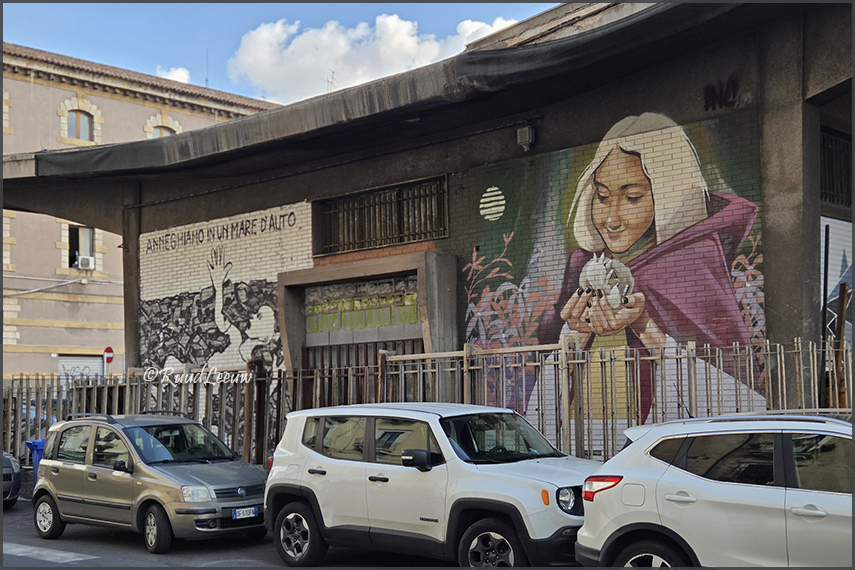
Collecting our rental car from Parcheggio Lupo we had our 'roadtrip' definitely... On The Road
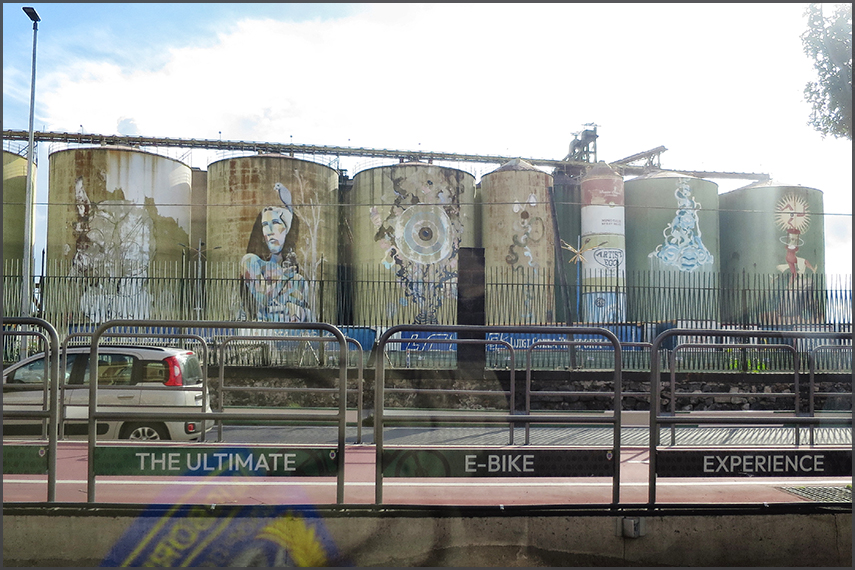
A last glimpse on Catania, on our way out.
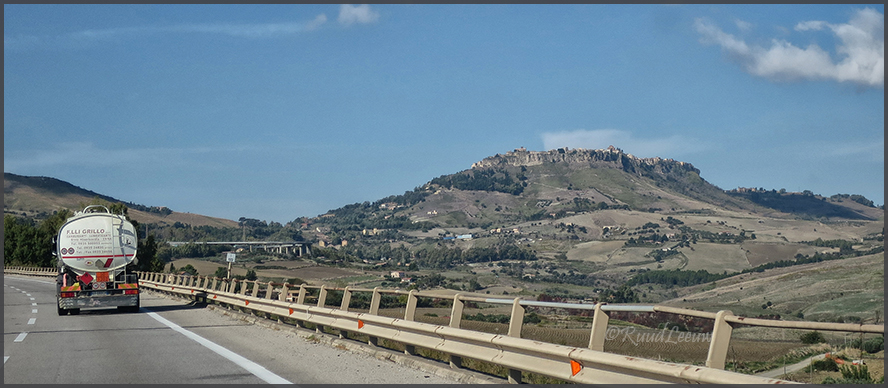
"I photograph to see what the world looks like in photographs" ¬ Garry Winogrand
First port of call is this Air Pub Café (a.k.a. Café Aereo a.k.a. Da Angela Air), near Caltanisetta.
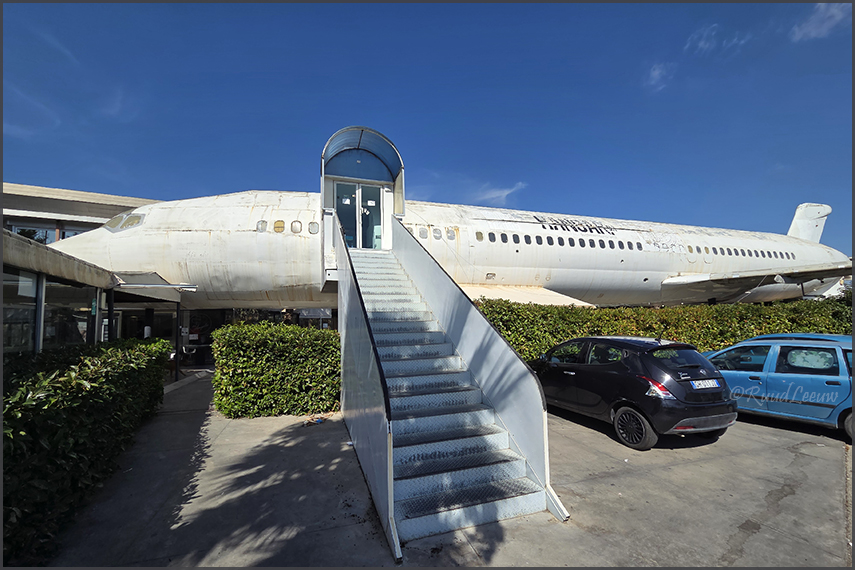
Full report on our visit to this converted DC-9 into a nice café / restaurant on PAGE THREE
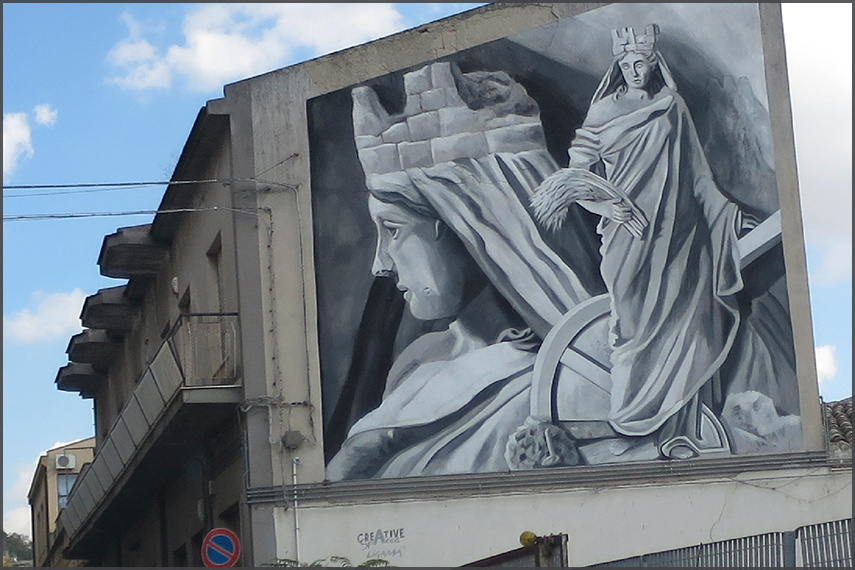
At Caltanissetta, if I remember correctly.
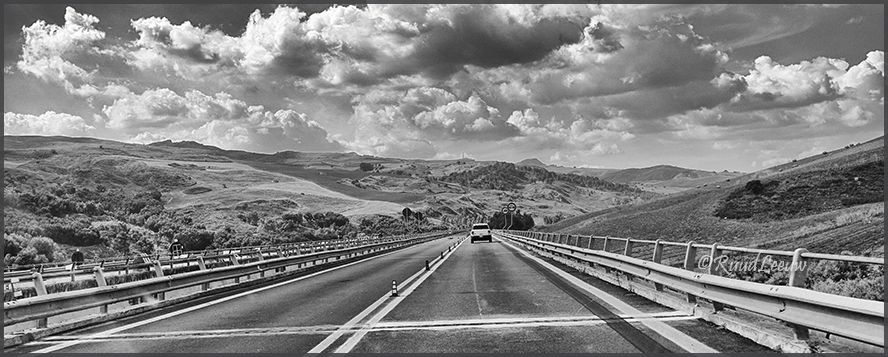
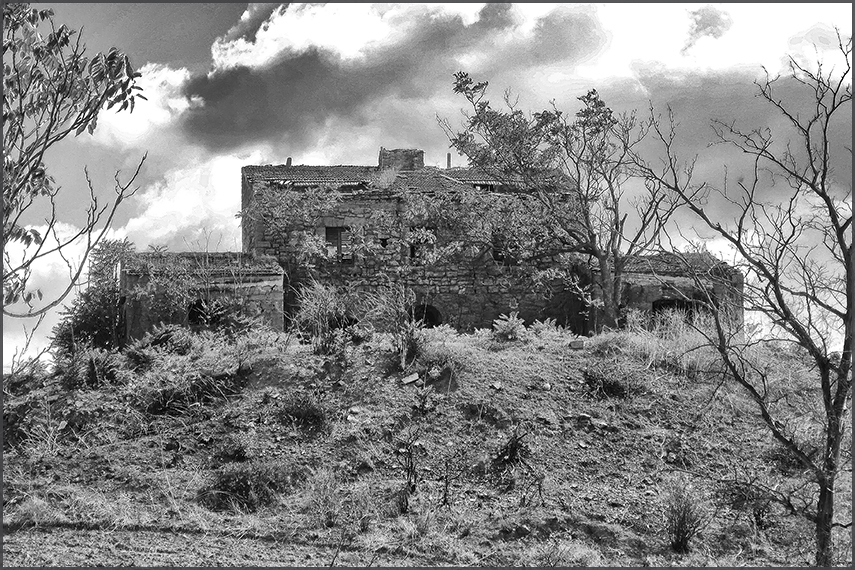
We often saw abandoned houses, perhaps people had to move for new main roads being built.
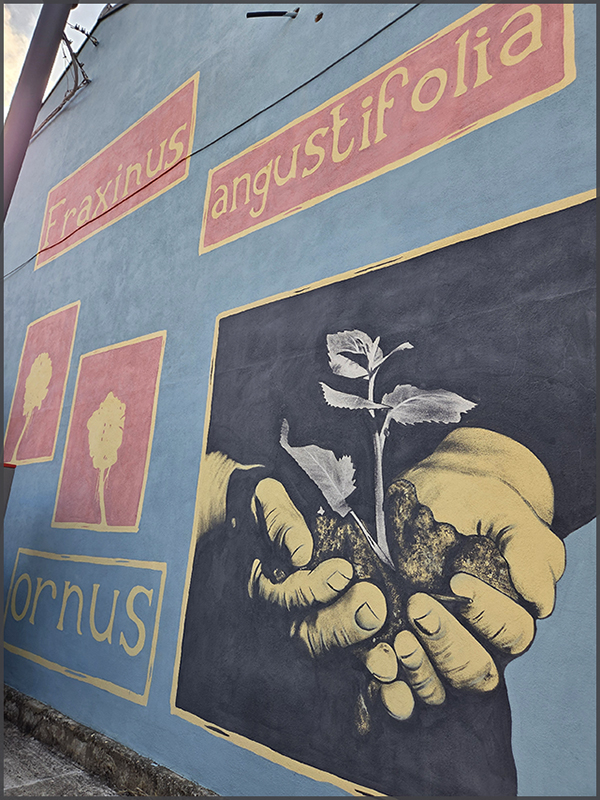
Mural in Castelbuono
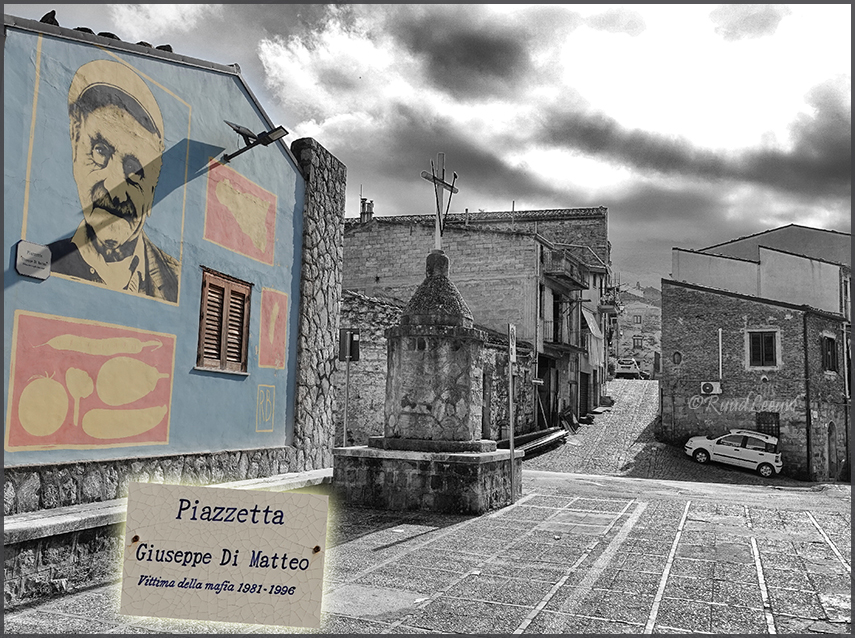
Piazzetta Giuseppe Di Mateo, victim of the Mafia 1981 - 1996. Has the Mafia really been overcome..?
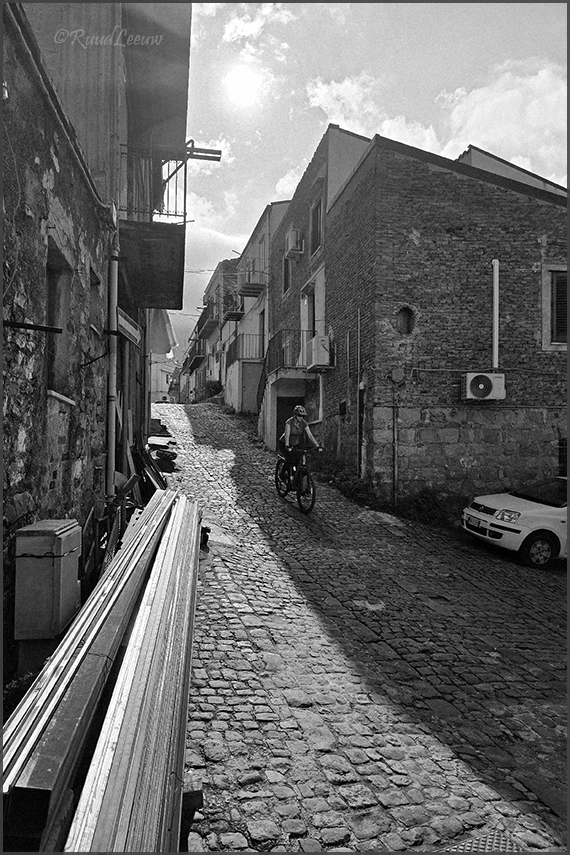
The small roads proved too small here for our rental KIA Sportage, thus we failed to visit the castle here.
|
CEFALÙ
I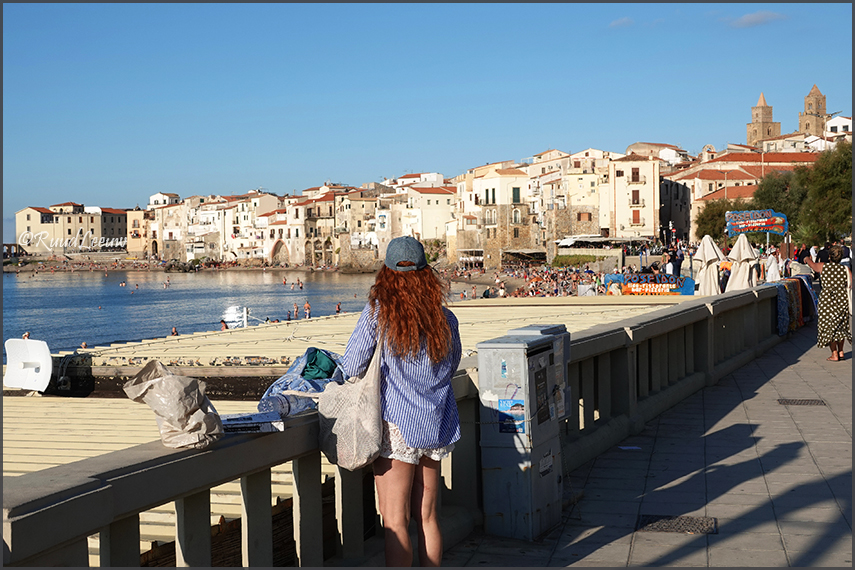
By cutting short our visit to Castelbuono we arrived sooner than expected at Cefalù and found it
in glorious sunshine. Our hotel was right on the boulevard and the historic centre was nearer than I'd expected!
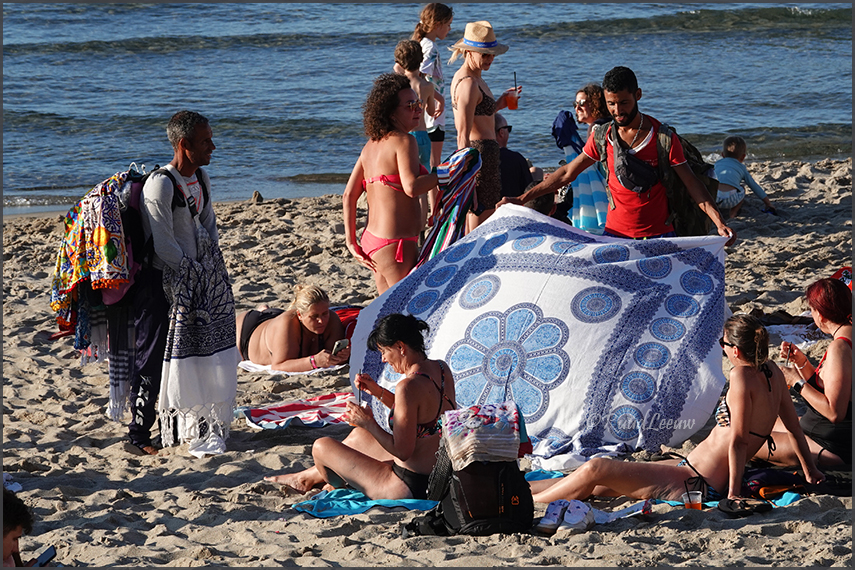
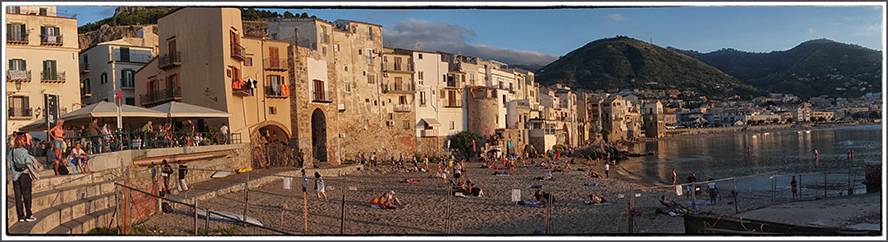
The boulevard looks out onto the beach, people sunbathing and sellers trying
to find customers
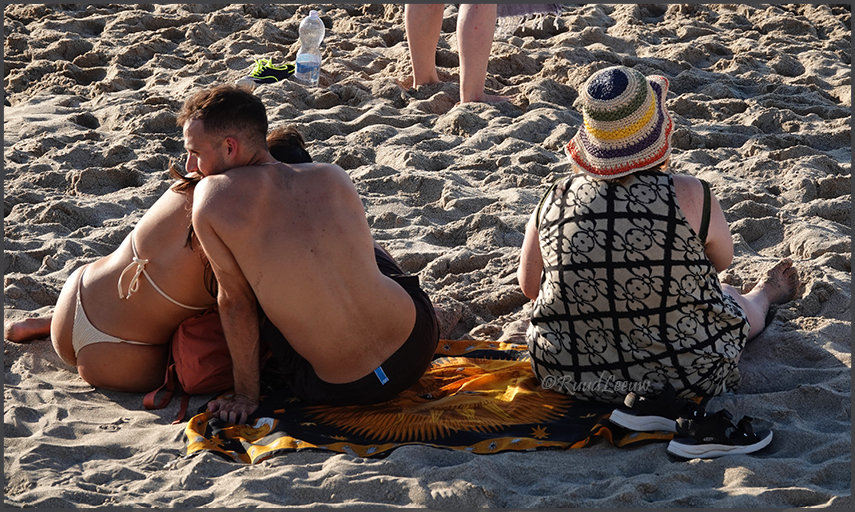
Mother-in-law keeps a close watch

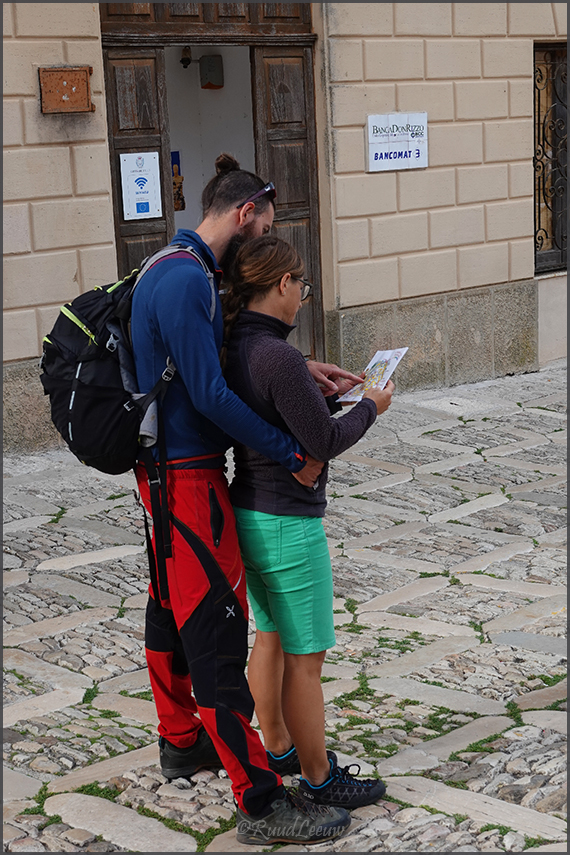
I can relate to this, consulting each other's smartphone for something to find..☺

The historic cobblestone streets are often not easy to walk on for the elderly.
Such as me!
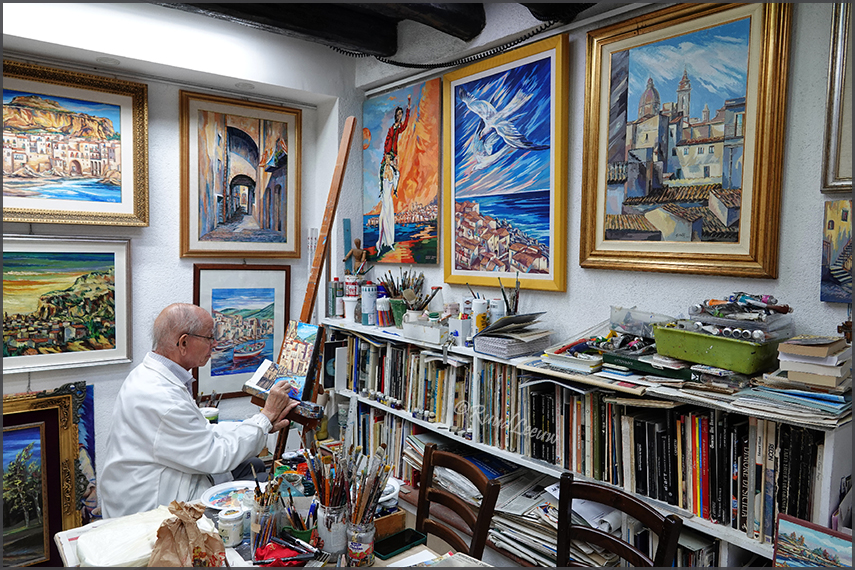
Artist -Guiseppe Forte- at work, with a distinctive style

Postcards I bought of his work
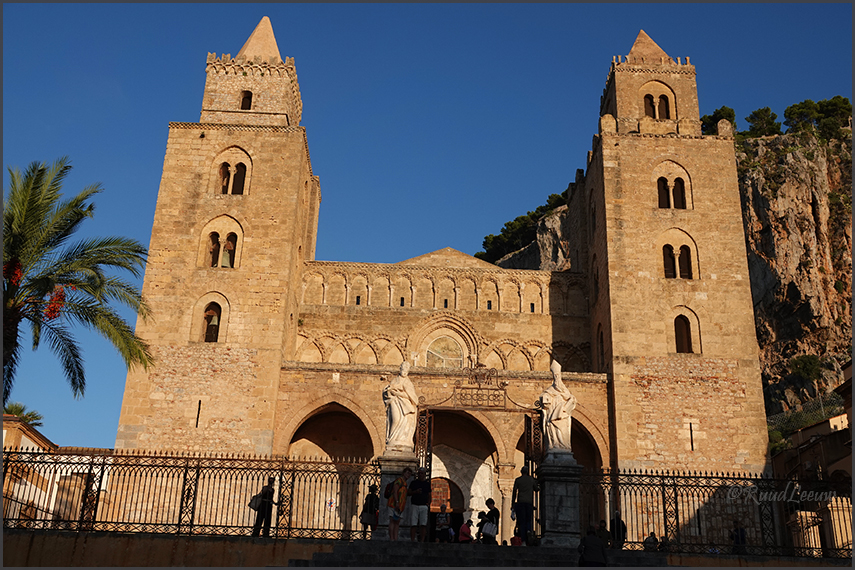
It was quite a climb to reach this church. The city is built against a rocky outcrop
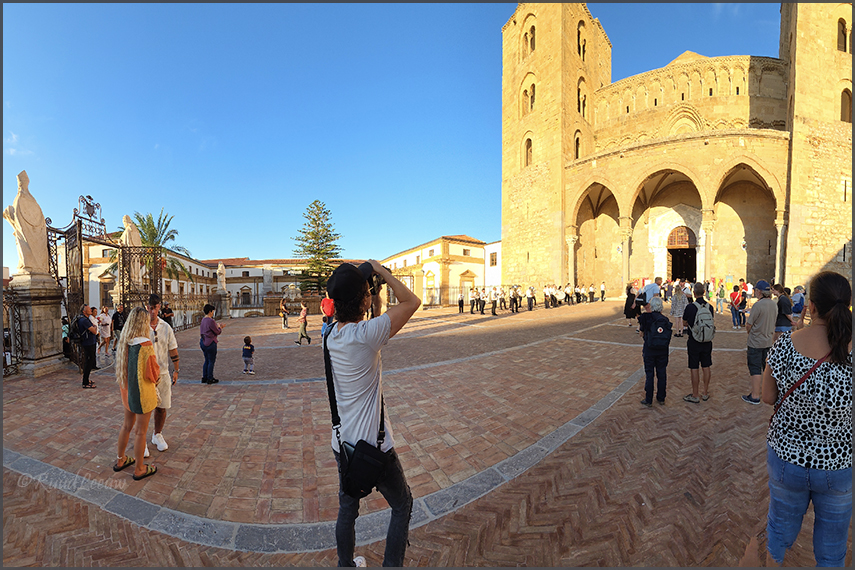
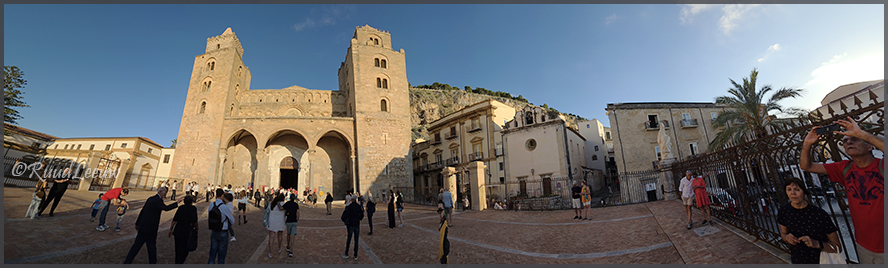
A panorama shot to get it all in
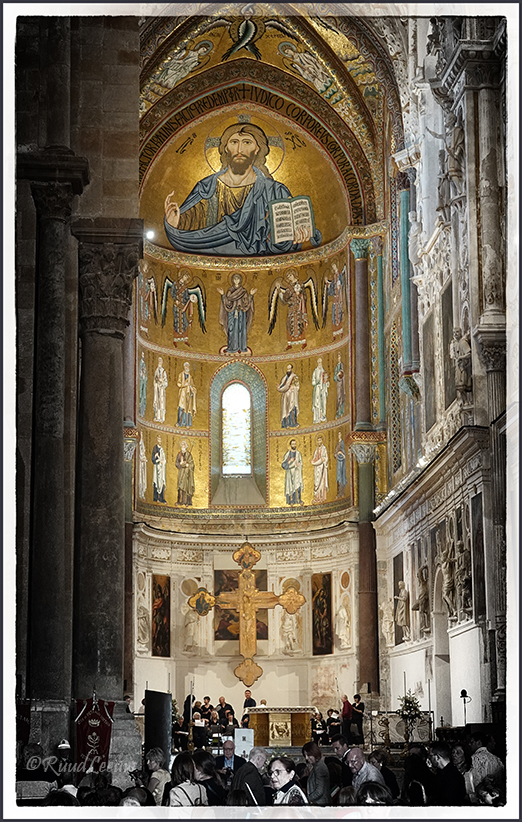
Cathedral-Basilica of Cefalù | Duomo di Cefalù
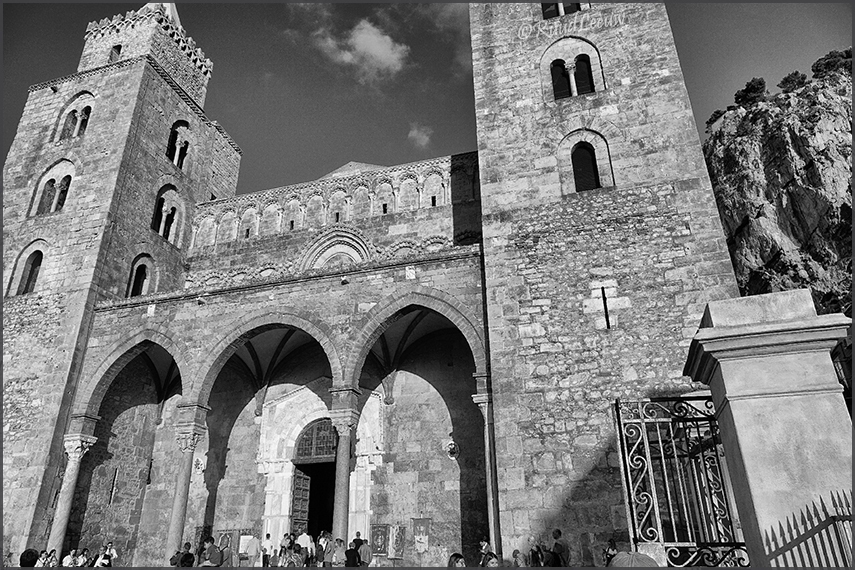
The Cathedral of Cefalù (Italian: Duomo di Cefalù) is a Roman Catholic basilica in Cefalù, Sicily.
It is one of nine structures included in the UNESCO World Heritage Site known as Arab-Norman Palermo and the Cathedral Churches of Cefalù and Monreale.
The cathedral was erected between 1131 and 1240 in the Norman architectural style, the island of Sicily having been conquered by the Normans in 1091.
According to tradition, the building was erected after a vow made to the Holy Saviour by the King of Sicily, Roger II, after he escaped from a storm to land on the city's beach.
The building has a fortress-like character and, seen from a distance, it dominates the skyline of the surrounding medieval town. It made a powerful statement of the Norman presence. [¬ Wikipedia] |

Inspired by Daido Moriyama's photography

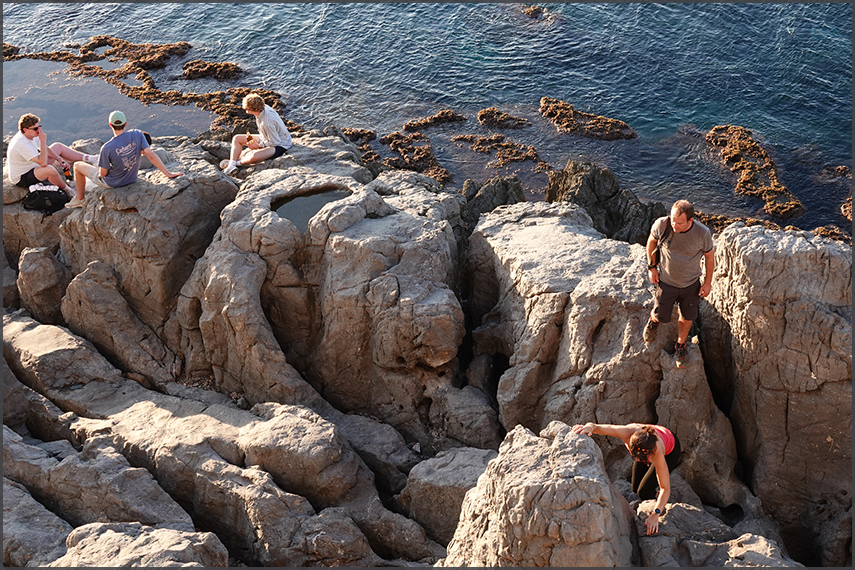
Some people prefer to do their sunbathing on mighty rocks instead of the sandy beach, takes a bit of climbing
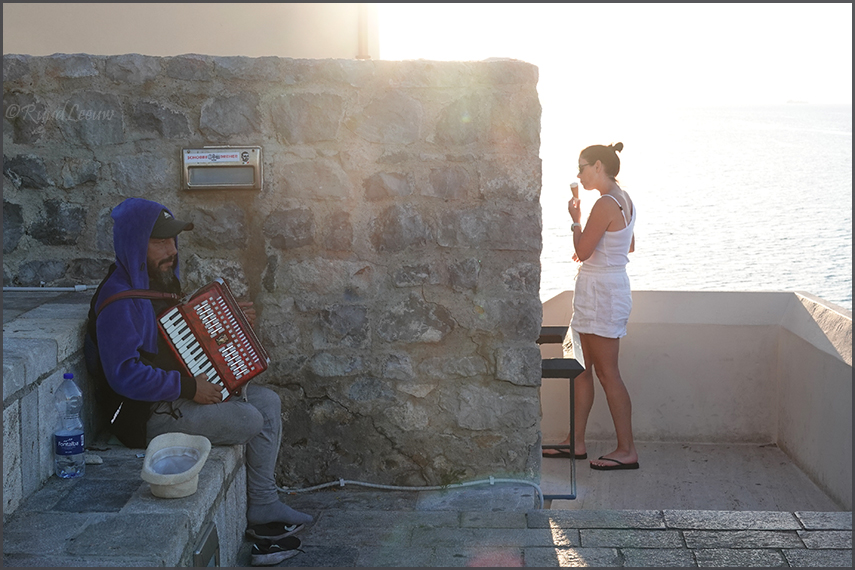
Streetmusician trying make some money. I always donate a bit, esspecially when I come away with a photo.
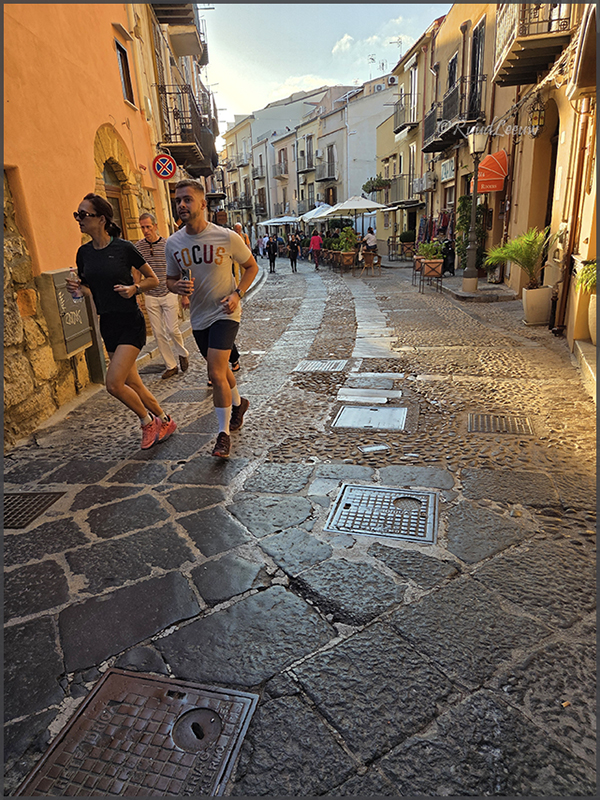
Runners in the summer heat
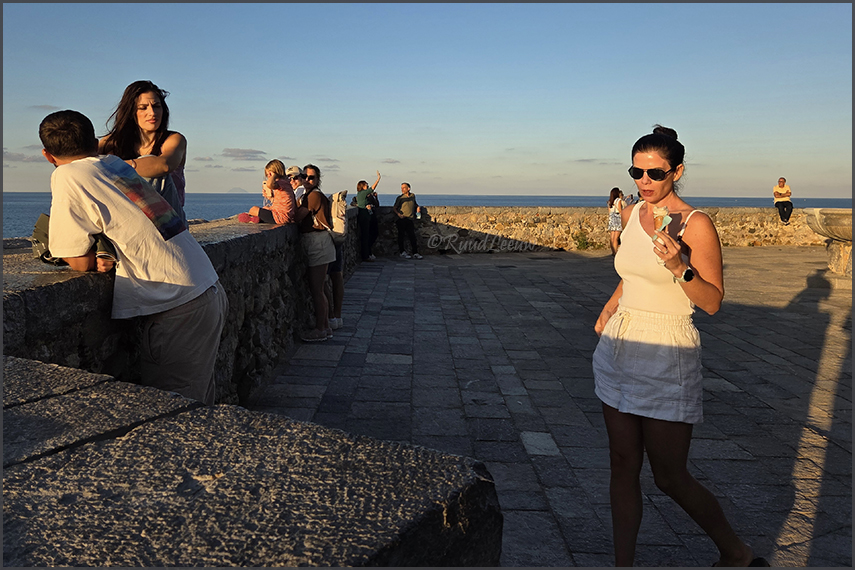
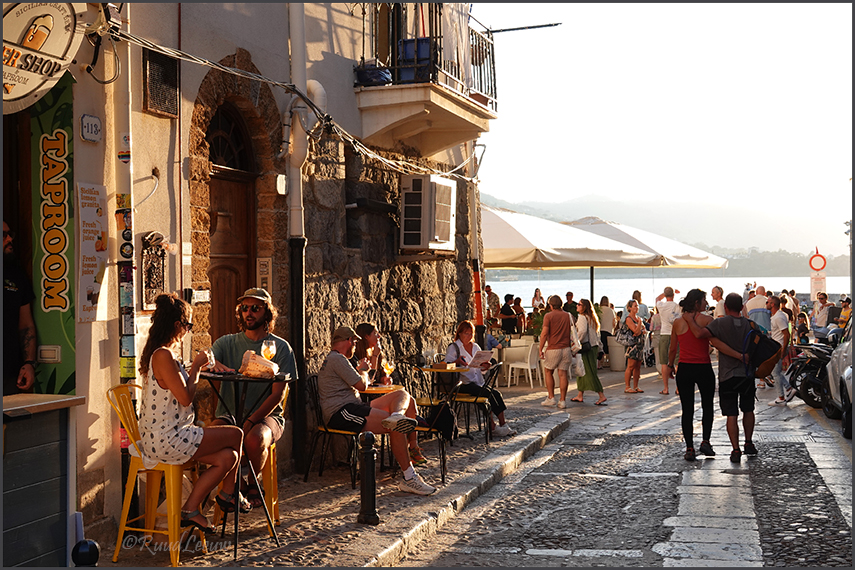
A golden sunset, people enjoying their Spritz or cold beer
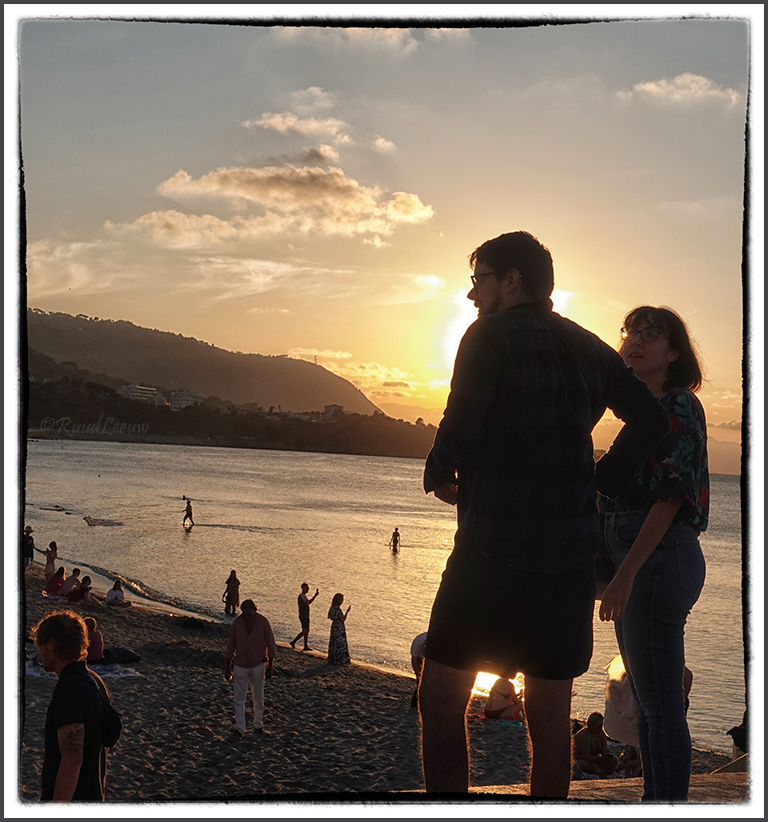
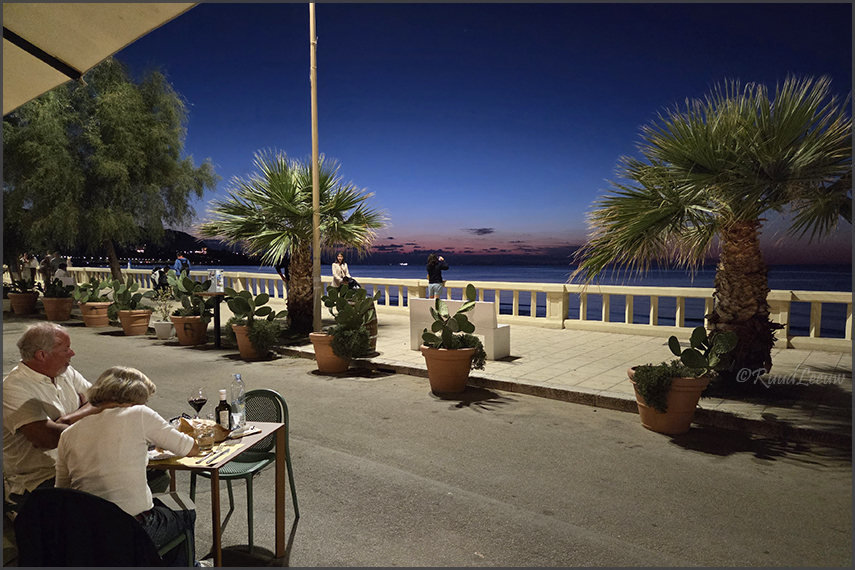
Dinner on the boulevard
(I can't leave my camera alone)
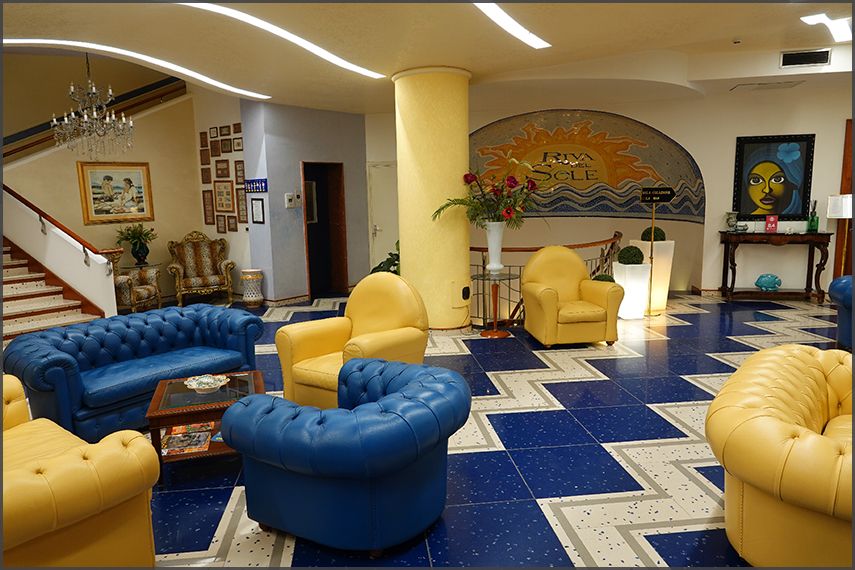
The lobby of our hotel. Our room had (much) less decorations, 'bare' even springs to mind. But with a nice balcony!
|
(TO) SEGESTA
I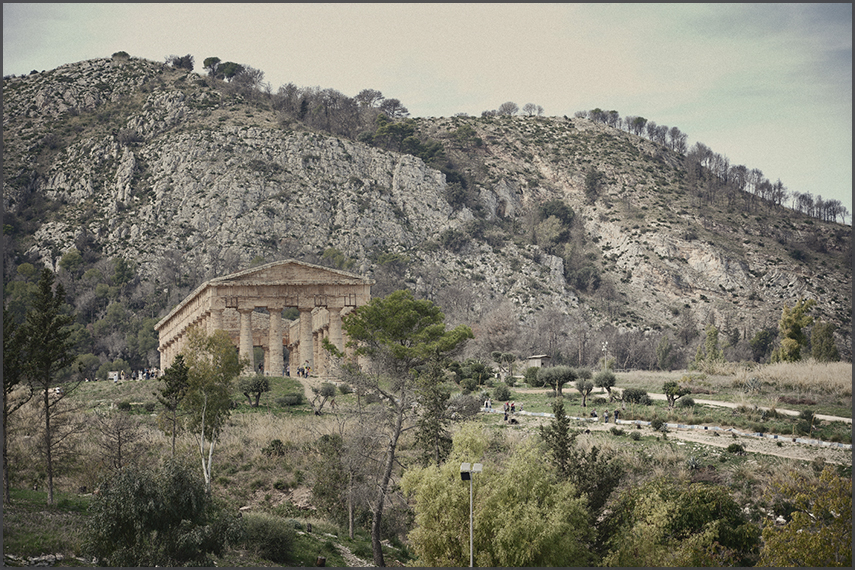
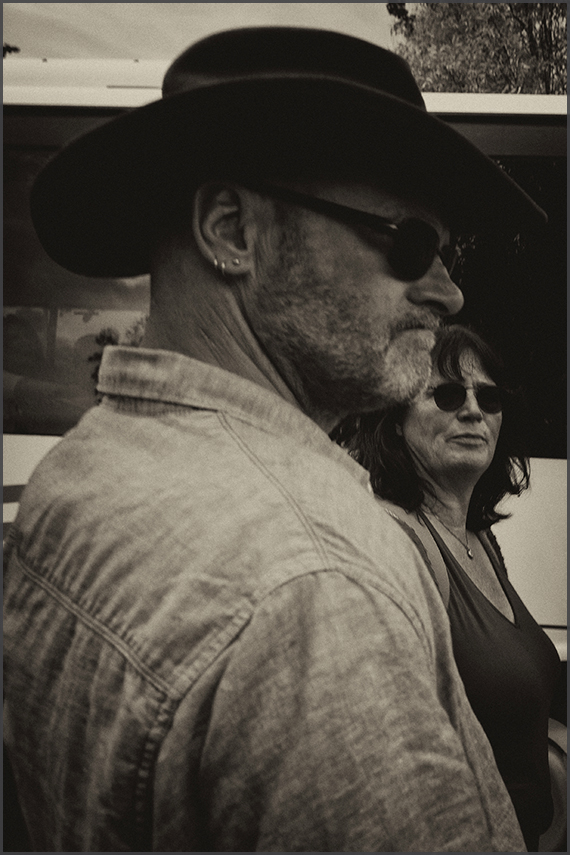
Men with (cowboy) hats will catch my eye. We were waiting for the bus
to bring us up the steep road.
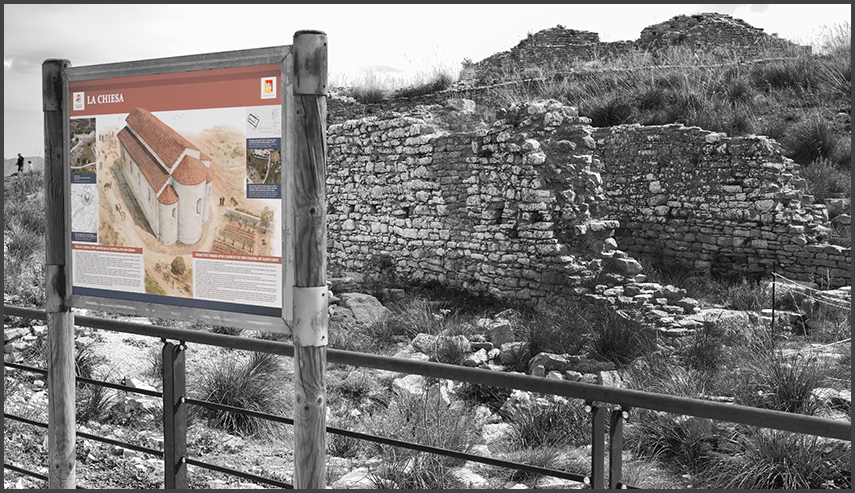
The church
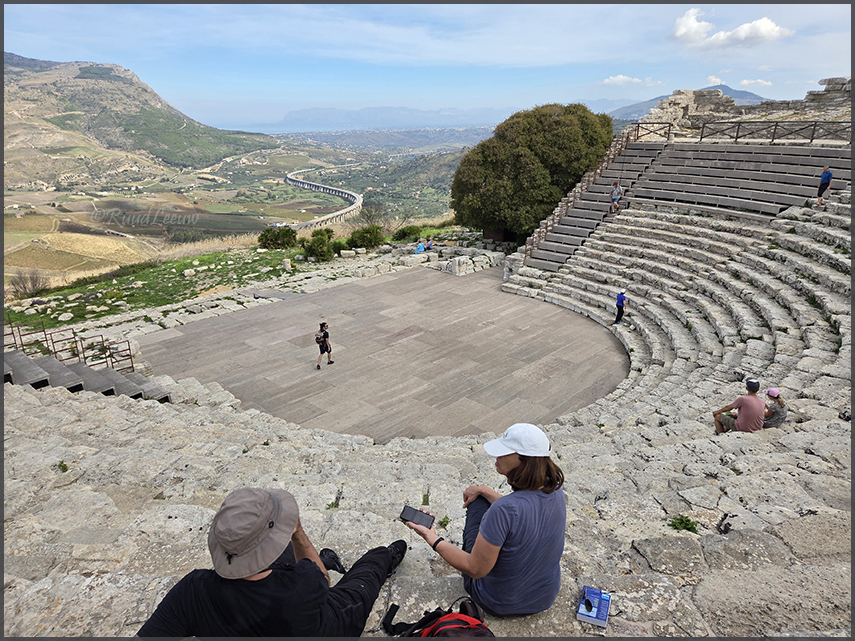
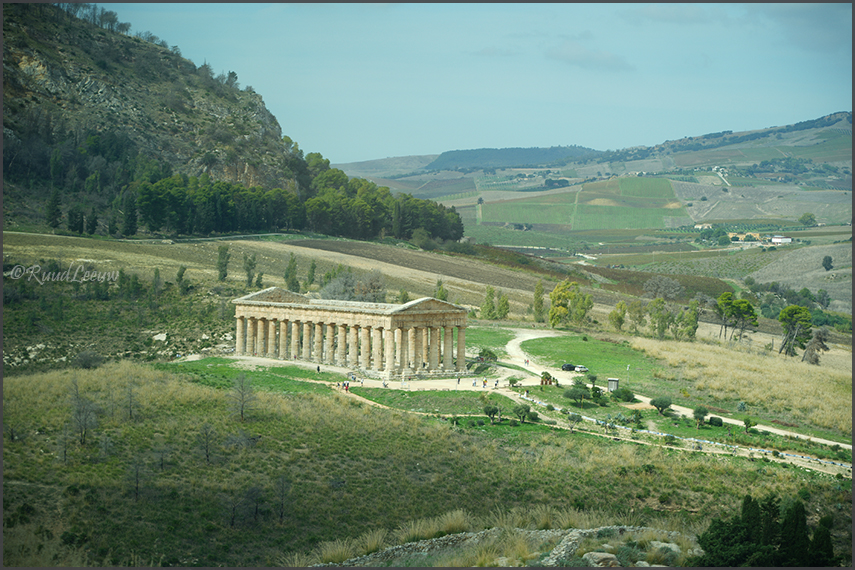
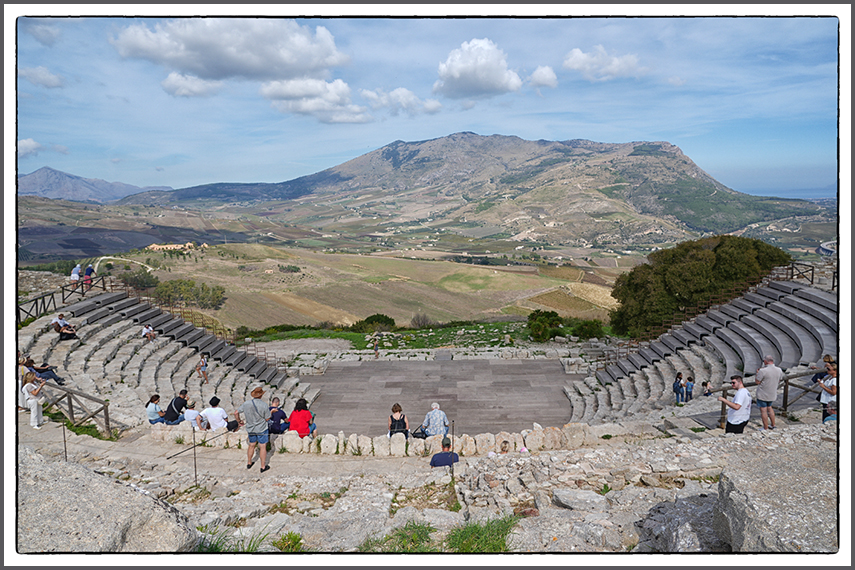
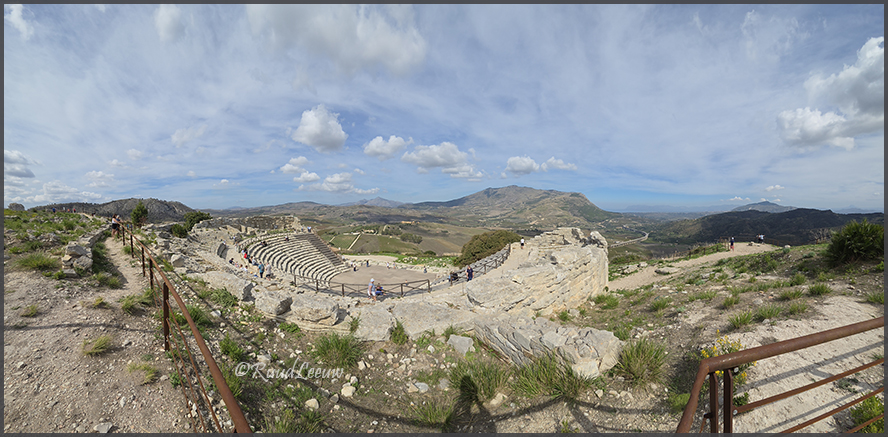
The theatre with its splendid view of the countryside surrounding Segesta
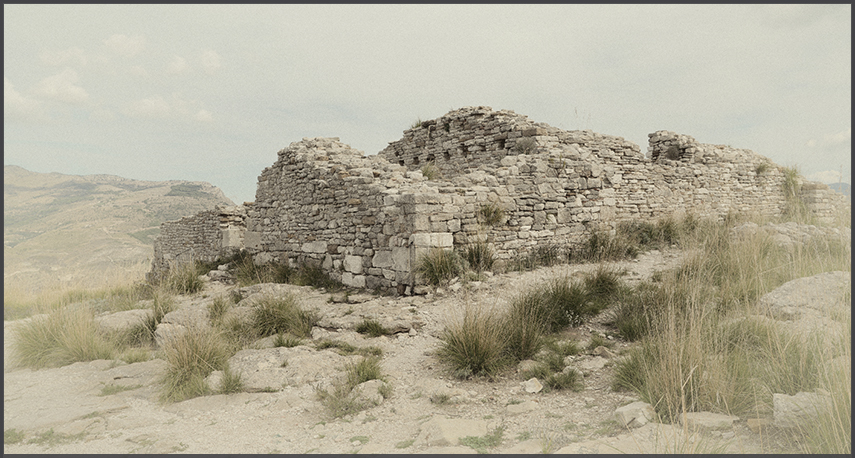
All that remains of the mosque. No doubt people made away with the stones for personal use..
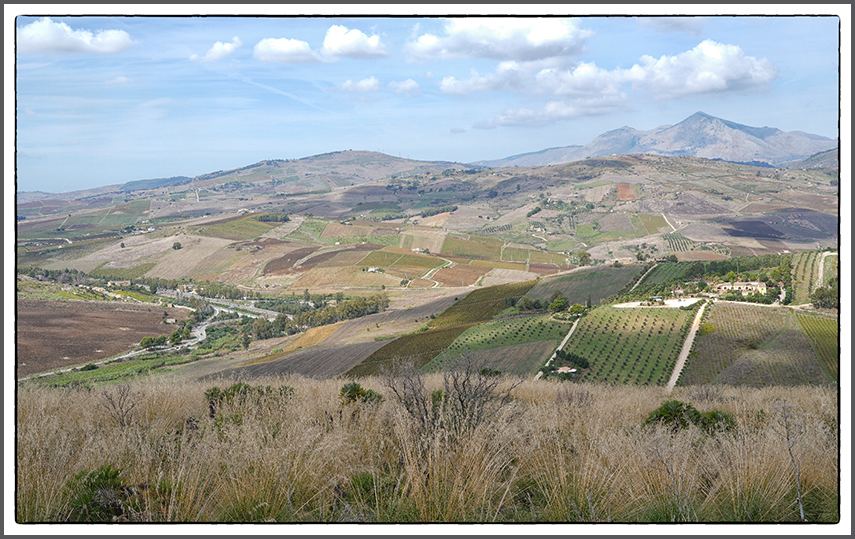
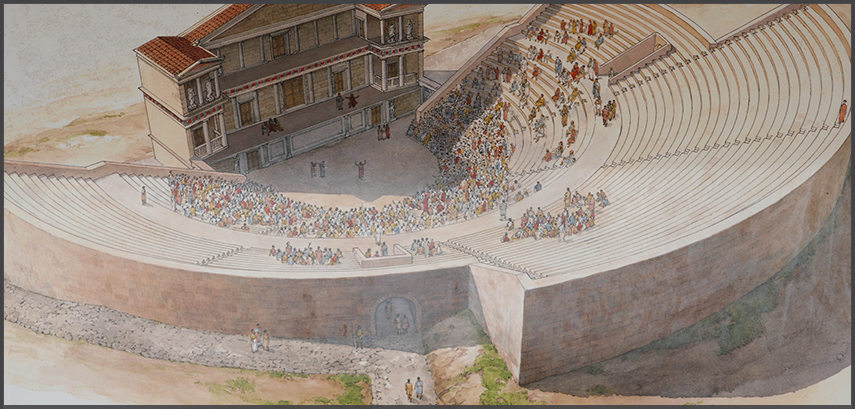
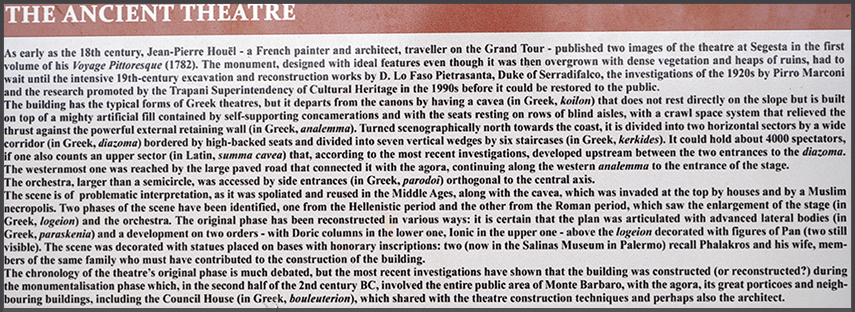
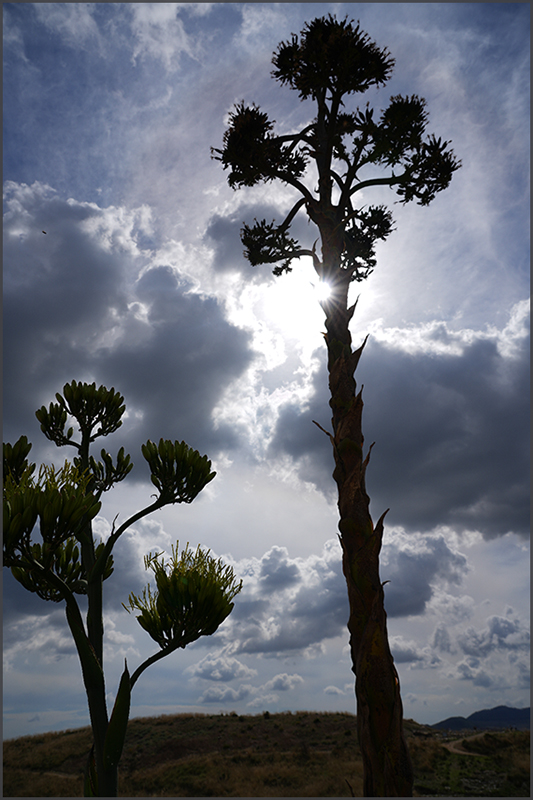
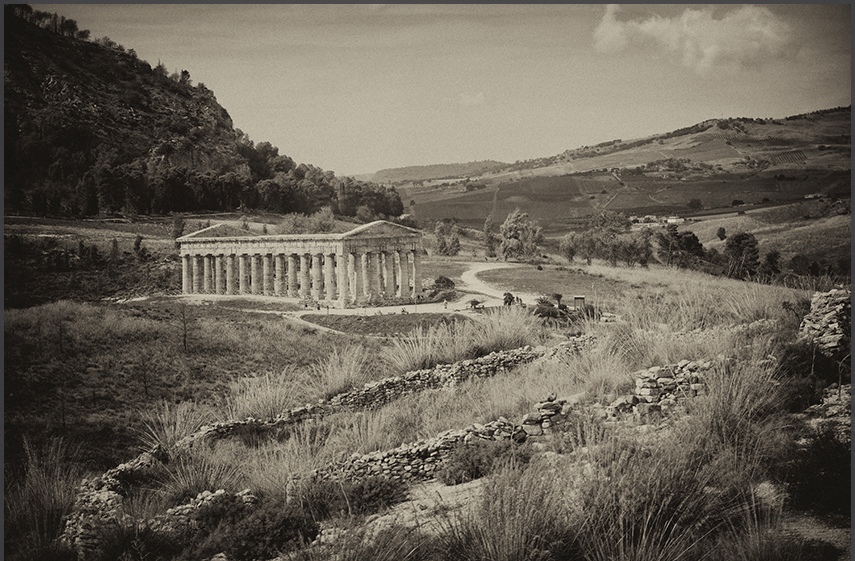
The bus taking us up and down the winding road allowed fine, but brief, moments for a good photo
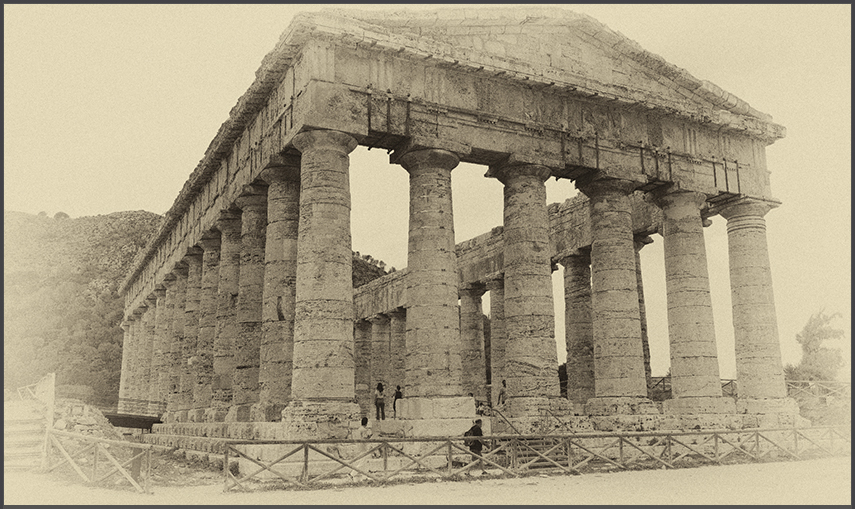

Photo by Herbert List, 1952
See MyBlog_2026q2 for List's 1930s-1961
photography in Italy.
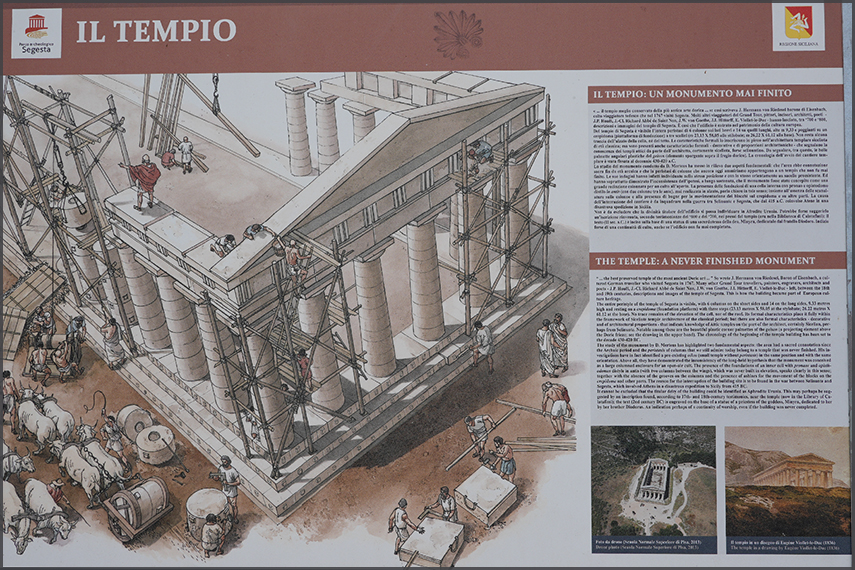
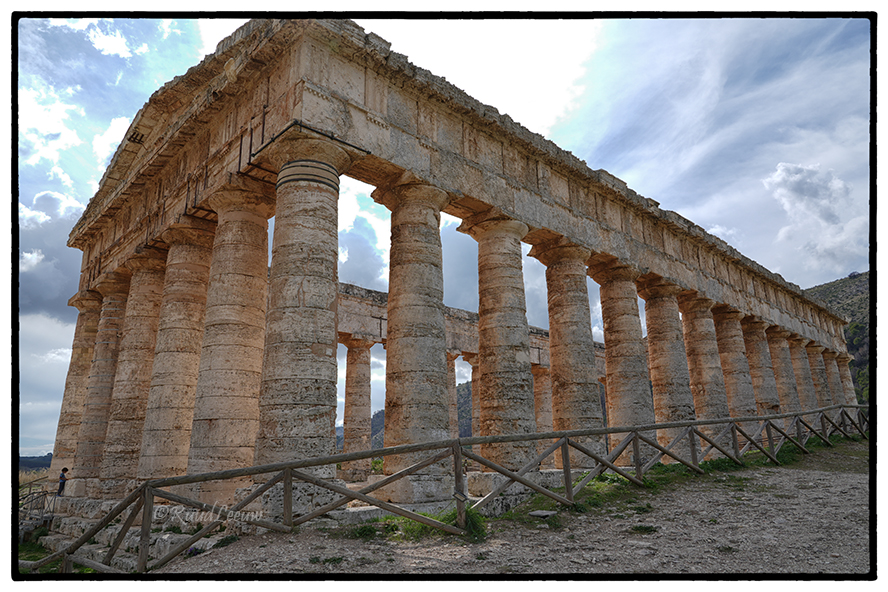
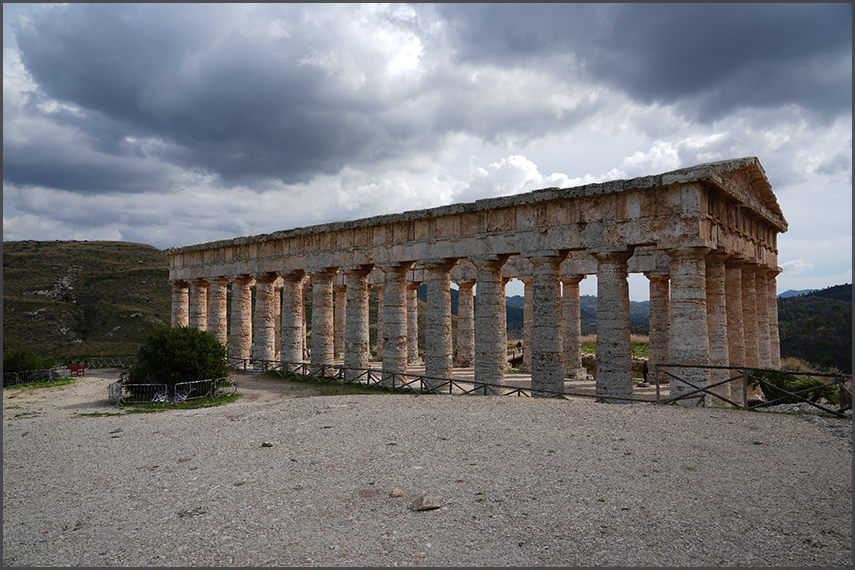
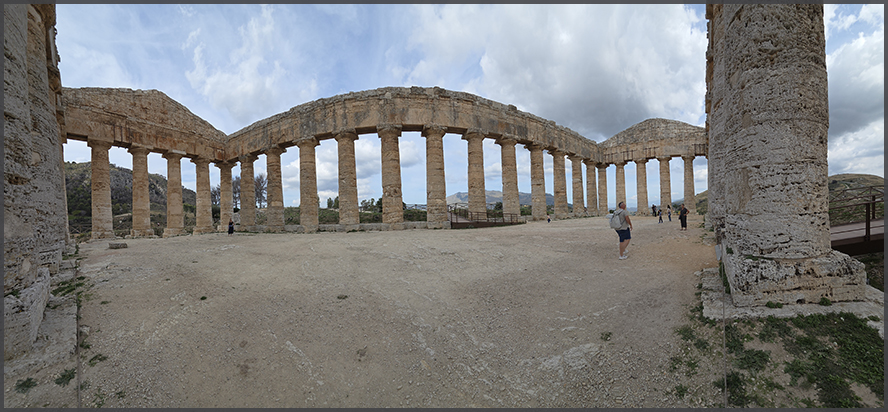
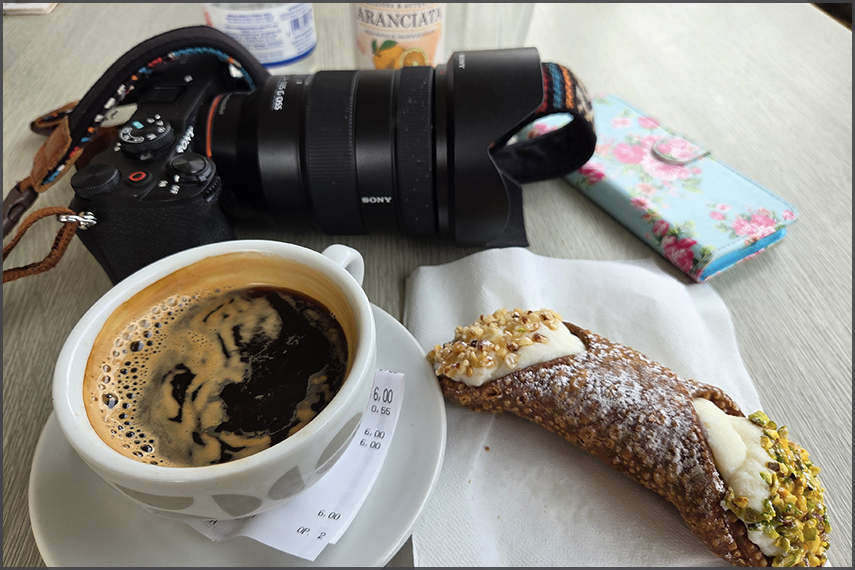
Lunch! Cannoli Siciliani and coffee.
On this trip I used my Sony A7C.II (w/ 24-105 G OSS) and Sony RX10.IV |
ERICE
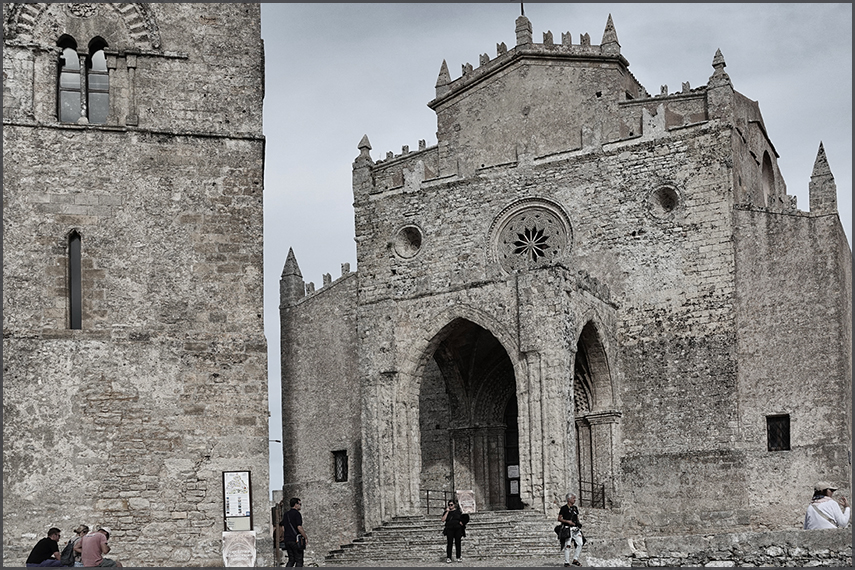
Located on the summit of Monte Erice, the city developed around a site that later became a prominent religious
and military stronghold for the Carthaginians and Romans. It retains its medieval layout and architecture, with
few modern interventions, and occupies a natural vantage point that historically offered strategic control over the Strait of Sicily and the western coastline.

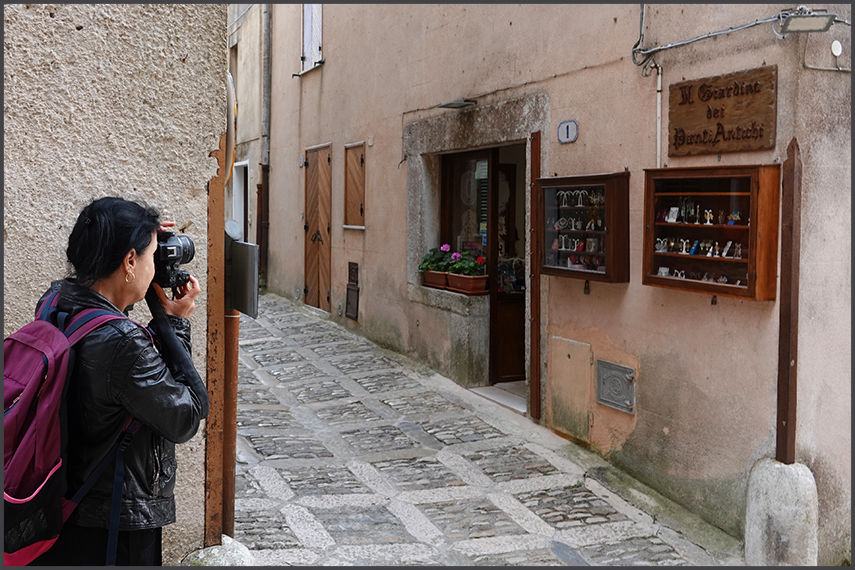
Photographers at play
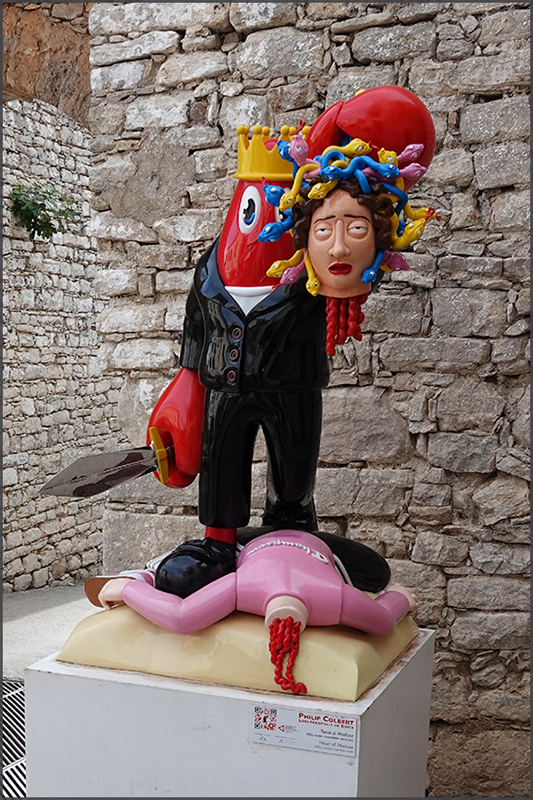
Strange and brutal: art by Philip Colbert
Colbert is a British artist based in London,UK: en.wikipedia.org:_Philip_Colbert
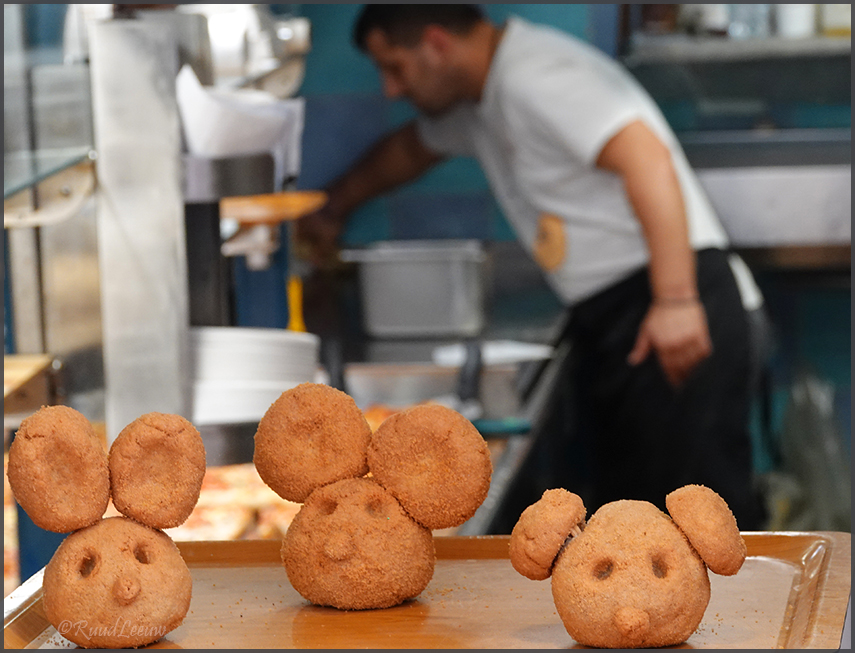
Arancine is typical Sicilian food but can also be used for something funny
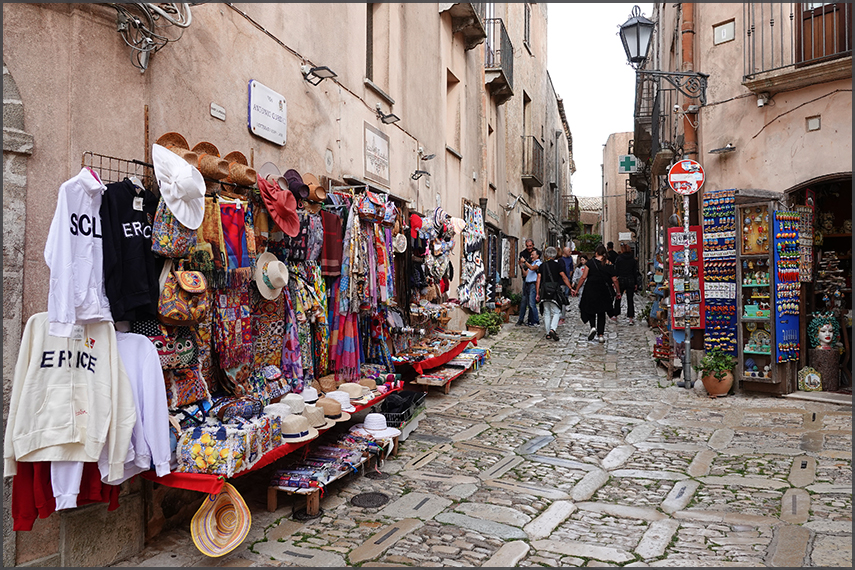
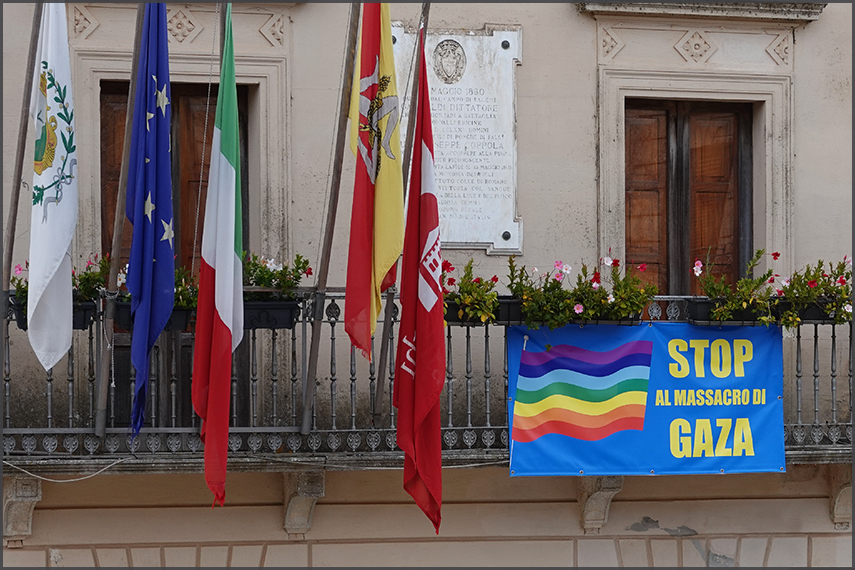
'Stop al massacro di GAZA' - FREE PALESTINE!
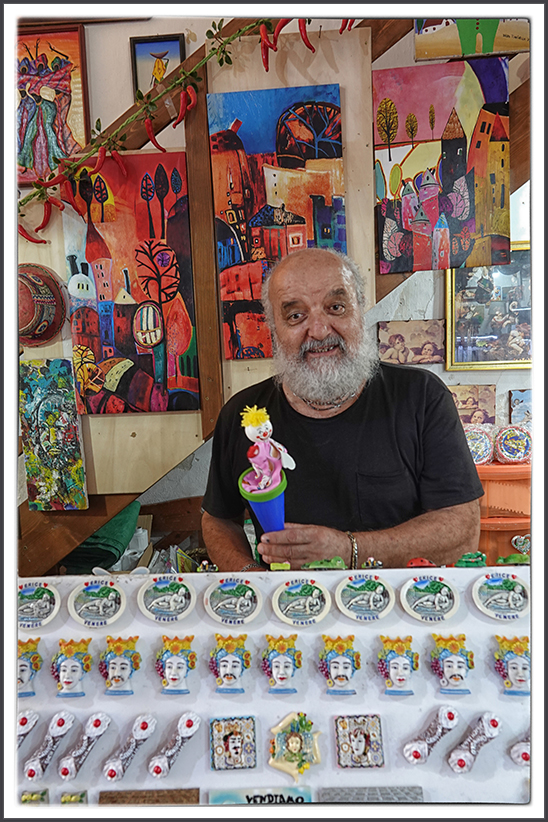
Bought a few souvenirs from Domenico. Had to make a photo, with permission.
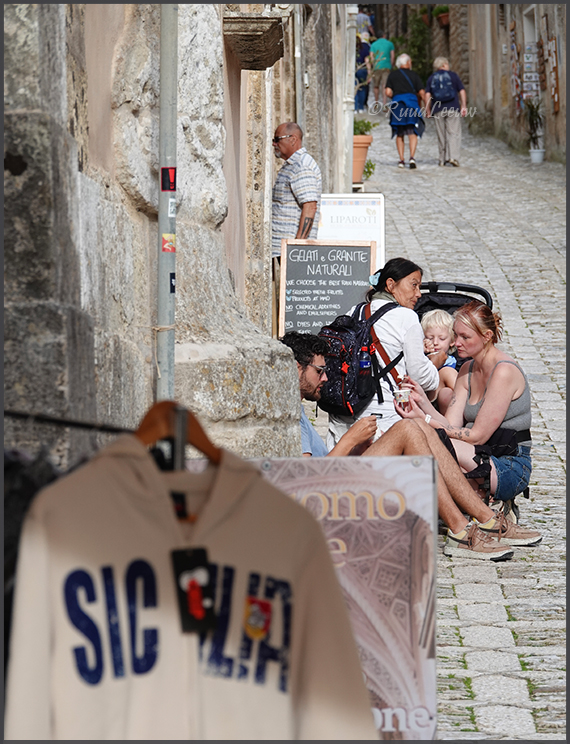
From the 1500s Sicily formed part of Habsburg Spain via the Crown of Aragon, governed as a Spanish viceroyalty.
In 1713 the island passed to the House of Savoy under the Treaty of Utrecht; in 1720 Victor Amadeus II exchanged Sicily for Sardinia, transferring Sicily to the Habsburg monarchy.
In practice, society remained strongly aristocratic: feudal and ecclesiastical estates dominated landholding and local power well into the modern era, especially in Sicily, where large latifundia and church property were prominent.
Within this framework Erice prospered: its population rose from 7.657 in 1584 to about 12.000 by the late 1600s, and the town controlled much of the surrounding countryside.
Many palaces and churches date to this period, and the patterned cobbled paving laid with small stones became a defining feature of the historic centre. [¬ Wikipedia] |
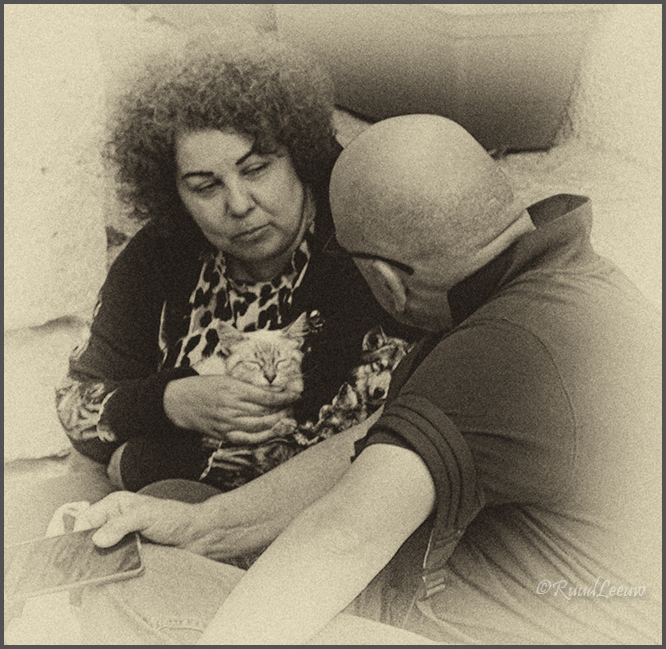
This little pussycat seems to have find a new owner, but total agreement has not been reached yet.
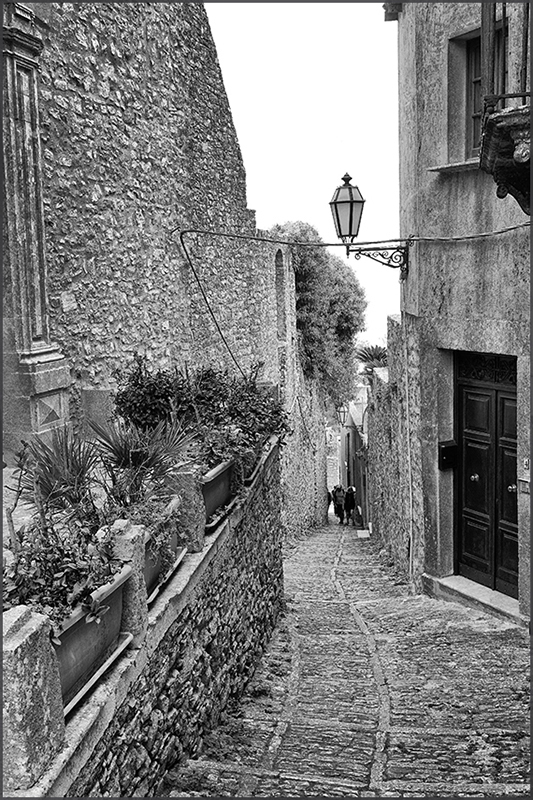
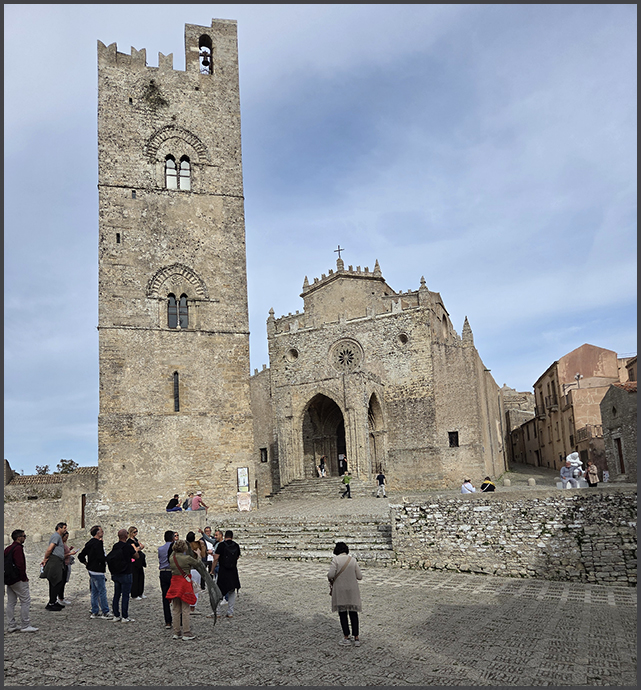
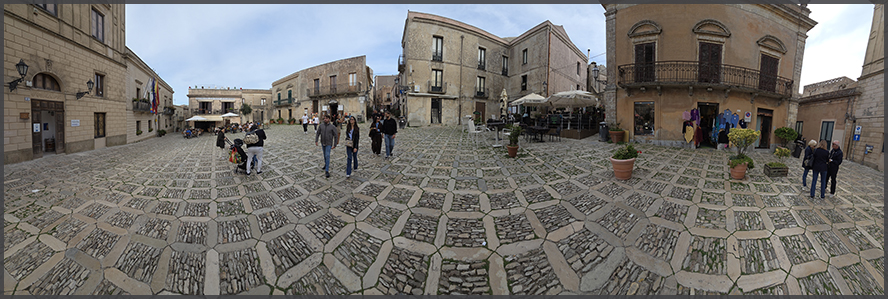
|
GOING DOWN THE MOUNTAIN
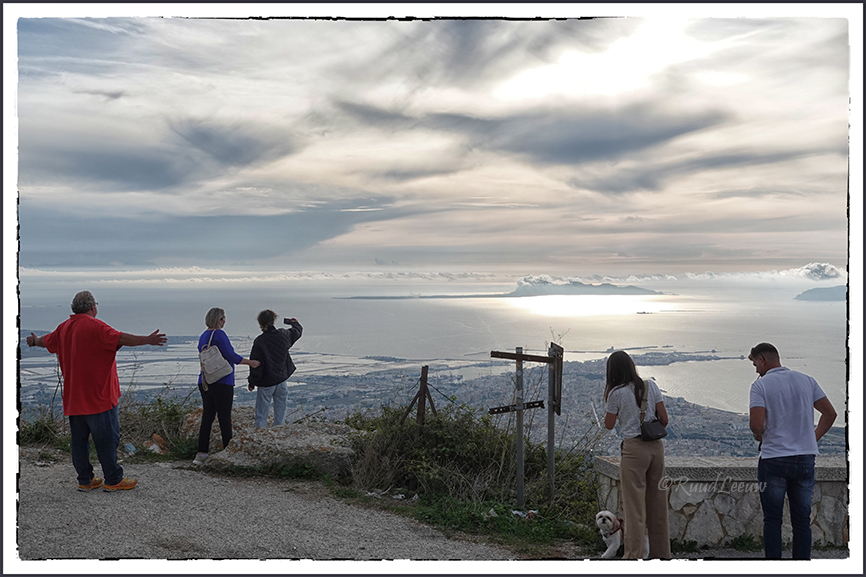
View on Trapani, where nearby our hotel would be.
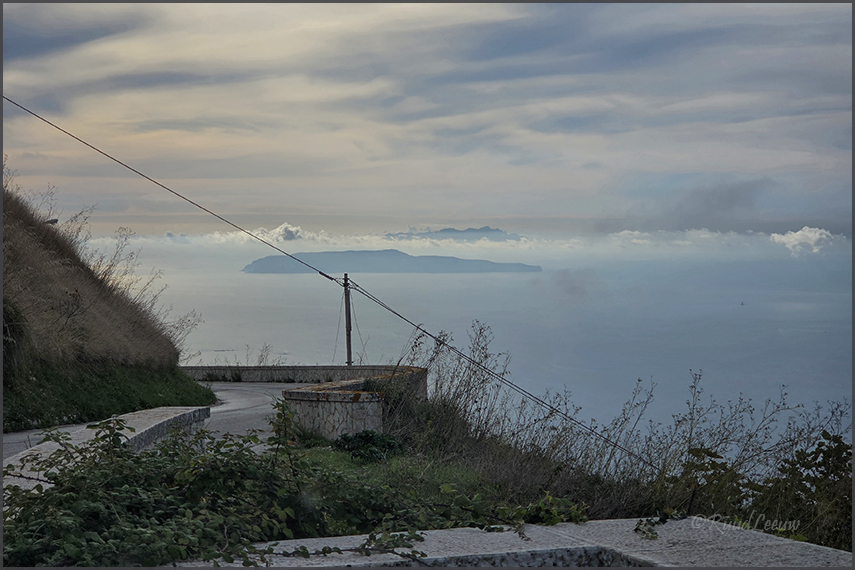
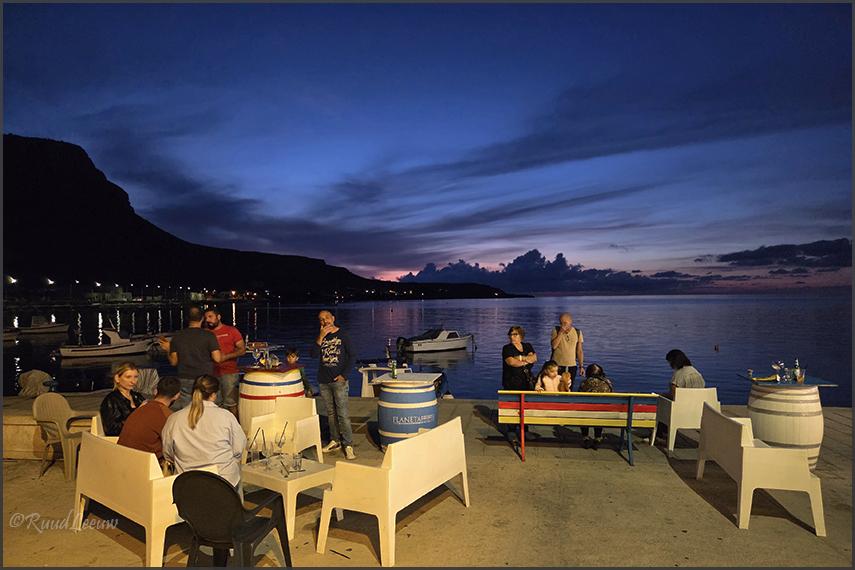
|
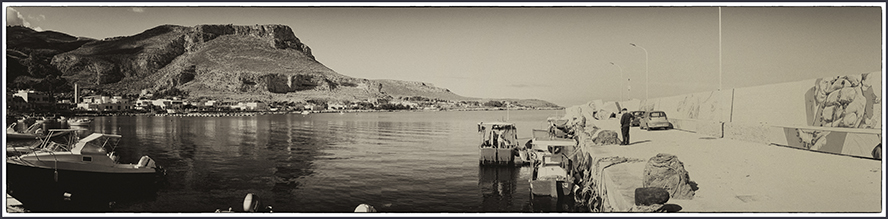
The small fishing harbour Bonagia, our hotel here was La Tonnara di Bonagia. Lovely location.
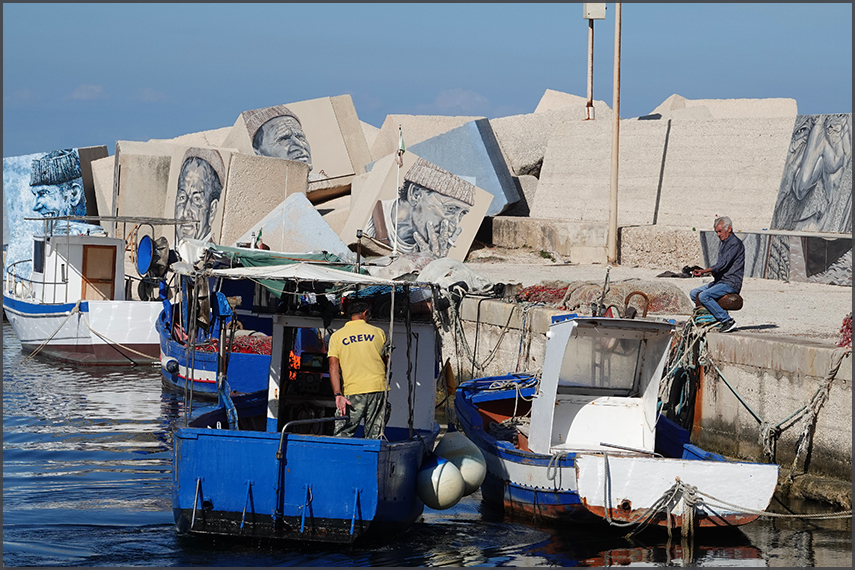
The little boat approaches the dock with fresh fish
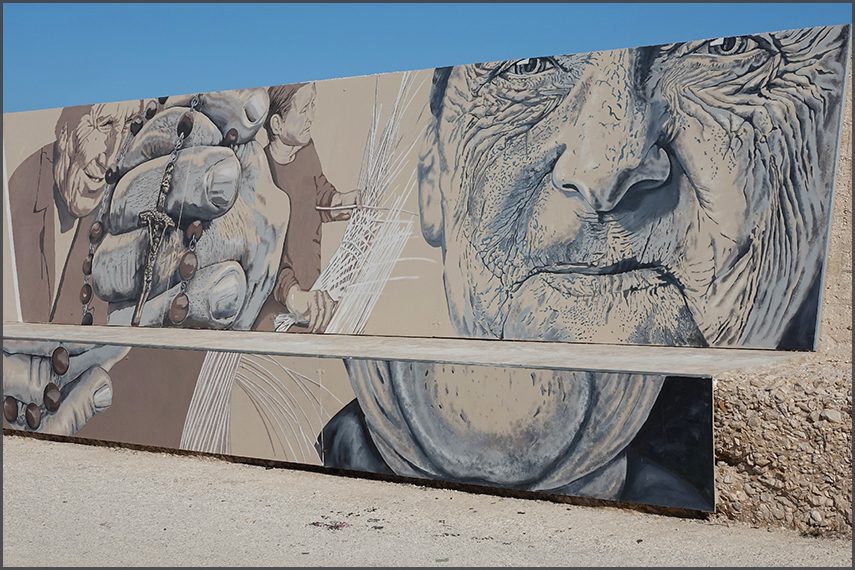
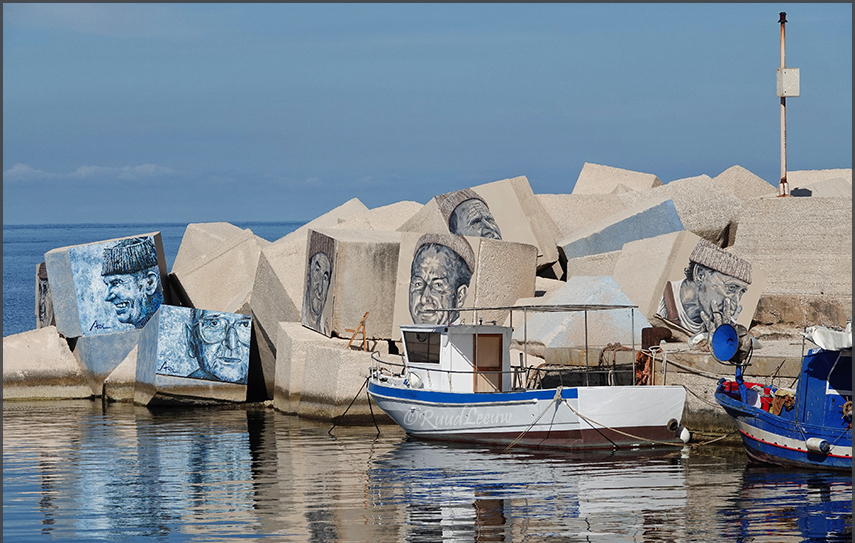
Some splendid art work here on the quay
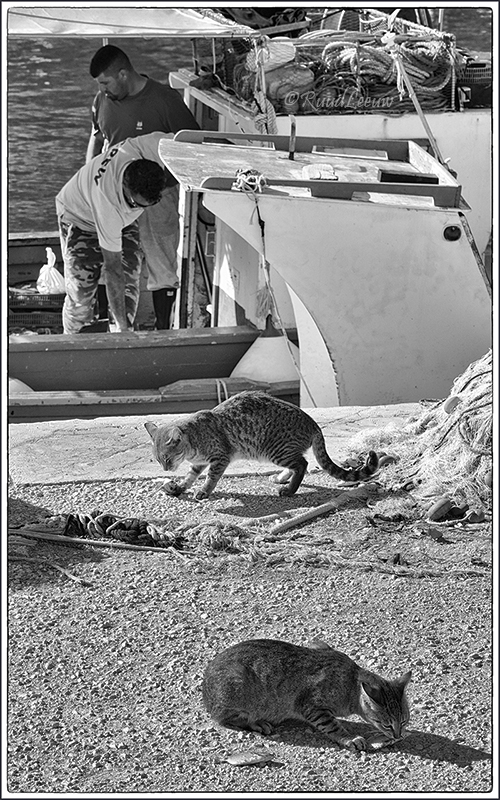
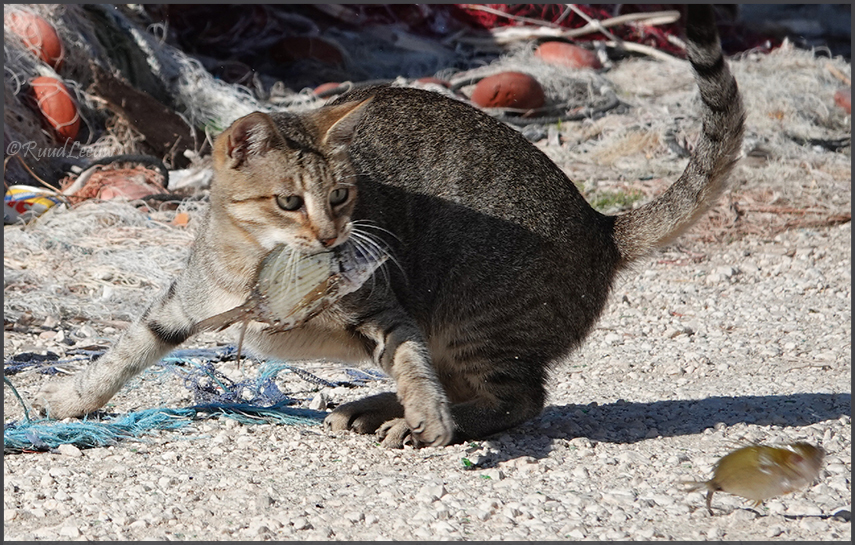
Cats are thrown a few small fish
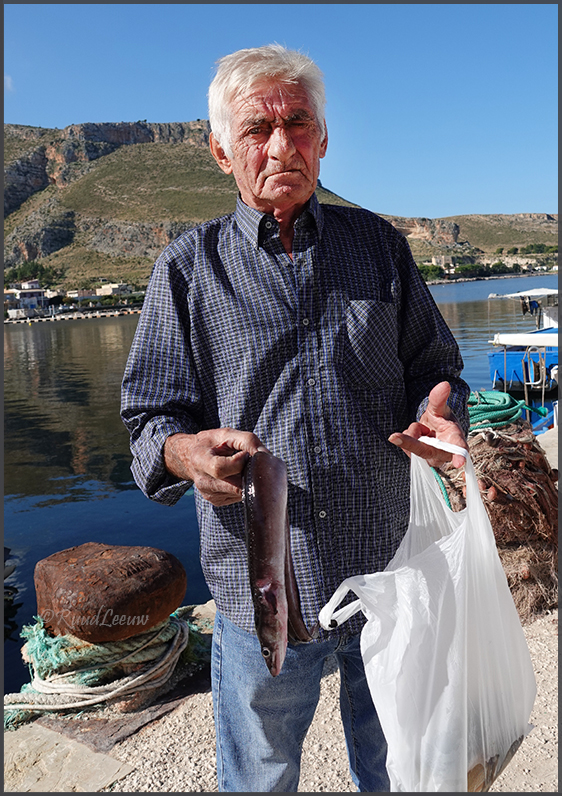
This man had been waiting for the boat to dock and bought his dinner from the fishermen
|
La Tonnara di Bonagia, a fine hotel to stay for exploring the region
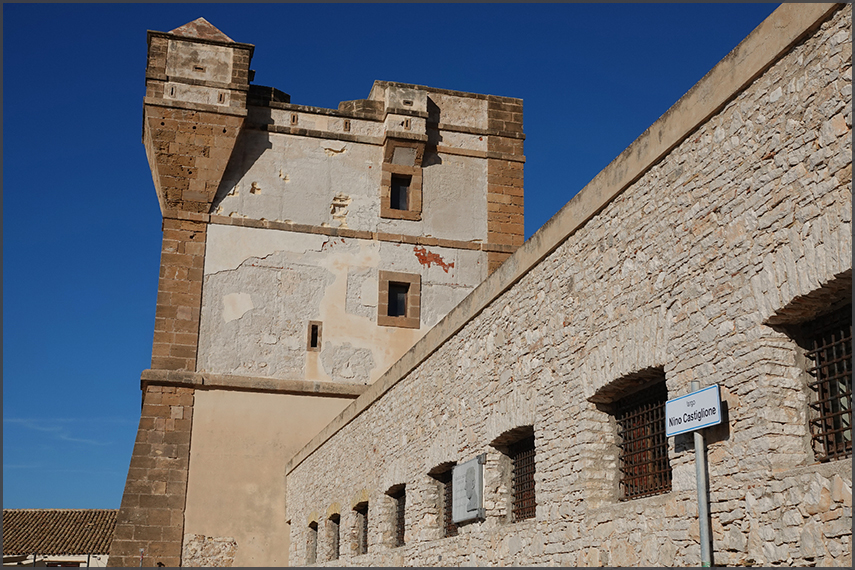
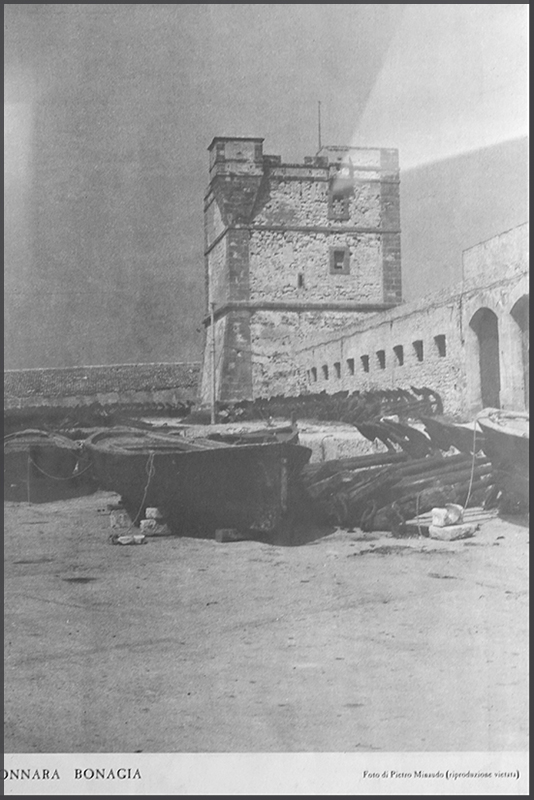
Historic photo in the lobby of the hotel
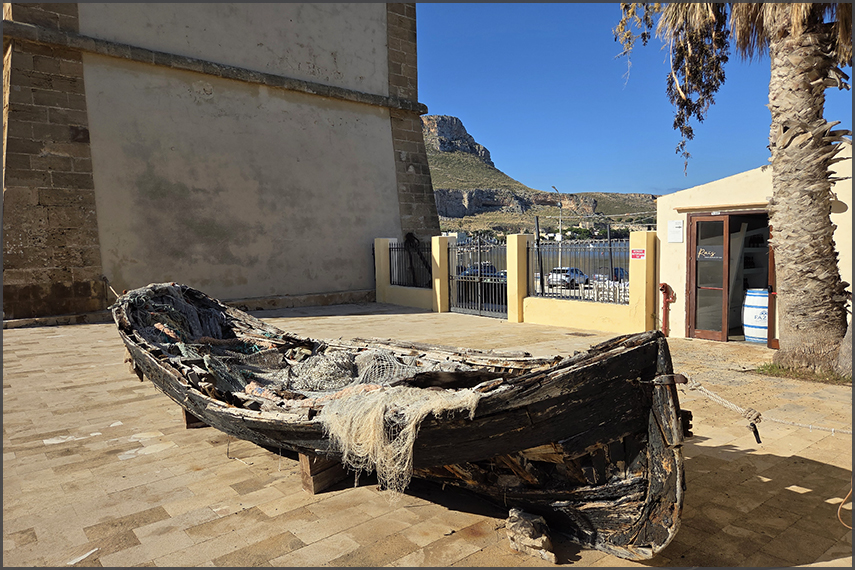
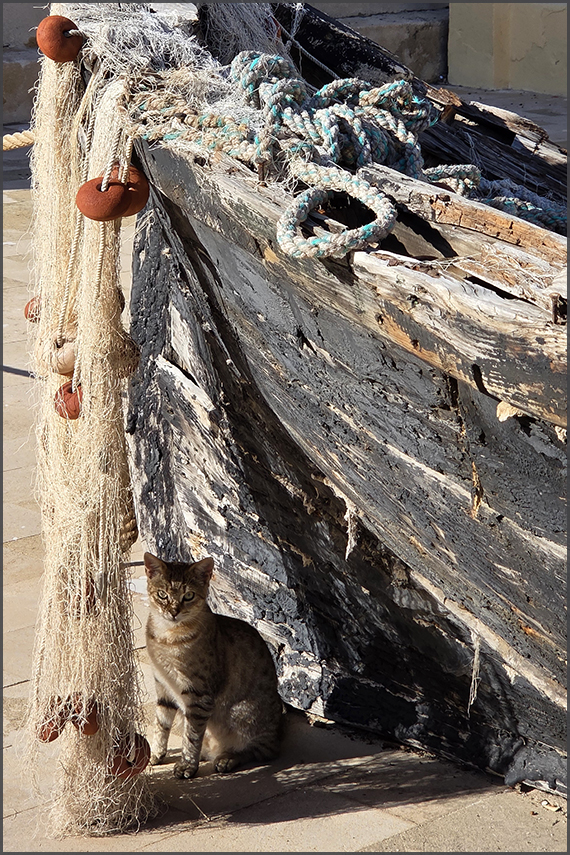
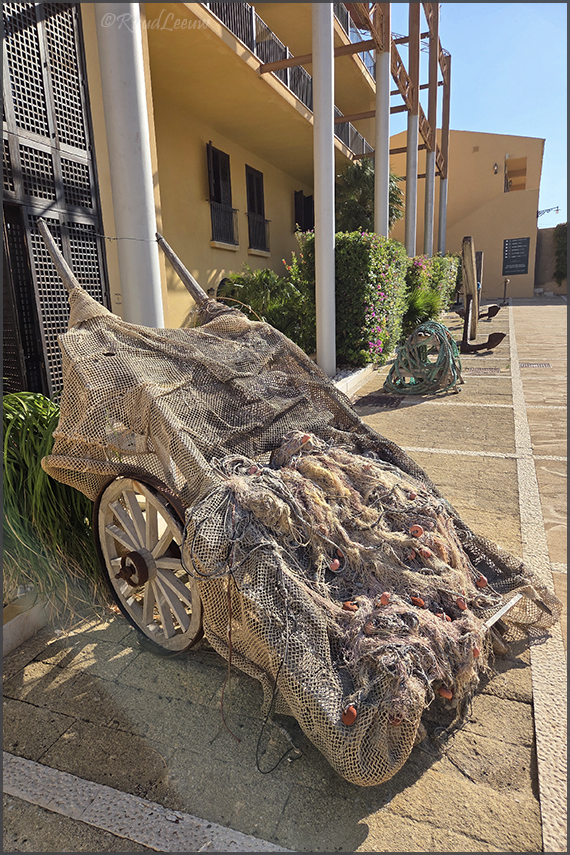
Again a Sicilan cart preserved here, outside the hotel
|
(TO) MOTYA
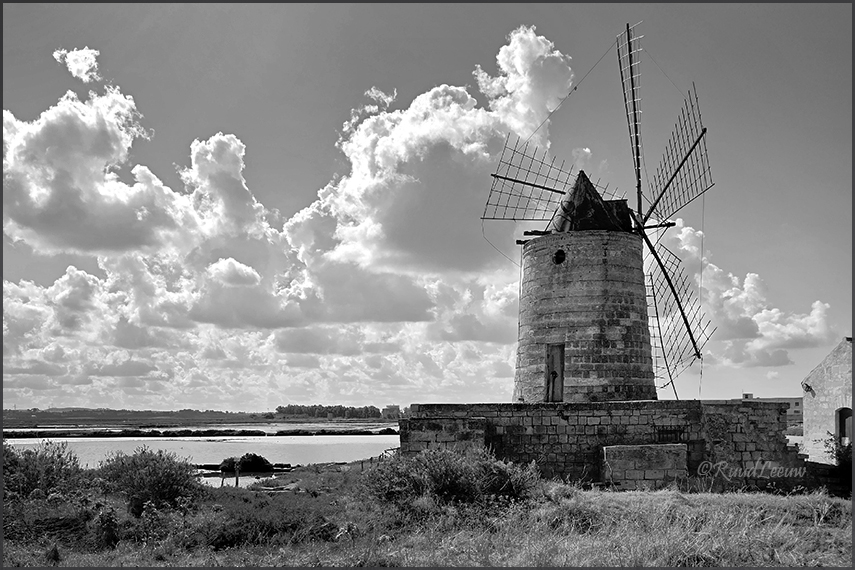
Out on a trip to see the windmills and just outside Trapani we came across a few; but no saltpans.
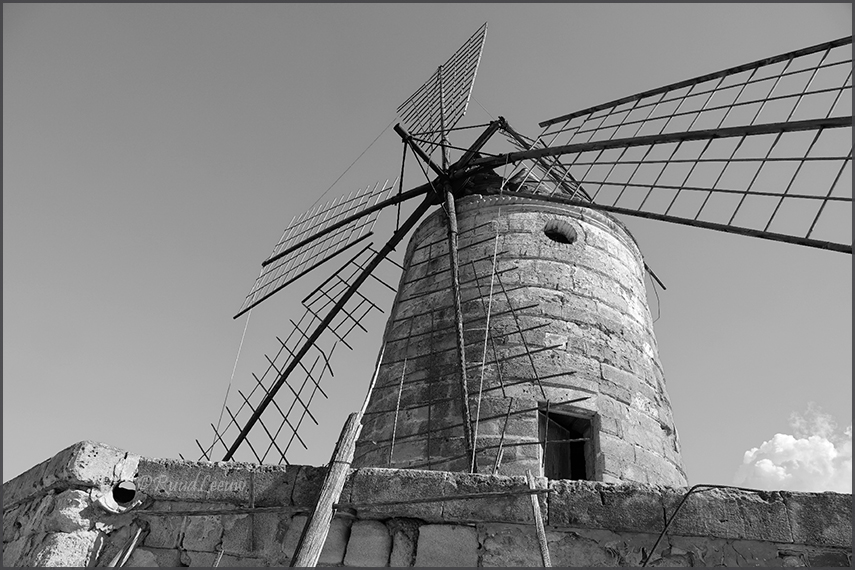
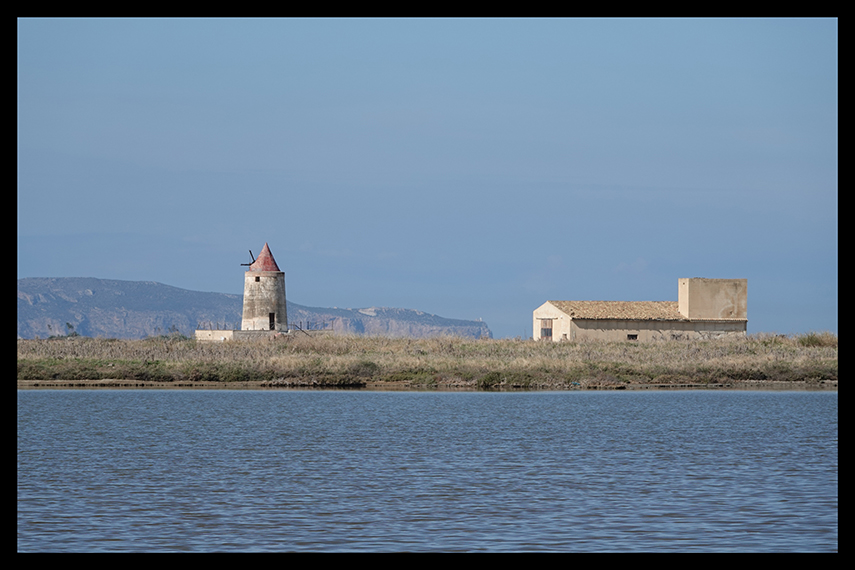
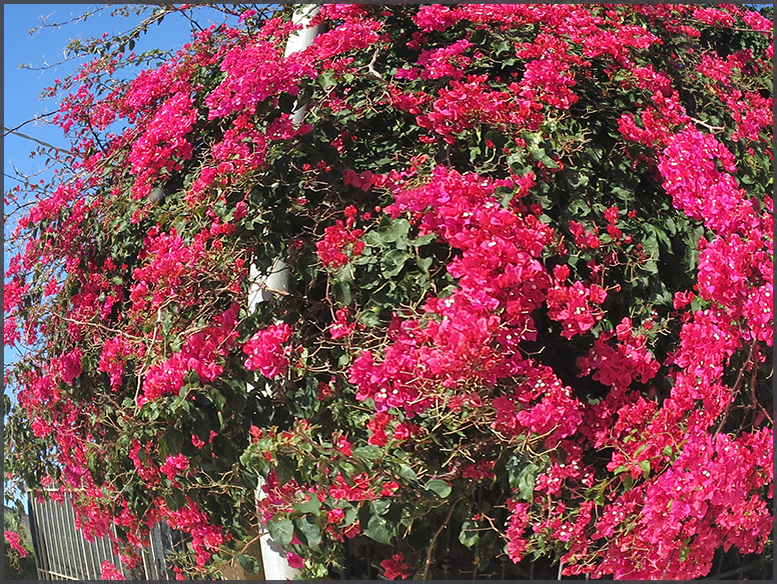
The Bougainvillea bloomed all over the island and in various colours, adding to our summer feeling
Ultimately, having an experience becomes identical with taking a photograph.
---Susan Sontag 'On Photography'
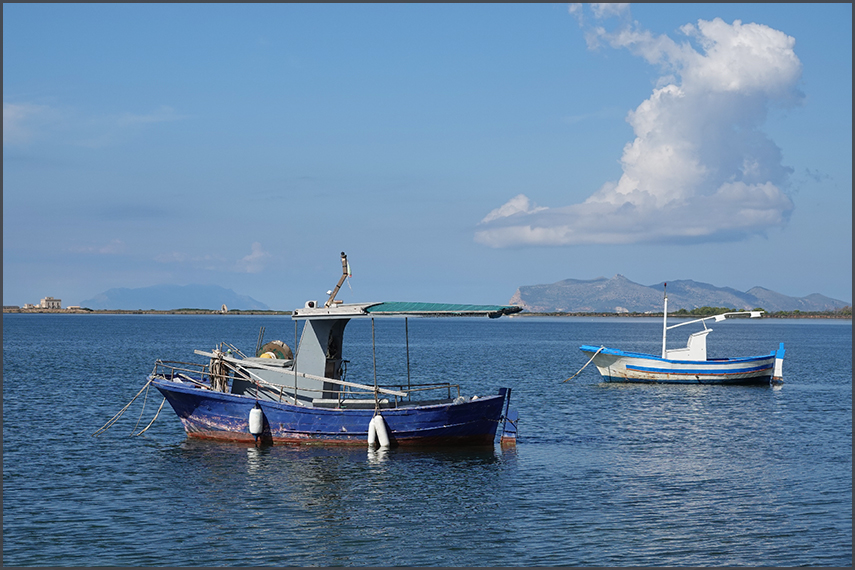
Motya was an ancient and powerful city on San Pantaleo Island off the west coast of Sicily, in the Stagnone
Lagoon between Drepanum (modern Trapani) and Lilybaeum (modern Marsala). It is within the present-day
commune of Marsala, Italy. Many of the city's ancient monuments have been excavated and are visible today.
We only visited the salt pans, left the monuments to a (possible) next visit.
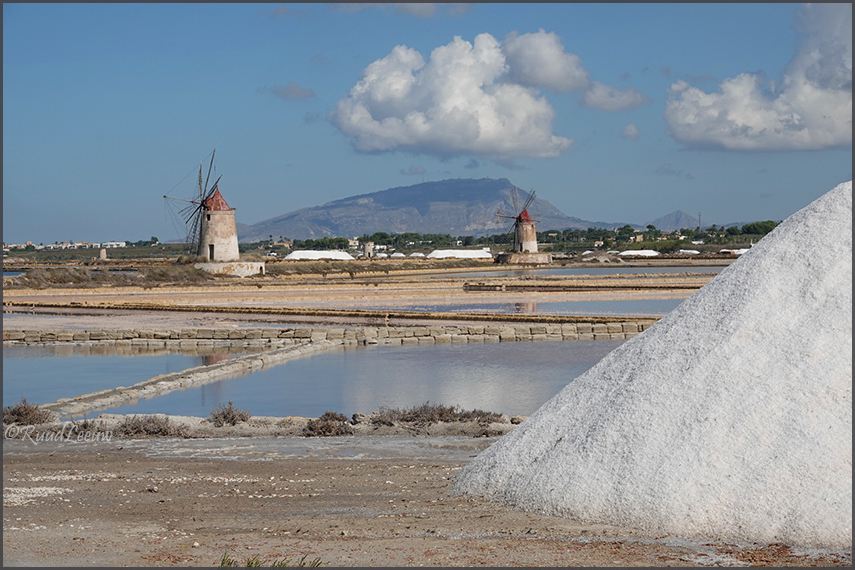
Saltpans on the Stagnone Lagoon, plus those typical windmills
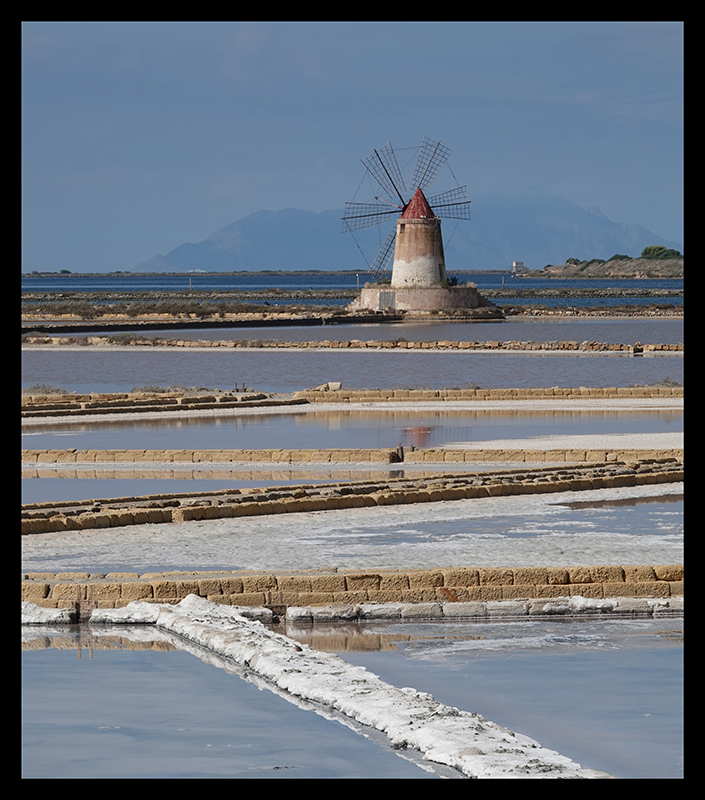
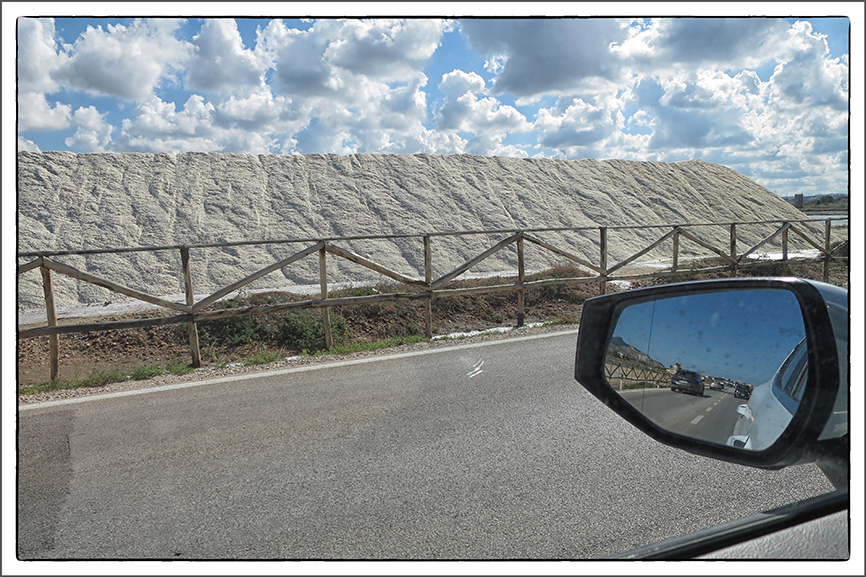
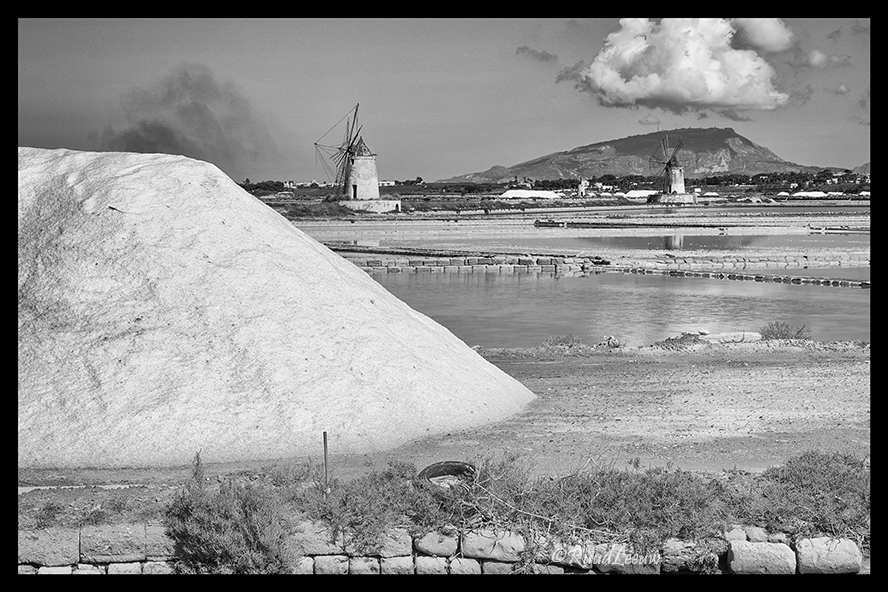 Motya is the latinization of the island's Greek name, variously written Motýa (Μοτύα) or Motýē (Μοτύη).
The Greeks claimed the place was named for a woman named Motya whom they connected with the myths around Hercules.The town's Italian name appears as both Mozia and Mothia; its Sicilian name is Mozzia.
|
MARSALA
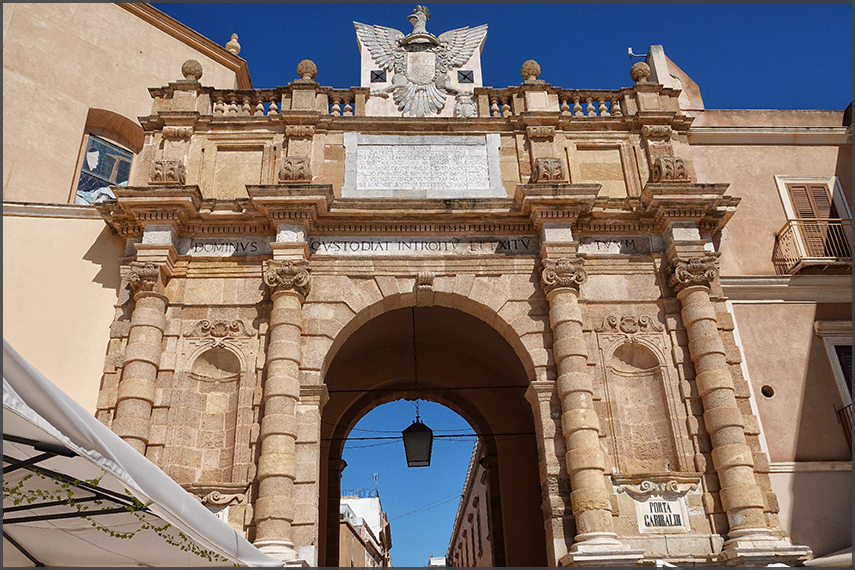
We parked our car near the Porta Garibaldi
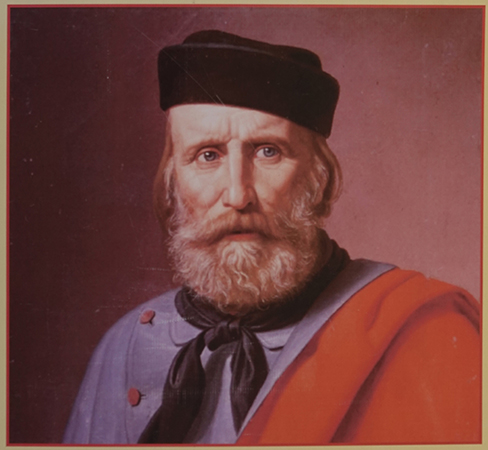
Giuseppe Maria Garibaldi (b.04July1807 – d.02June1882) was an Italian general, revolutionary and republican.
He contributed to the Unification of Italy ( Risorgimento) and the creation of the Kingdom of Italy.
He is considered to be one of Italy's 'fathers of the fatherland', along with Camillo Benso di Cavour, King Victor Emmanuel II and Giuseppe Mazzini.
Garibaldi is also known as the 'Hero of the Two Worlds' because of his military enterprises in South America
and Europe. [ ¬ Wikipedia] |
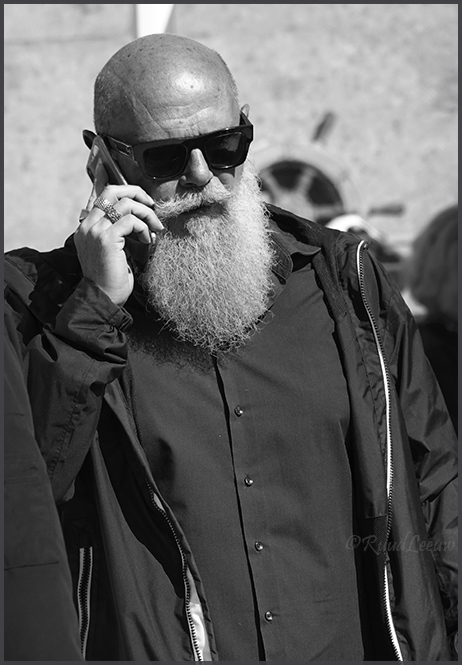
On the phone
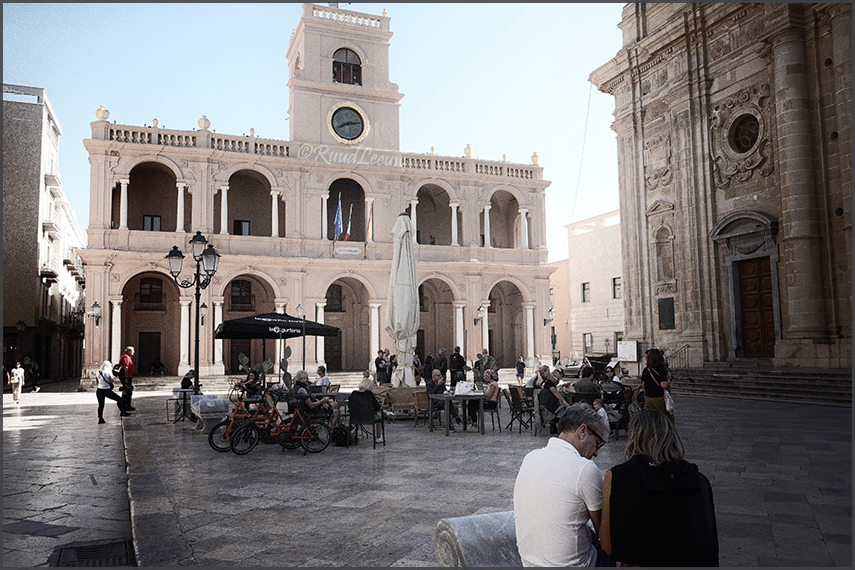
A quick walk around the block
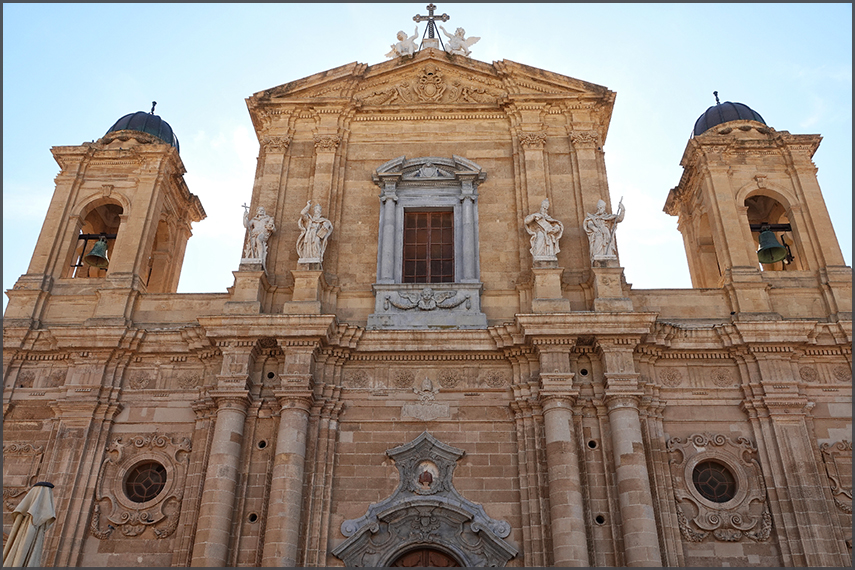
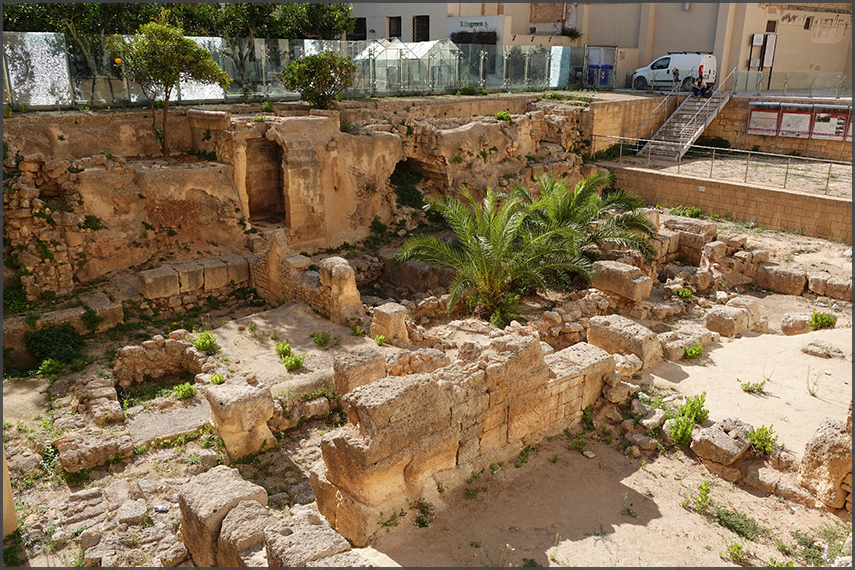
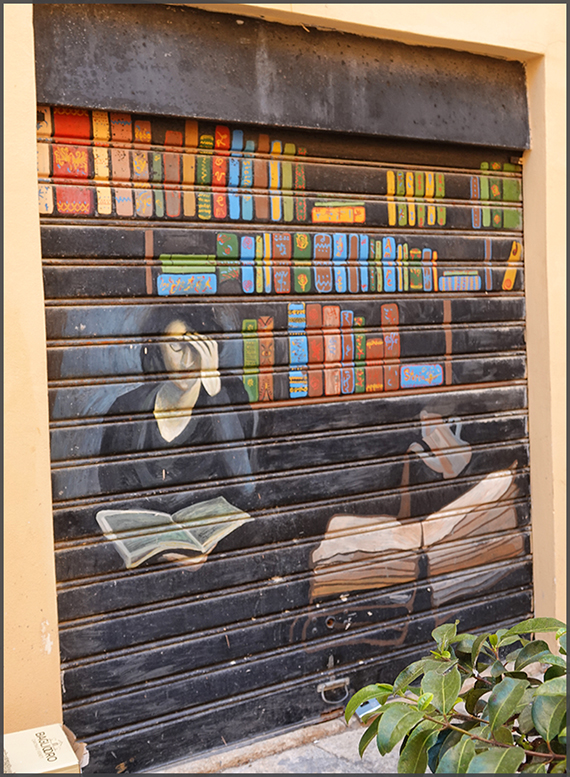
For my love of books and all the 'fascination' they contain
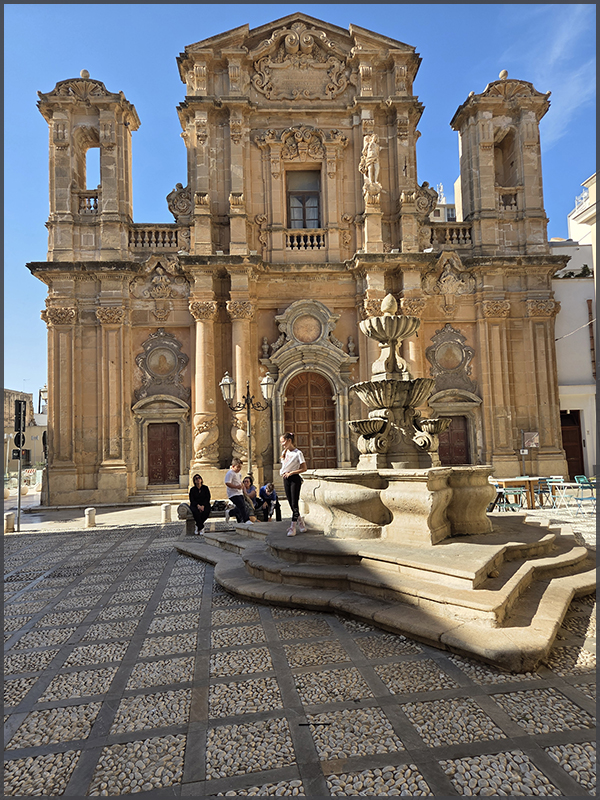
|
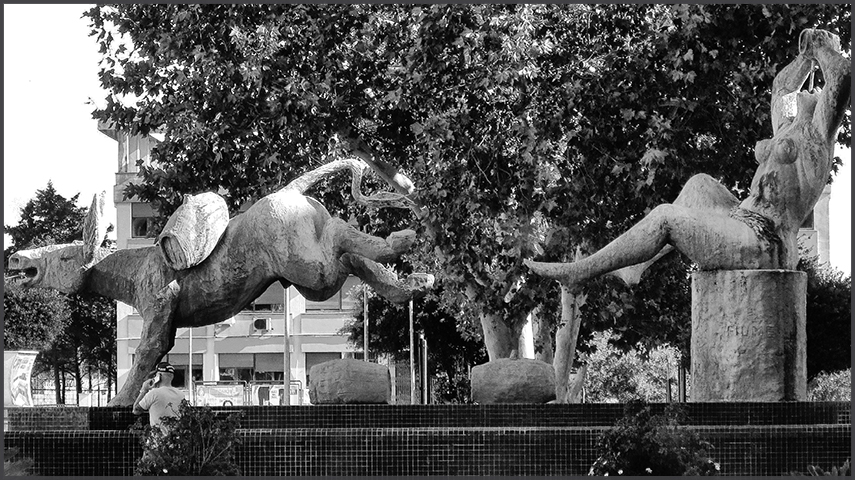
A rather hilarious (joy of living?) statue / fountain
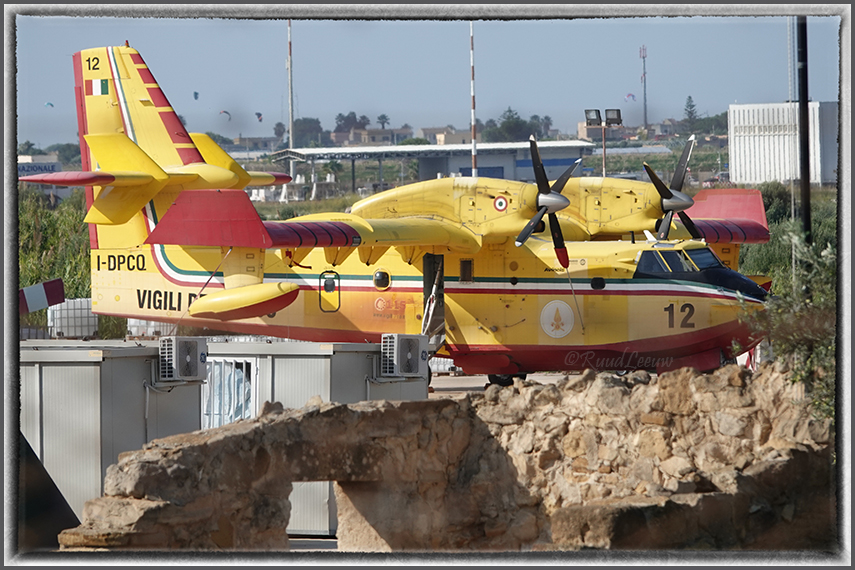
Canadair CL.415 I-DPCQ/12 of the Vigili del Fuoco, at (Trapani–)Bigli Airport (or Aeroporto Vincenzo Florio
di Trapani-Birgi). Photo taken from the road (on the safe side of the guardrail), over the fence and
through the barbed wire.
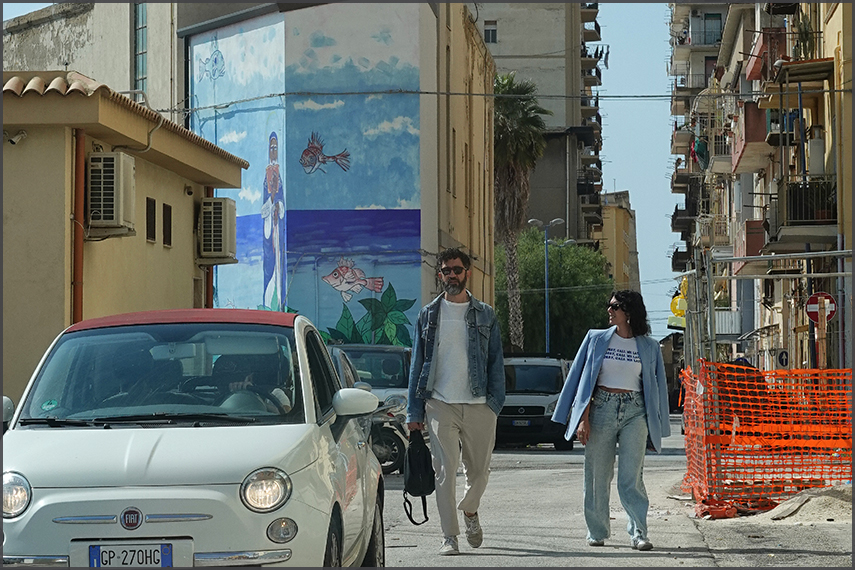
This photo could not have been taken outside Italy!
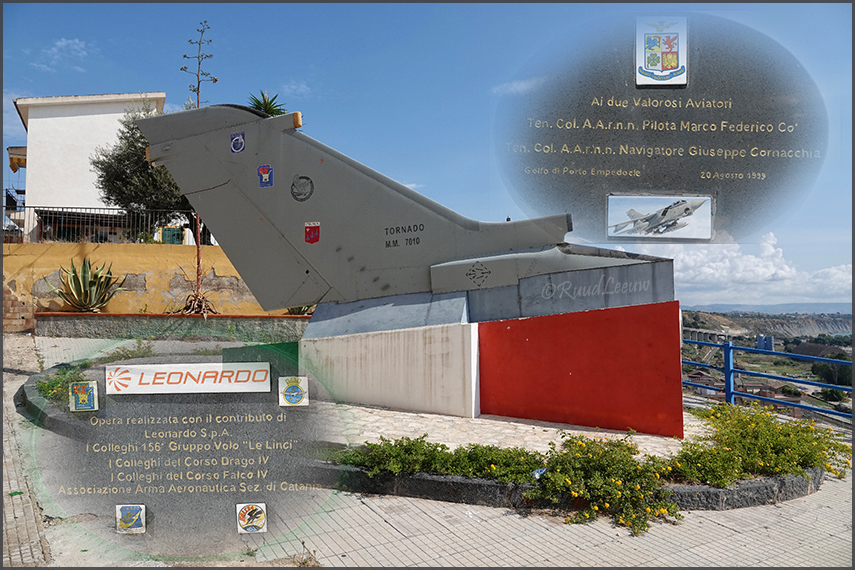
MRCA/Panavia Tornado IDS, m.m.7010
(36-51), crashed on 20Aug1999.
|
AGRIGENTO
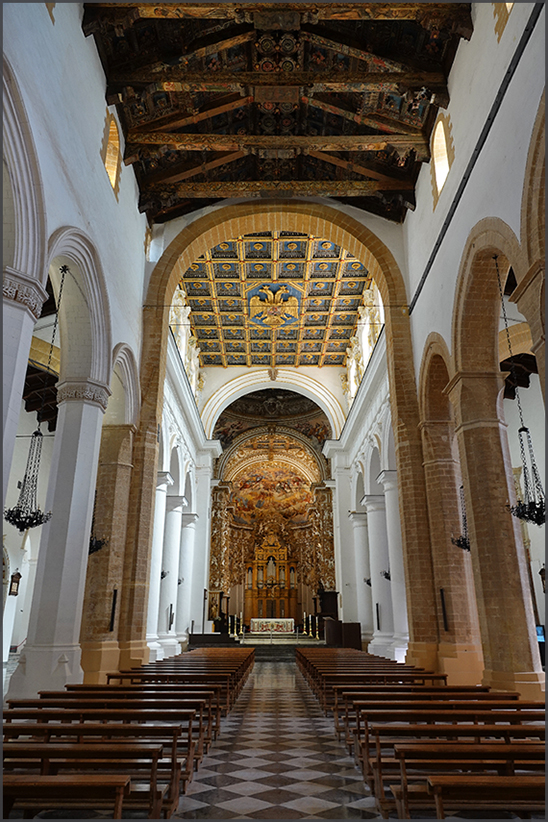
Here we only visited the Agrigento Cathedral (Italian: Duomo di Agrigento, Cattedrale Metropolitana
di San Gerlando). It is a Roman Catholic cathedral in Agrigento, dedicated to Saint Gerland. Founded in
the 11th century, it was consecrated in 1099 as the seat of the restored bishop of Agrigento.
The diocese was elevated to an archdiocese in 2000, and the cathedral is thus now the seat of the
Archbishop of Agrigento. [¬ Wikipedia]
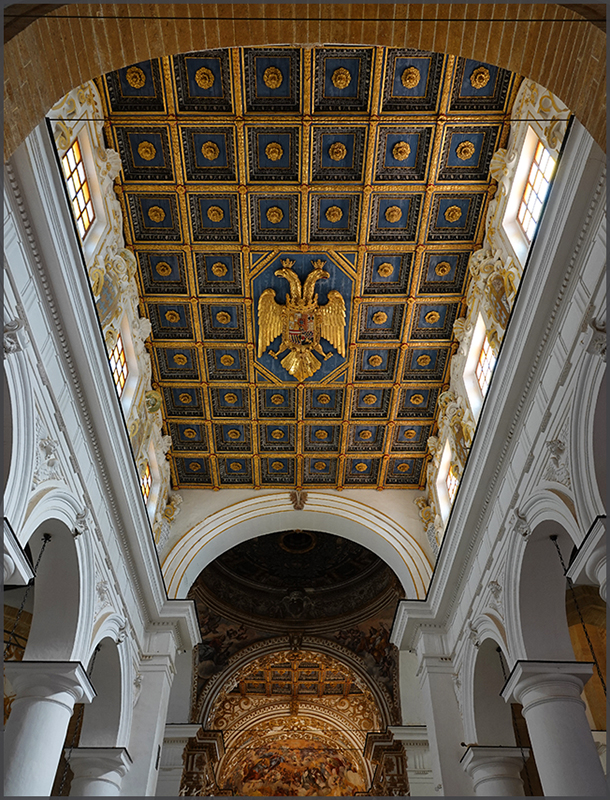
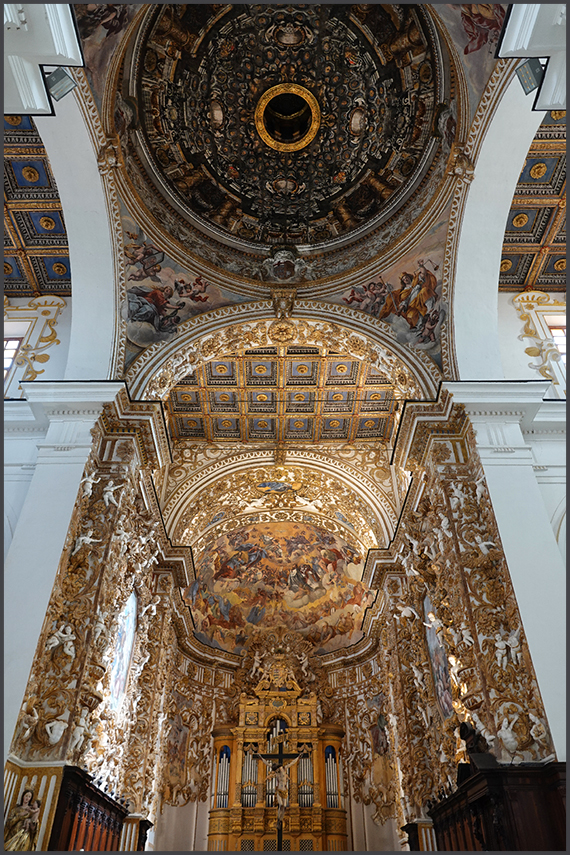
It certainly will raise your eyes upwards..
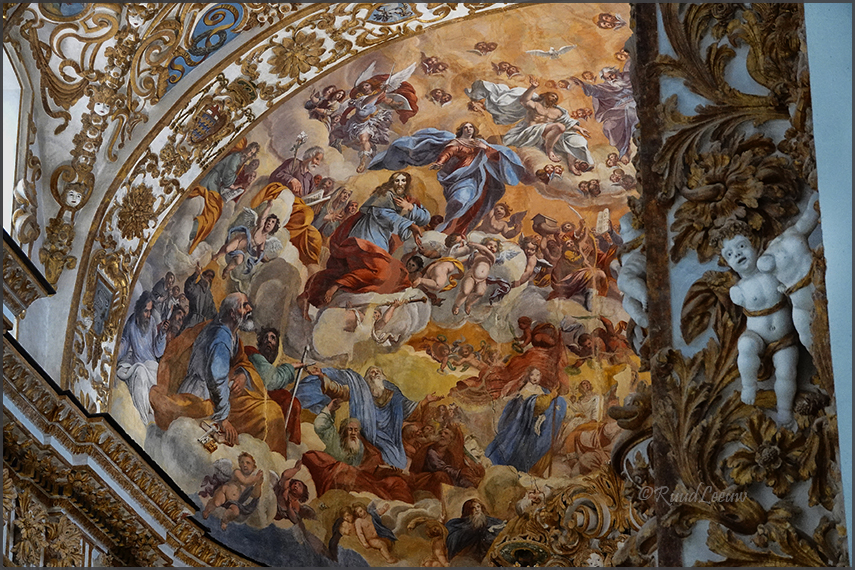
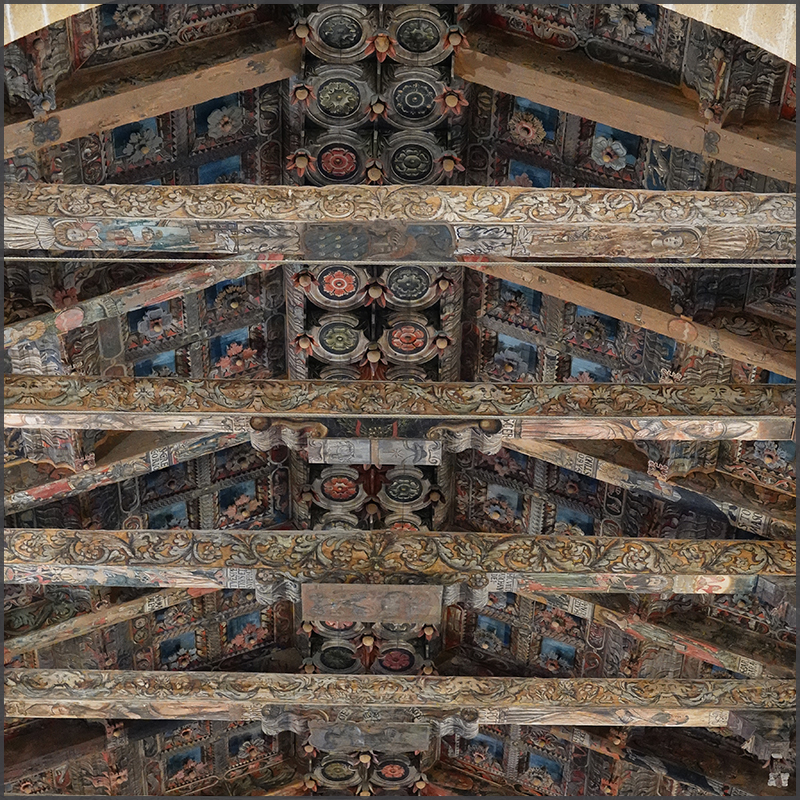
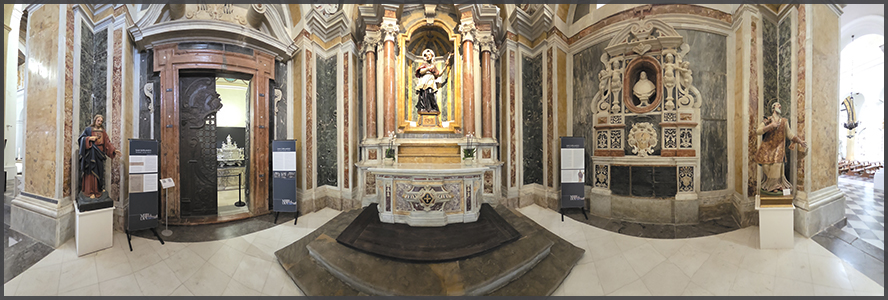
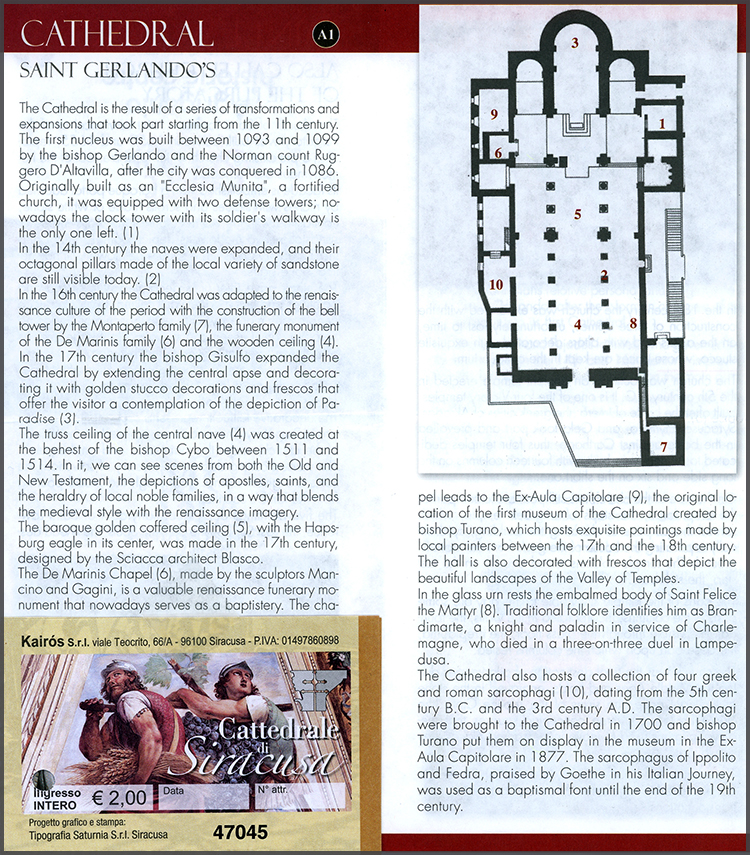
Cathedral Saint Gerlando's
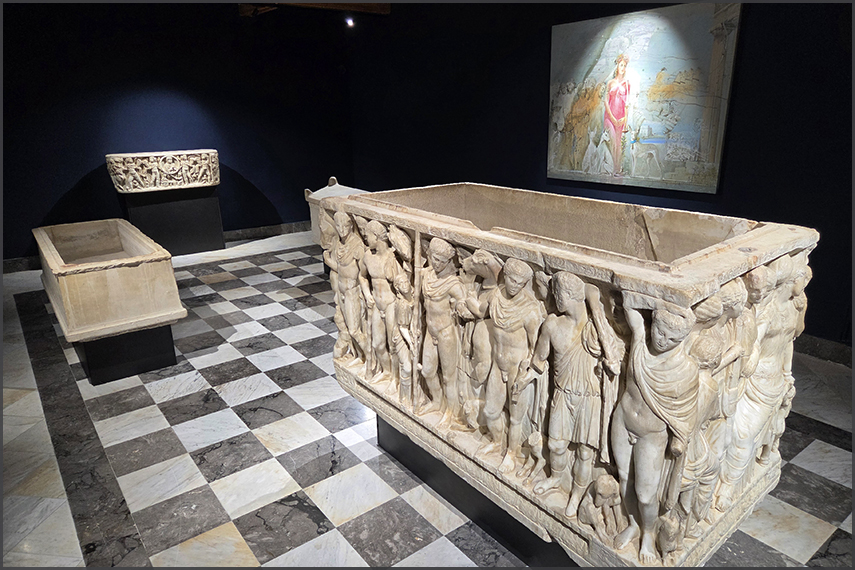
Four Greek and Roman sarcophagi are on view here; they date back to 5th century B.C. and 3rd century A.D.
|
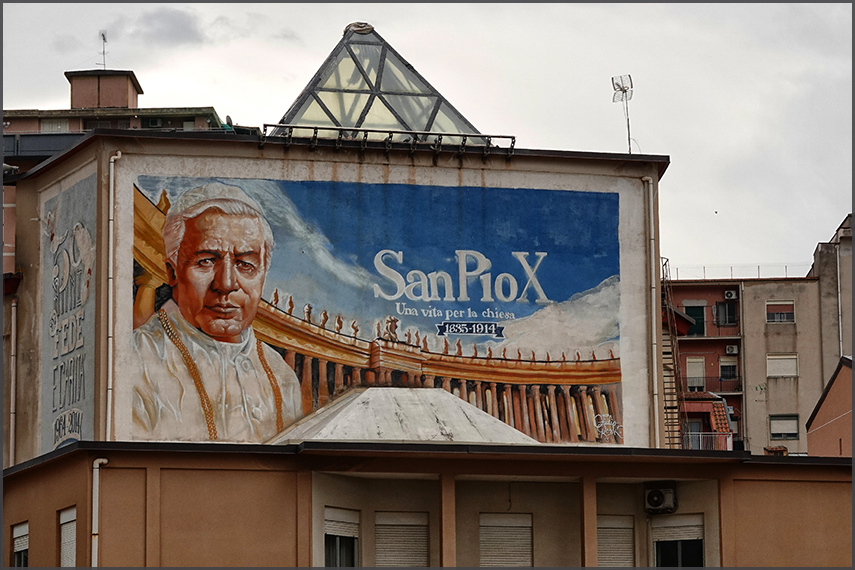
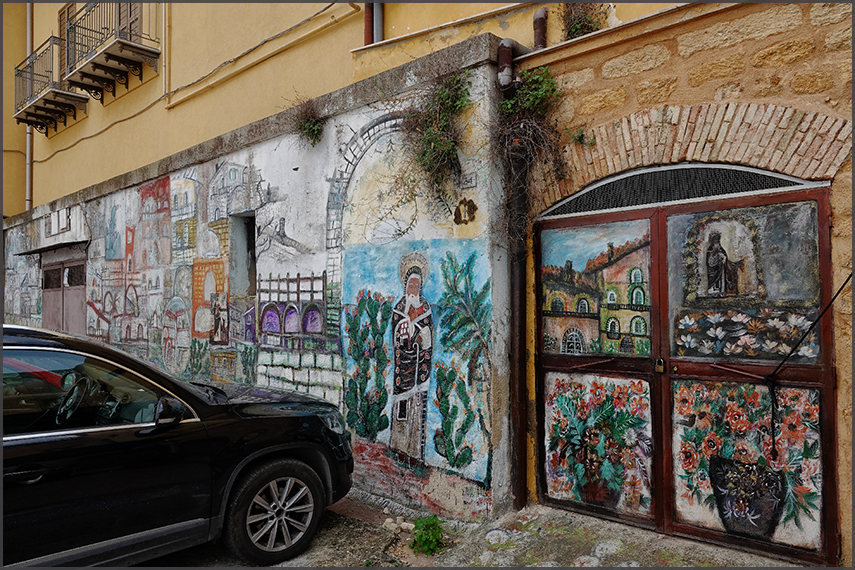
Mural: San Pio X, 'una vieta per la chiesa', 1835-1914
>> wikipedia.org:_Papa_Pio_X <<
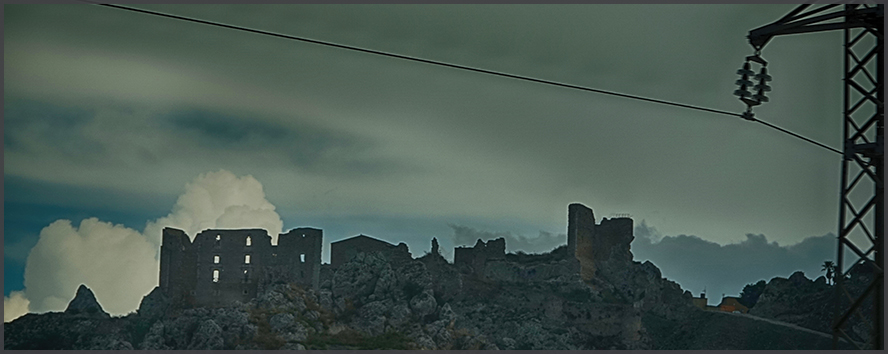
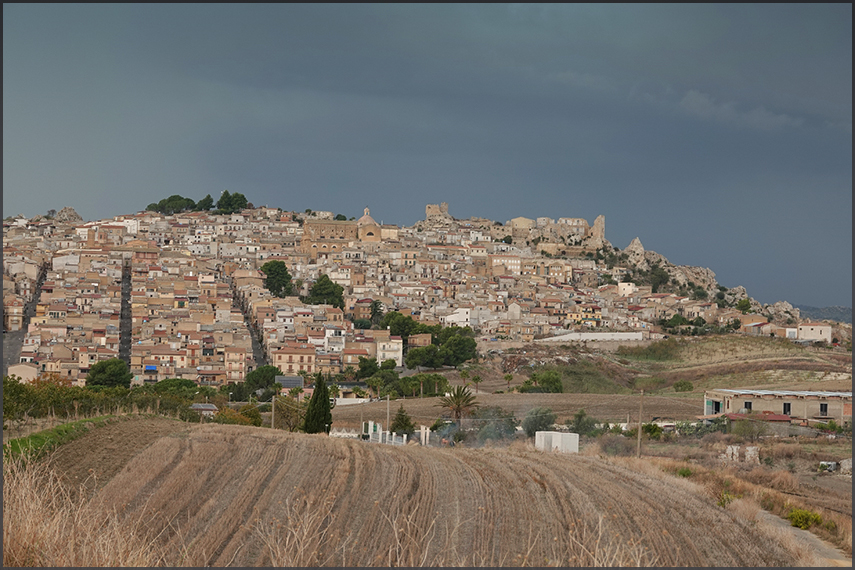
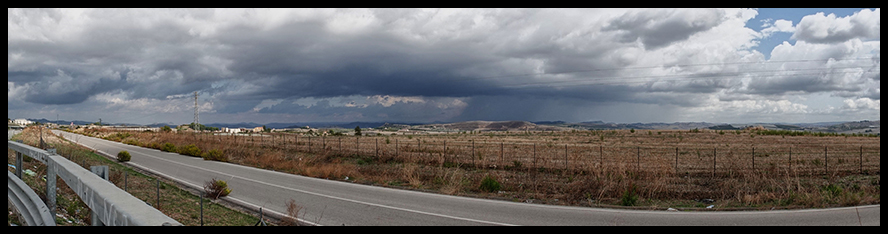
Dark clouds looming, it seemed autumn was approaching, heralded by lightning and thunder
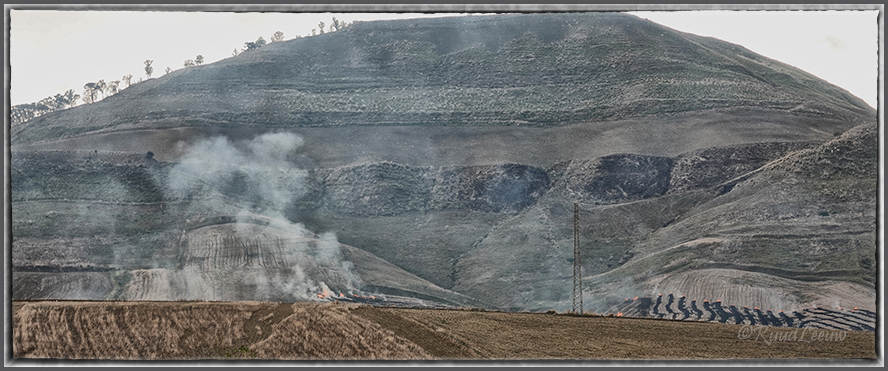
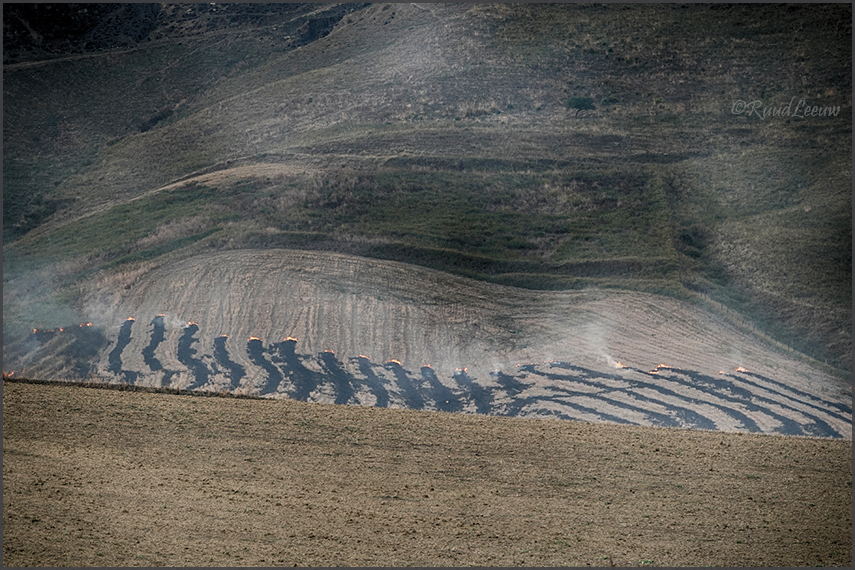
Farmlands being burned; our SatNav gave us twice alerts for our routes being effected by these smokey fires
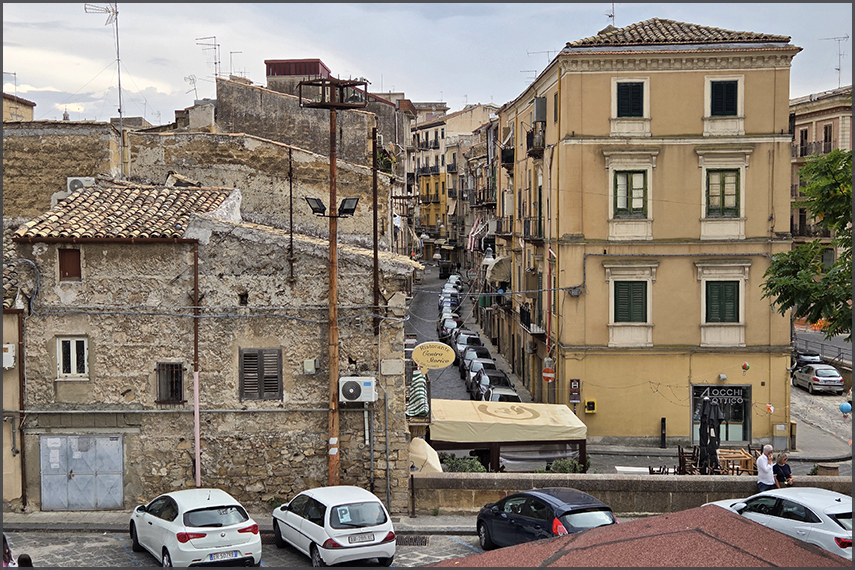
A quick stop in Caltanissetta for a reference to the Mafia in a book I had been reading. It was only a few
minutes from our final B&B this trip.
Giuseppe Di Cristina (b.b.22Apr1923 – d.30May1978) was a powerful mafioso from Riesi in the province of Caltanissetta.
Di Cristina, nicknamed 'la tigre', was born into a traditional Mafia family, his father Francesco Di Cristina and his grandfather were men of honour as well.
In 1975 he became the head of Cosa Nostra in the Caltanissetta province and a member of the Interprovincial Commission of the Mafia.
Three years later he was killed by a rival Mafia faction, the Corleonesi of Totò Riina and Bernardo Provenzano. His death was a prelude to the Second Mafia War, which would start in 1981 after the Corleonesi killed Stefano Bontade. [¬ Wikipedia] |
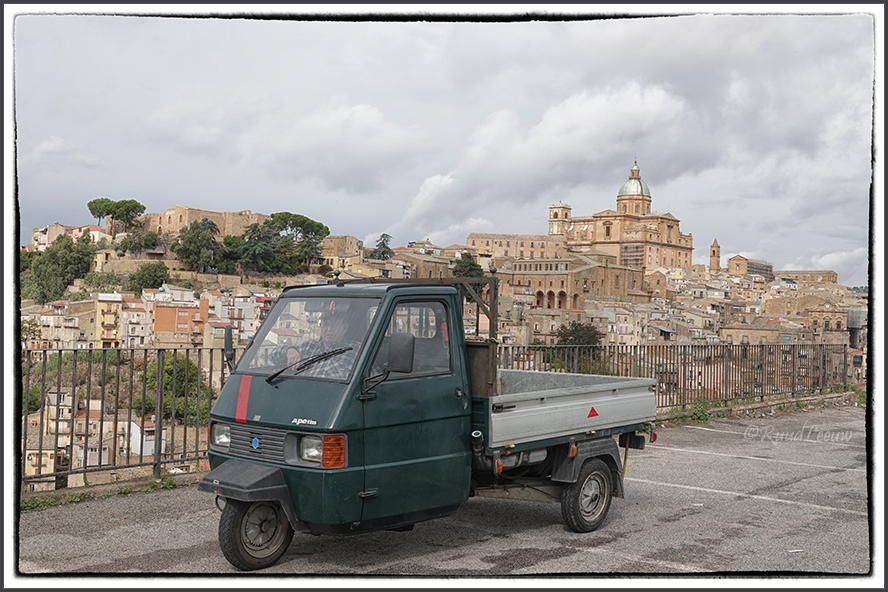
Piazza Armerina (Ciazza in Gallo-Italic of Sicily, Chiazza in Sicilian) is an Italian town of 20.569 inhabitants of the free municipal consortium of Enna in Sicily.
The territory of Piazza Armerina rises on a hill of the southern Erei mountains, in the central-eastern part of Sicily, at 697m above sea level.
Dominating the skyline is the Cathedral of Piazza Armerina, dedicated to Maria Santissima Delle Vittorie; it is a large place of worship of mixed Gothic, Mannerist and Baroque style, with a 40m high bell tower dating back to the 15th century, formerly related to the previous church, in place of which the current cathedral was erected.
{¬ Wikipedia] |
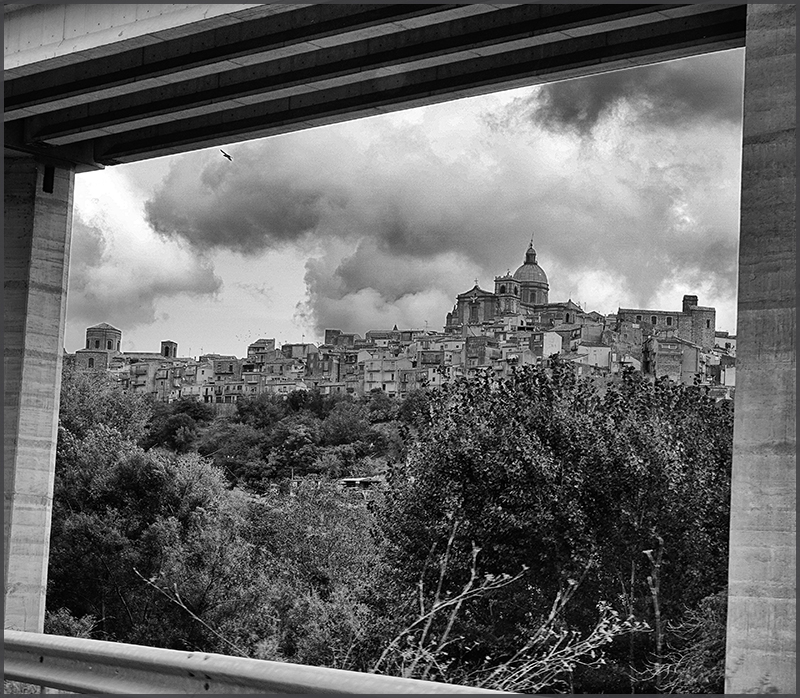
We did not visit Piazza Armerina except for a pizza dinner; I did notice tourgroups have this city
often in their program. Perhaps its nickname 'city of 100 churches' has something to do with it?
|
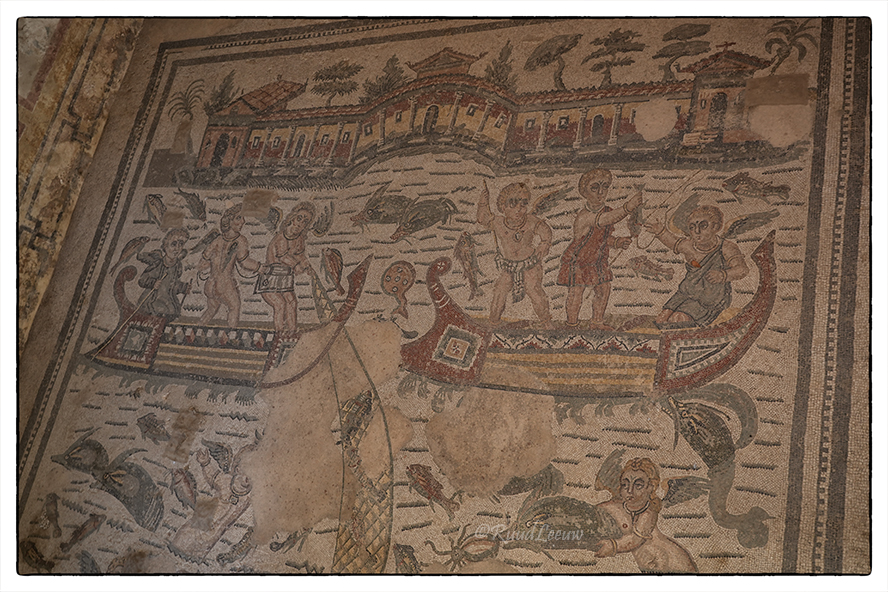
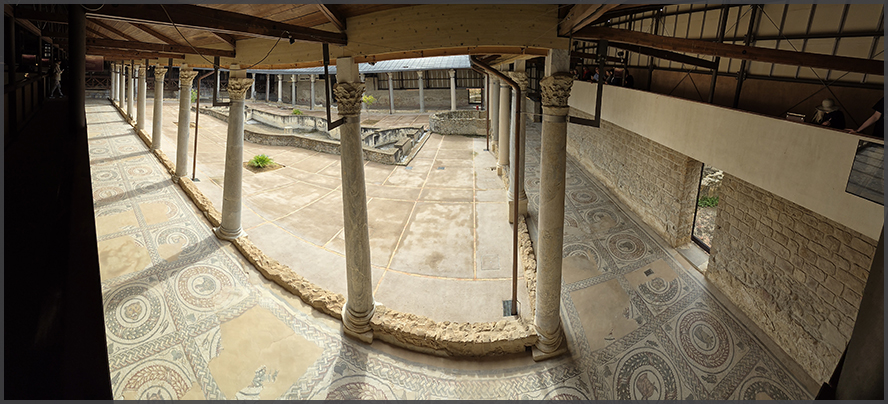
VILLA ROMANA DEL CASALE
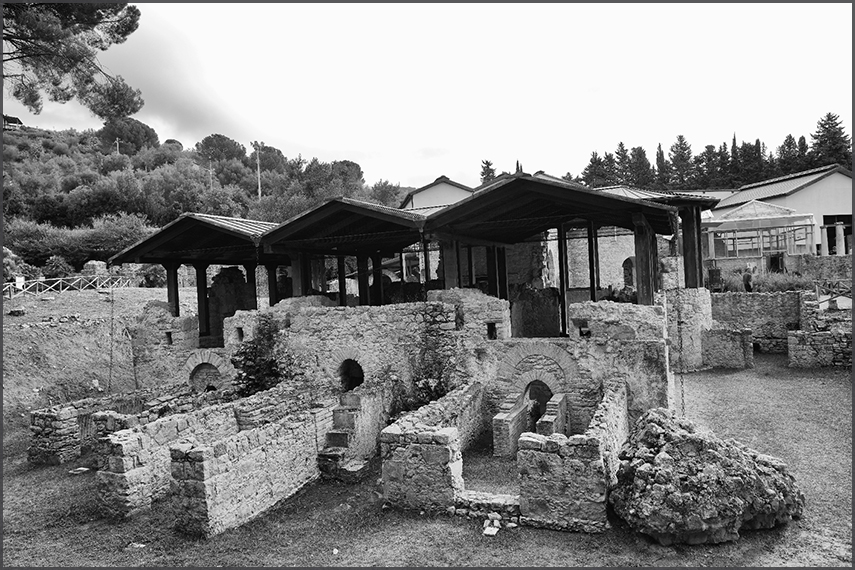
Roman villa near Piazza Armerina, recommended by our B&B host.
Since we had time before our flight I took this in my stride. It was certainly worth a visit!
Between the 5th and 6th centuries, the villa underwent a significant adaptation: the living area was enlarged with additions and fortifications. The resulting medieval settlement, called Palatia or Blàtea was then destroyed,
between 1160 and 1161, by the Norman king William I the Evil...
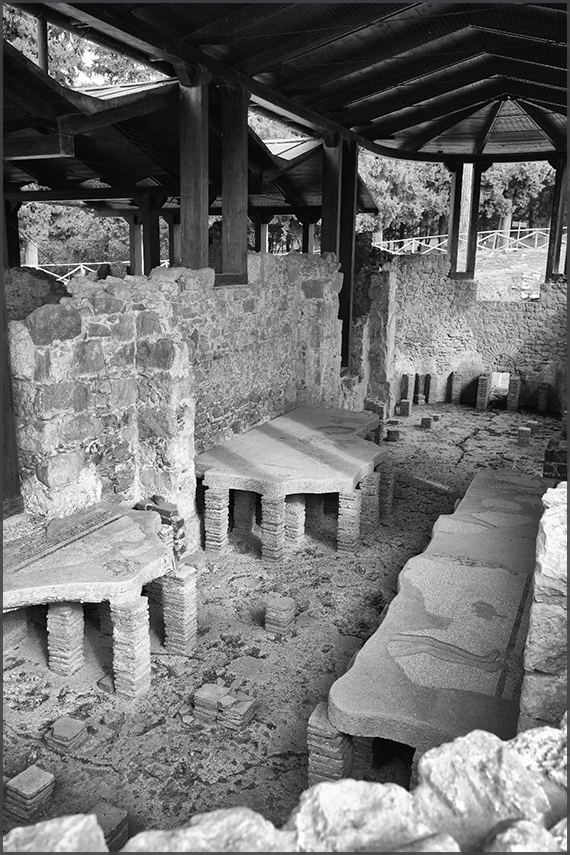
"Where the past exists, the future may flourish." -Peter Ackroyd
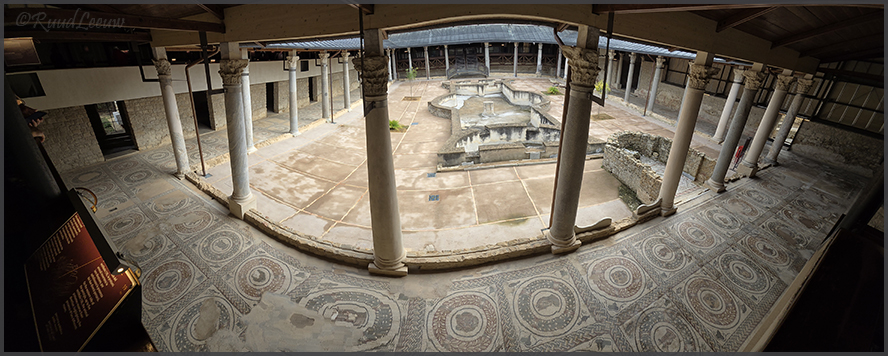 The Roman Villa del Casale is a late antique residential building, popularly defined as a villa despite the fact that
it does not have the characteristics of the extra-urban Roman villa but rather of the imperial urban palace,
the remains of which are located about 4 kilometers from Piazza Armerina.
Since 1997 it has been part of the UNESCO World Heritage Sites.
The discovery of the villa is due to Gino Vinicio Gentili, who in 1950 undertook the exploration following reports
from the locals. Based mainly on the style of the mosaics, the discoverer initially dated the layout of the
sumptuous house – built on an older farm – not before the middle of the 4th century; later the same scholar
assigned the villa to the Tetrarchic age (285-305). According to Ranuccio Bianchi Bandinelli, the villa should
be dated to the first 25 years of the 4th century. [¬ Wikipedia]
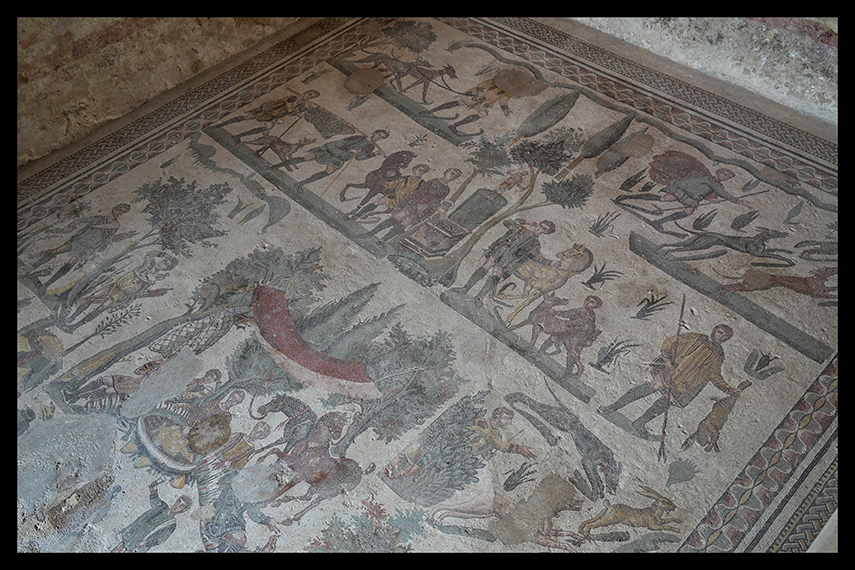
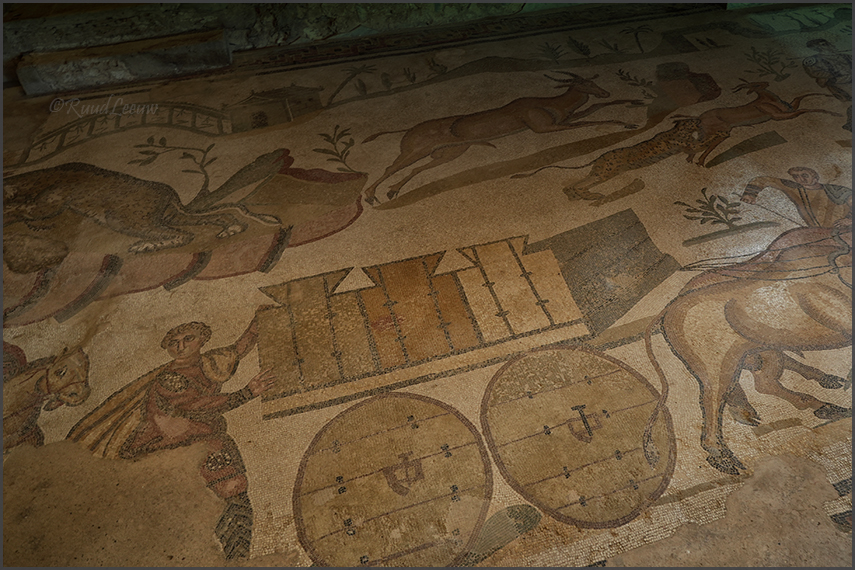
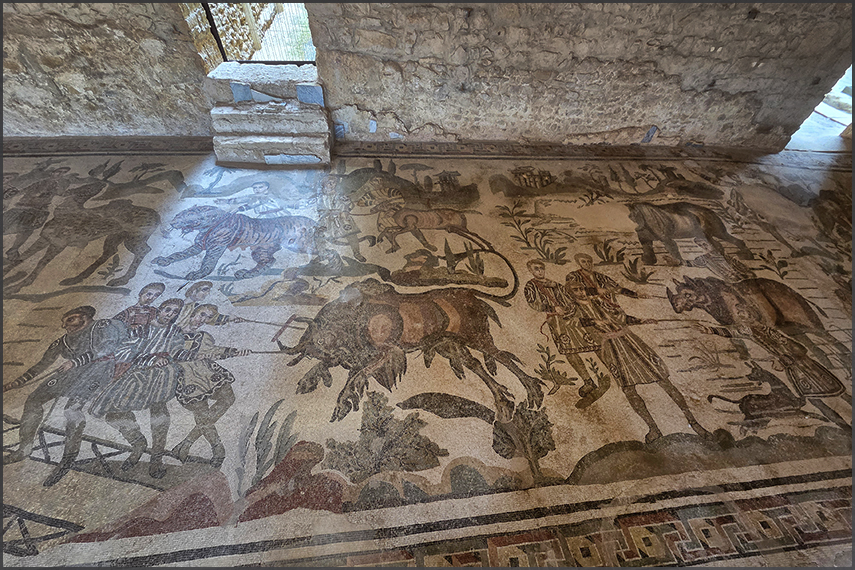
Corridor of the 'Great Hunt'
Despite the name by which it is known, the subject of the floor mosaic represents a great capture trip, not
hunting, of wild beasts for the amphitheater games in Rome: no animals are in fact killed and the hunters
use weapons only to defend themselves.
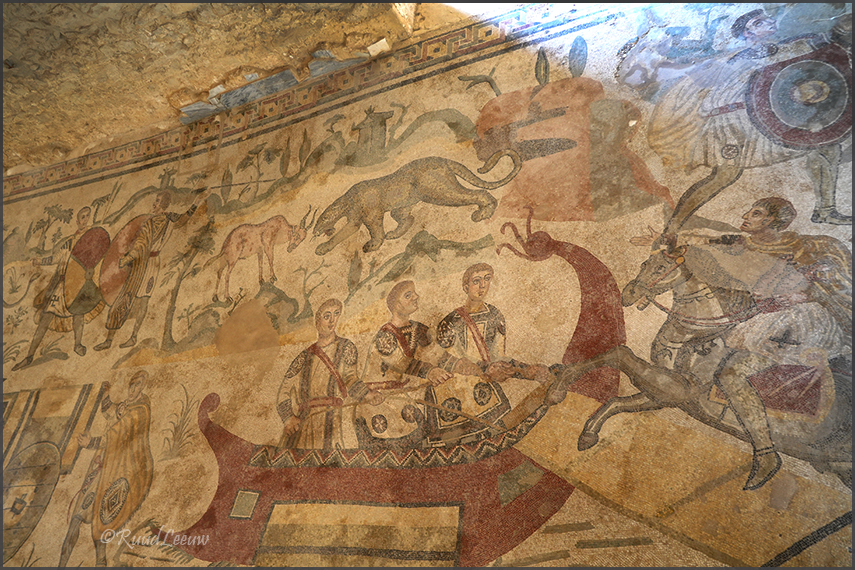
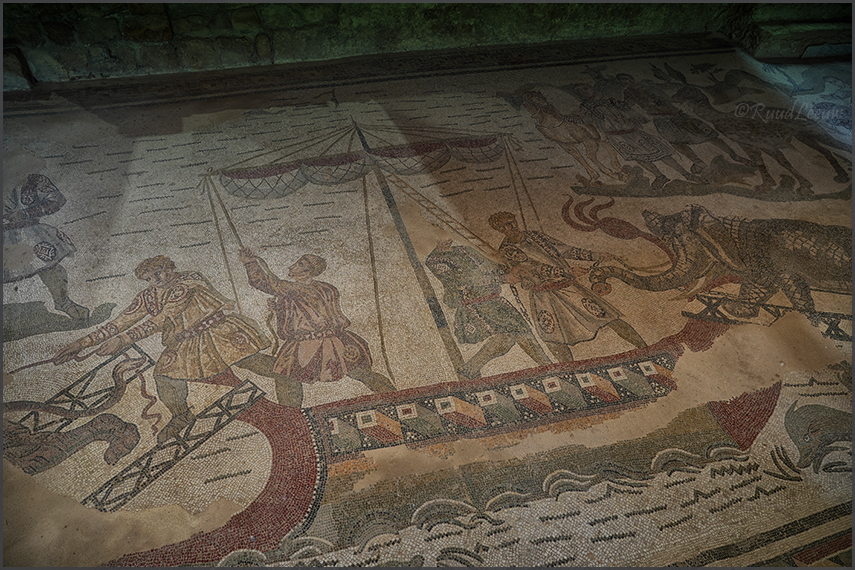
Despite the name by which it is known, the subject of the floor mosaic represents a great capture trip, not hunting, of wild beasts for the amphitheater games in Rome: no animals are in fact killed and the hunters use weapons only to defend themselves.
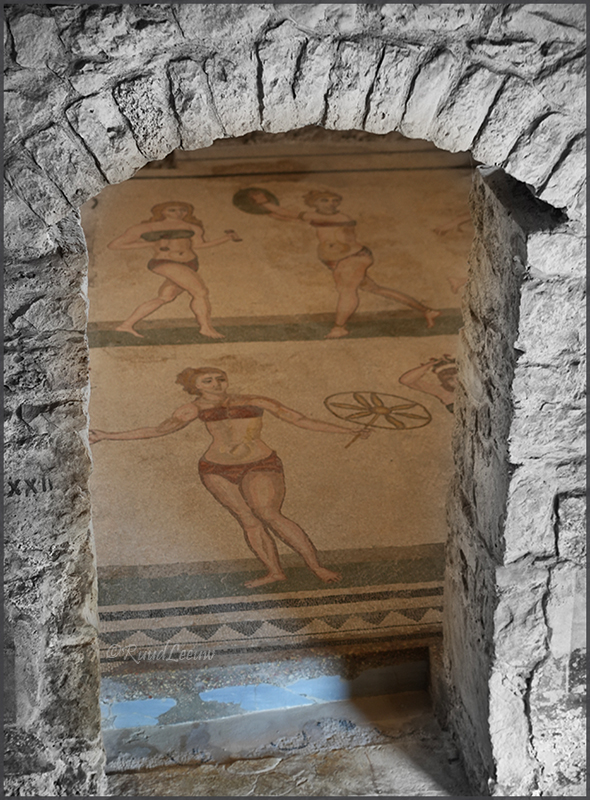
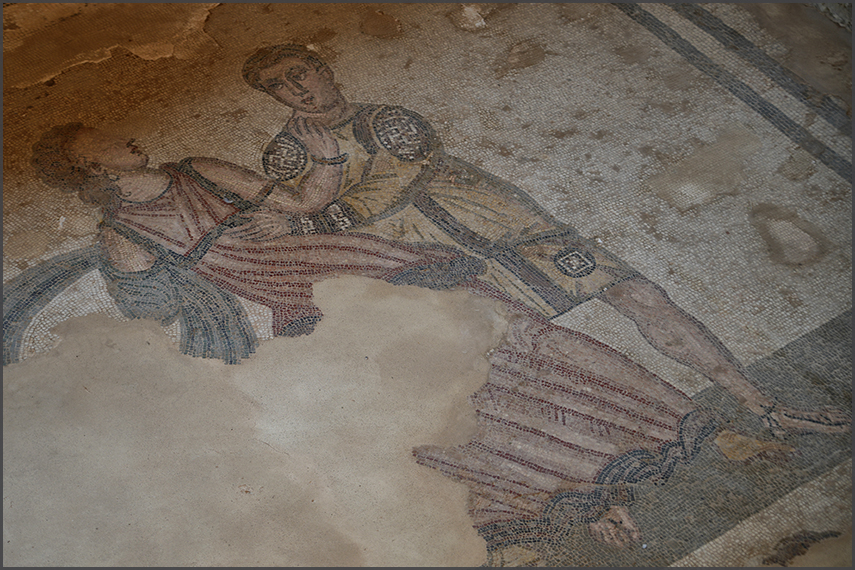
In a later reconstruction, the innermost room was decorated with a unique mosaic depicting women in the gym,
known as the Maidens in Bikinis. In reality, the girls are not at the bath, but in the gym, so they wear the
sports outfit of the time: the "subligar", a kind of tight cloth, wrapped between the legs, with the subligaris
or mammillary band, which served as a bra. In the Roman world, there were no particular problems of
modesty for such skimpy costumes..
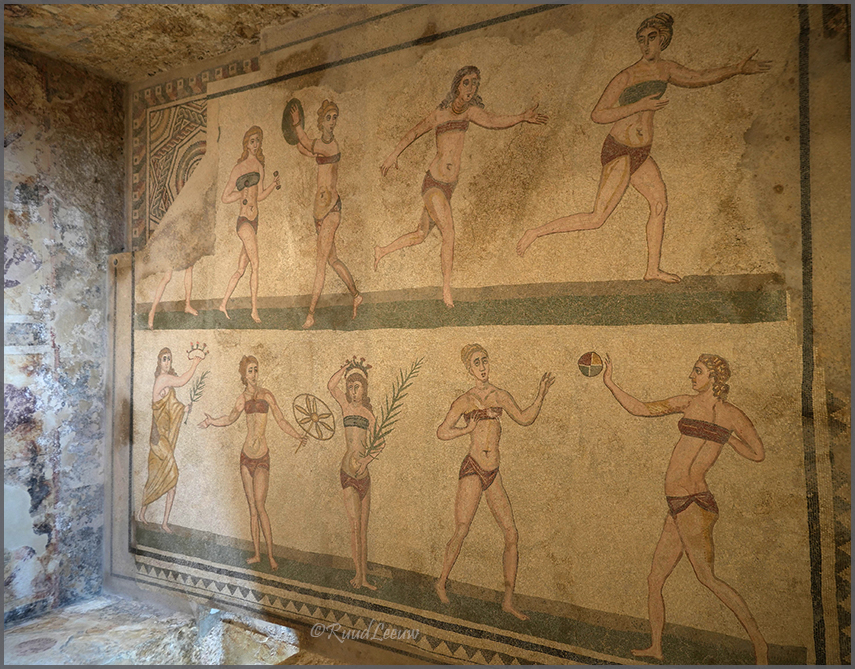
I turned this photo for obvious reasons, you notice the doorway down on the left
|
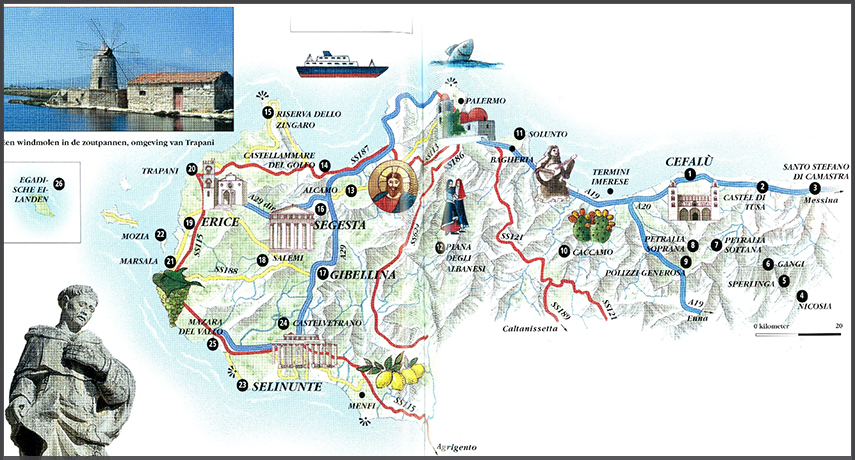
We left enough to see and (re)visit for another visit to SICILY!
|
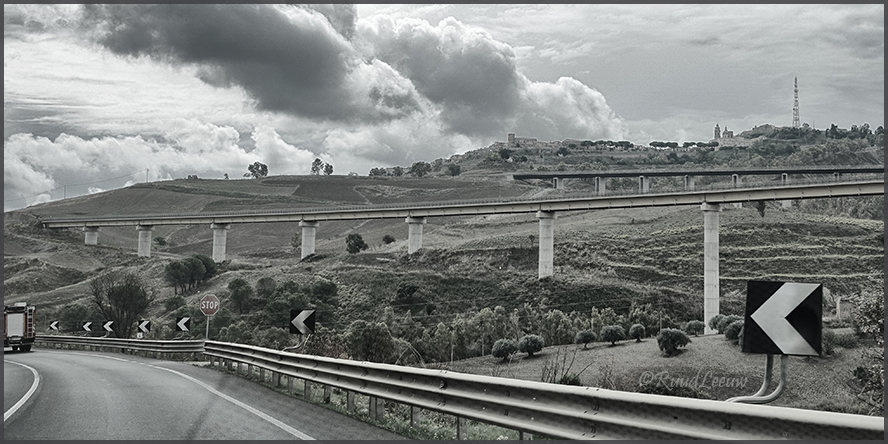
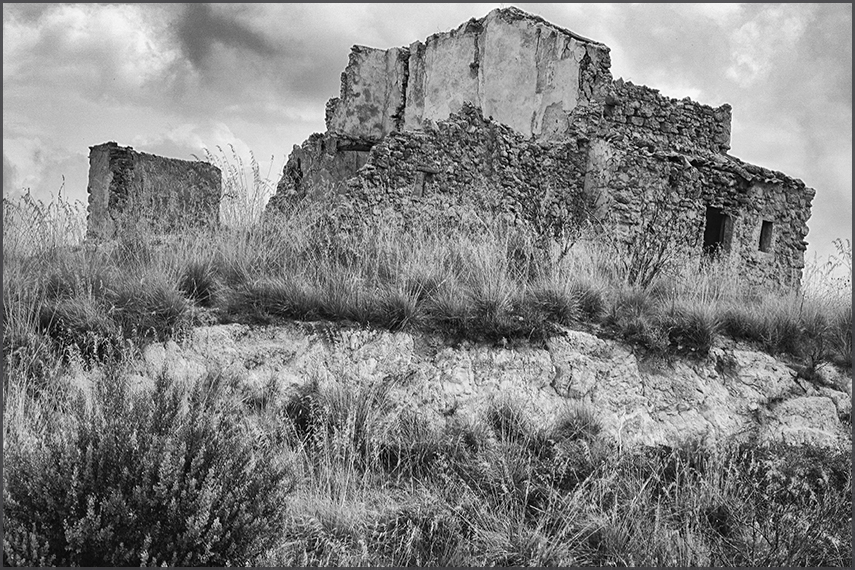
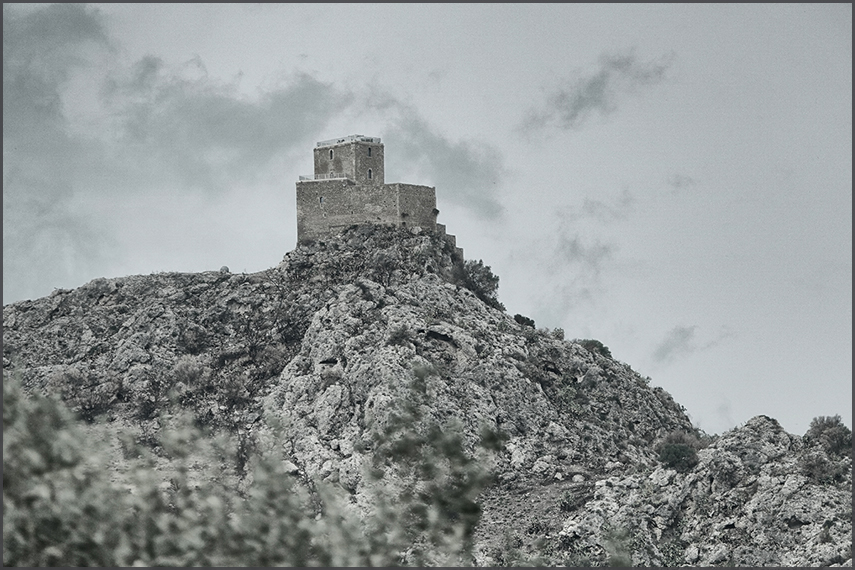
More abandoned houses next to the road
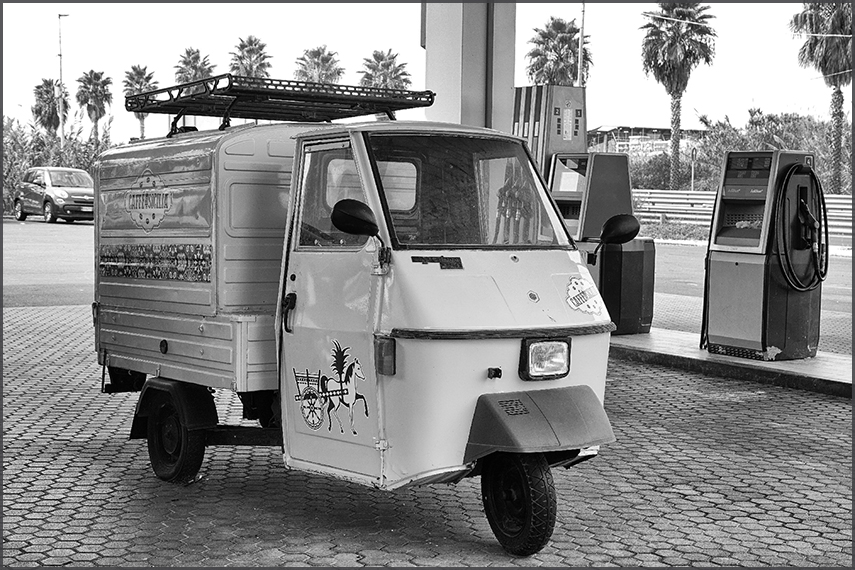
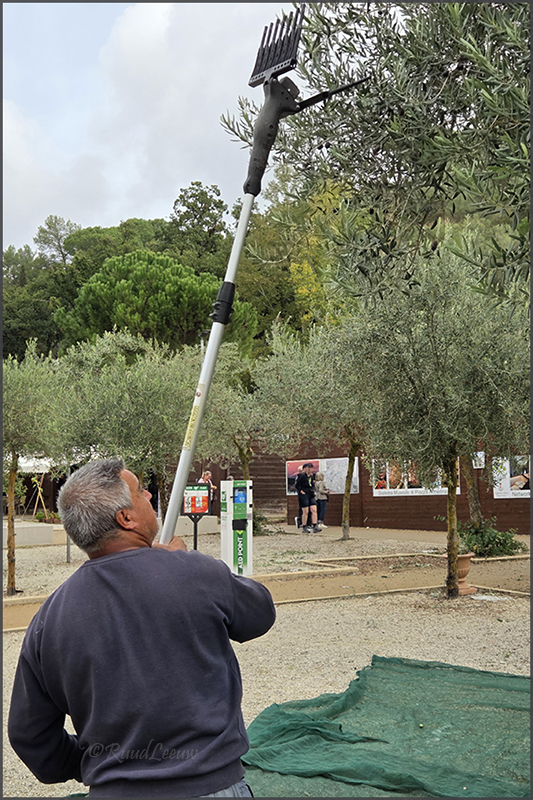
This is how the olives get down! The teeth of his tool opens and closes
while moving through the branches; the olives fall on a tarpaulin and are easy to gather.
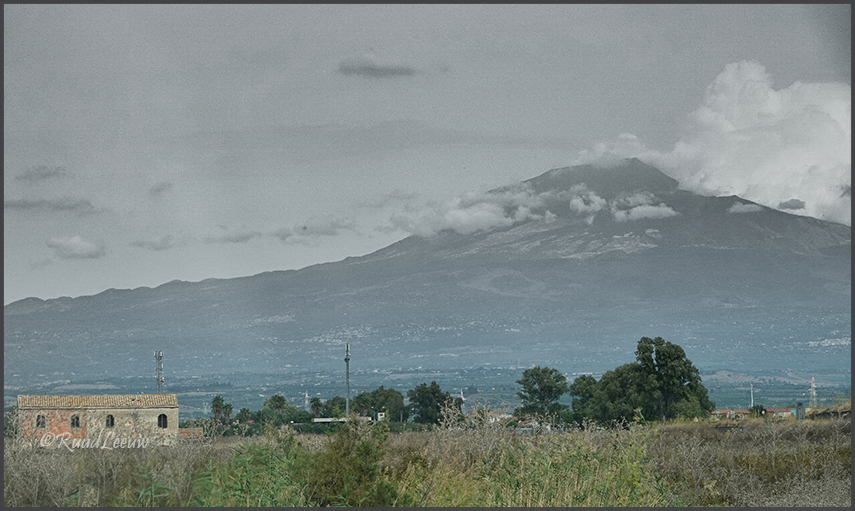
Mount Etna
shows herself again!
|
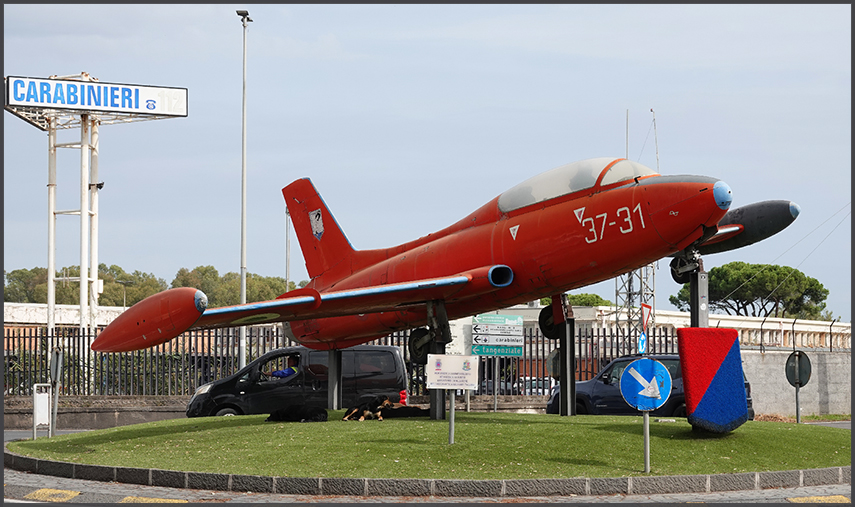
For more aeroplanes see PAGE THREE
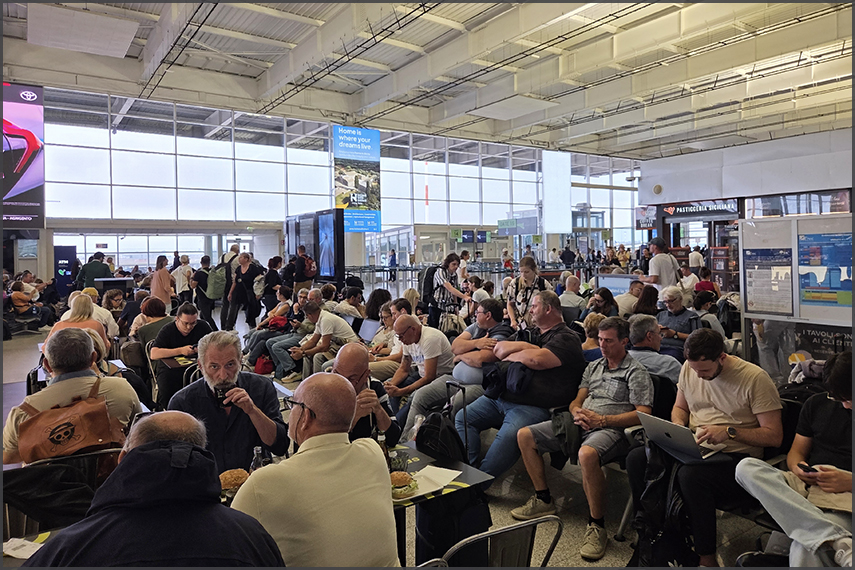
Catania Int'l Airport can't cope with the masses of people visiting Sicily; really horrible.
Btw, the sign above our gate for boarding
showed alternating 'MONACO' & 'MUNICH'... I thought it would
be another stop on our flight north to MUC, but I was told -by the gate attendant- that 'Monaco' is
the Italian name for München!
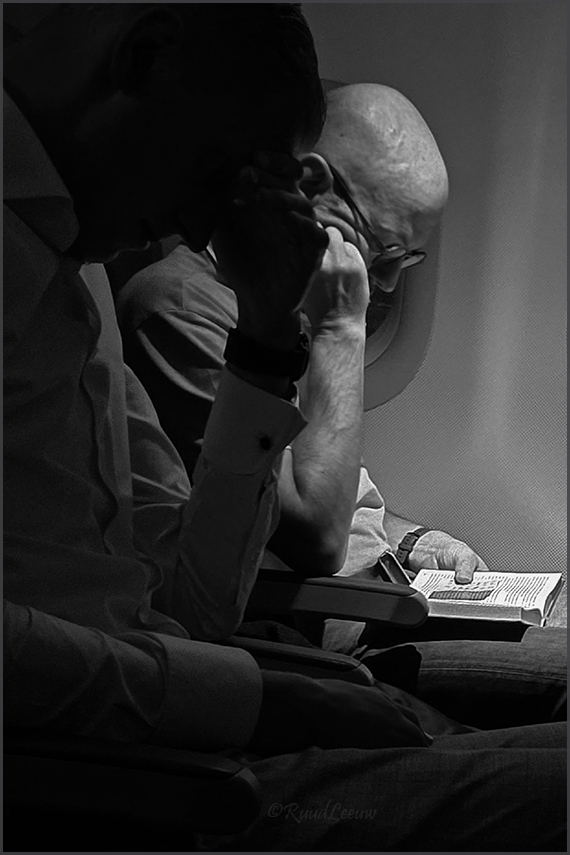
For my #OnReading series

|
Created: 12NOV2025 - Updated:
09-Mei-2026
|

