PALAZZO DUCALE / DOGE'S PALACE
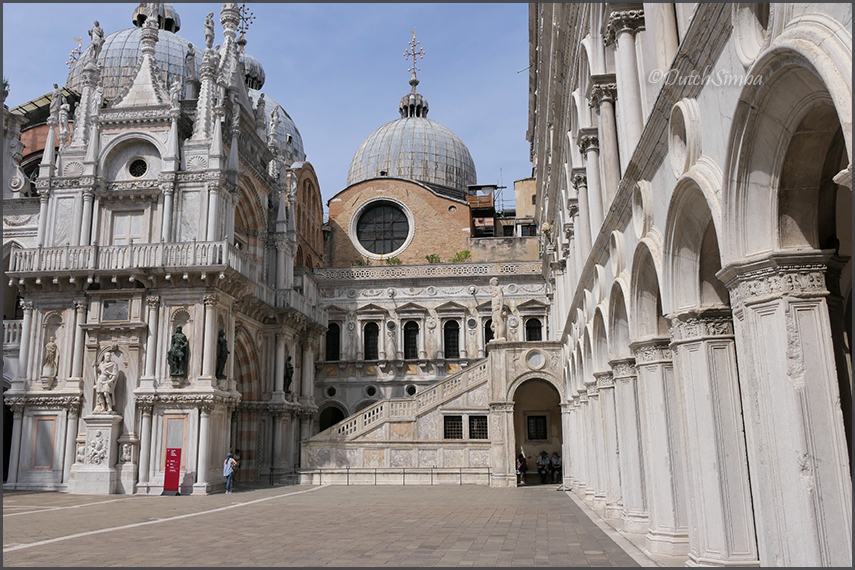
The courtyard and 'Scala dei Giganti'
The Doge's Palace (IT: Palazzo Ducale; Venetian: Pałaso Dogal) is a palace built in Venetian Gothic style, and one of the main landmarks of the city of Venice in northern Italy.
The palace was the residence of the Doge of Venice, the supreme authority of the former Republic of Venice.
It was built in 1340 and extended and modified in the following centuries.
It became a museum in 1923 and is one of the 11 museums run by the Fondazione Musei Civici di Venezia.
[¬ Wikipedia] |
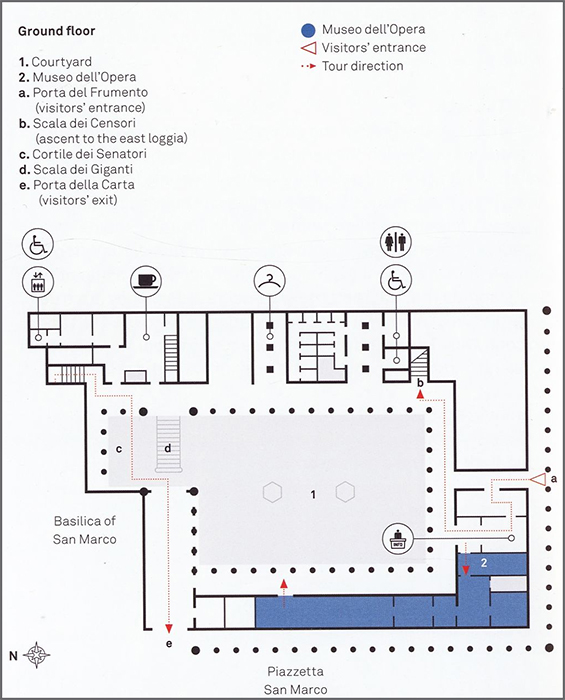
Ground floor including the courtyard
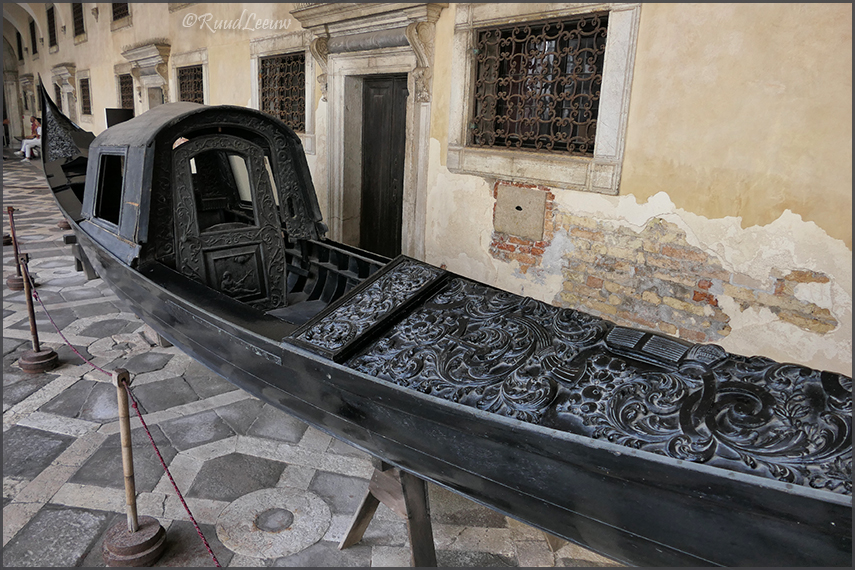
Historic gondola preserved, with a cosy cabin during the cold and damp season.
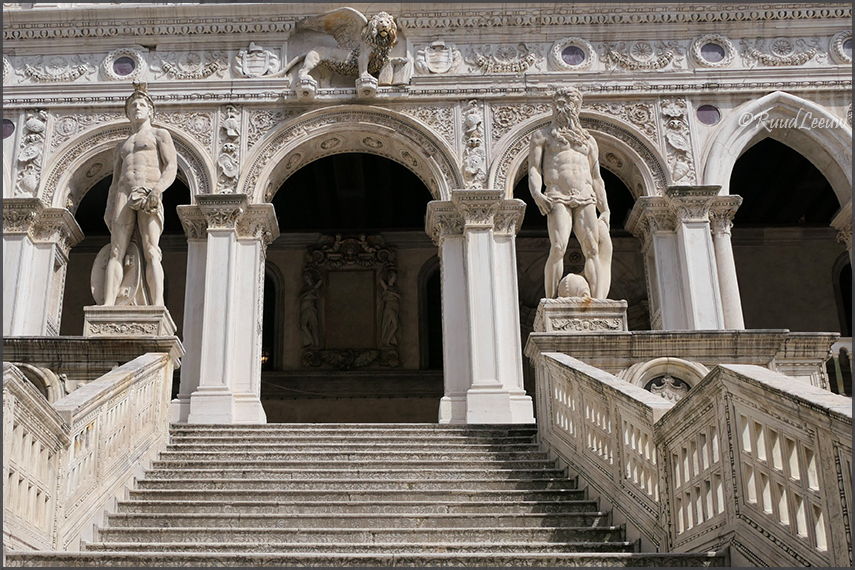
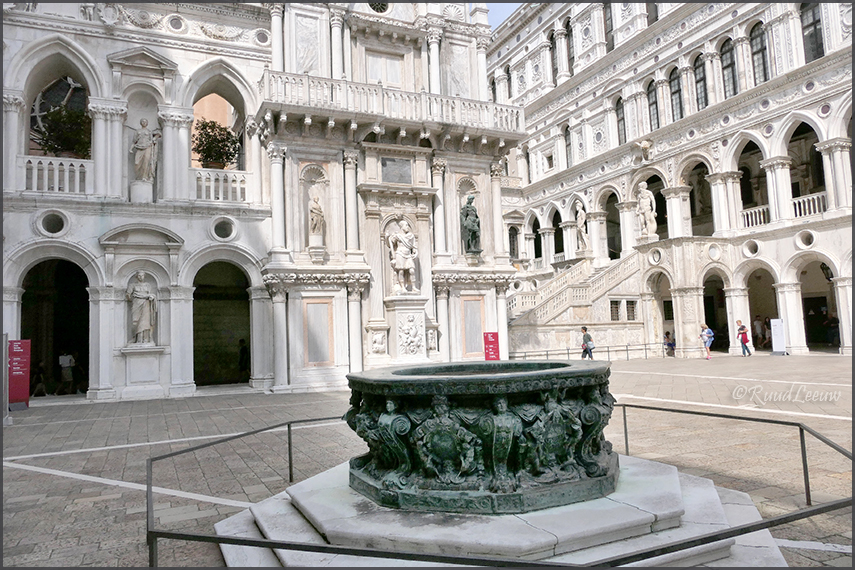
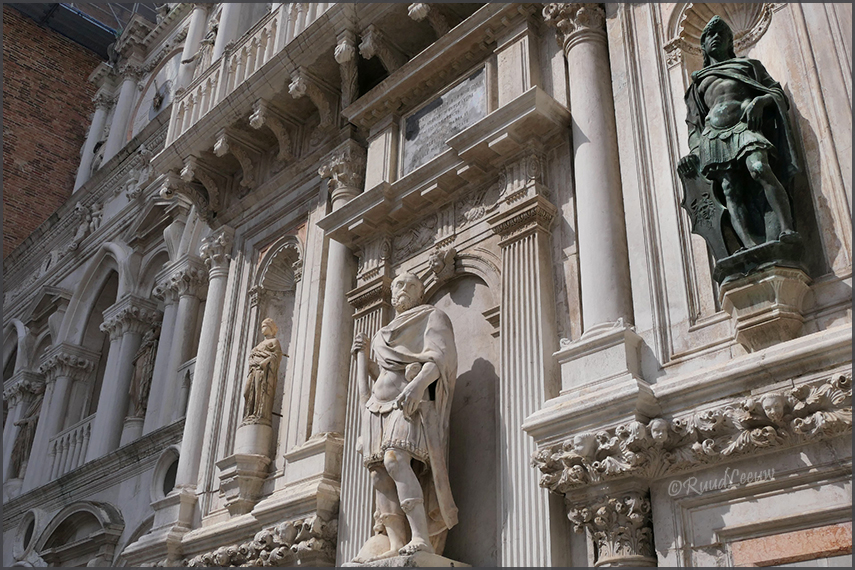
'Scala dei Giganti'
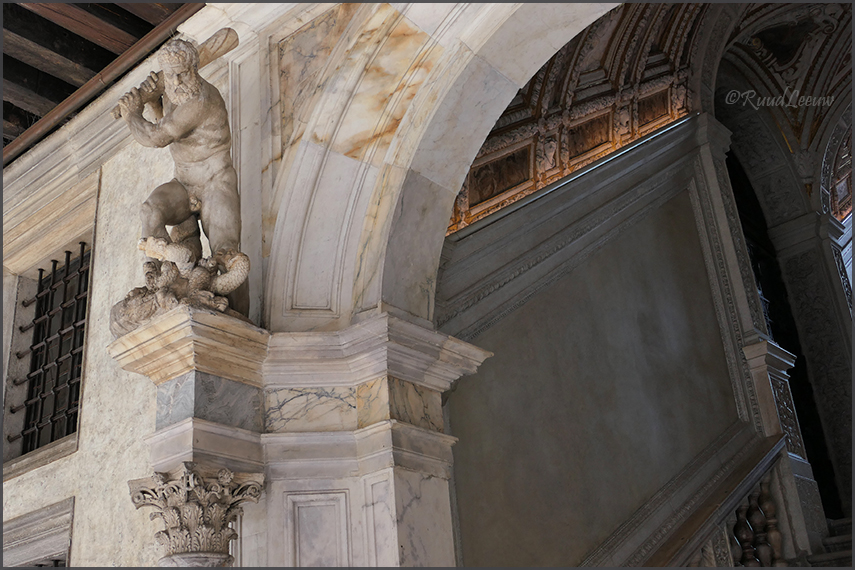
'Scala dei Sensori'
and Hercules killing the Hydra, the multi-headed monster. By Tiziano Aspetti (late 16th century).
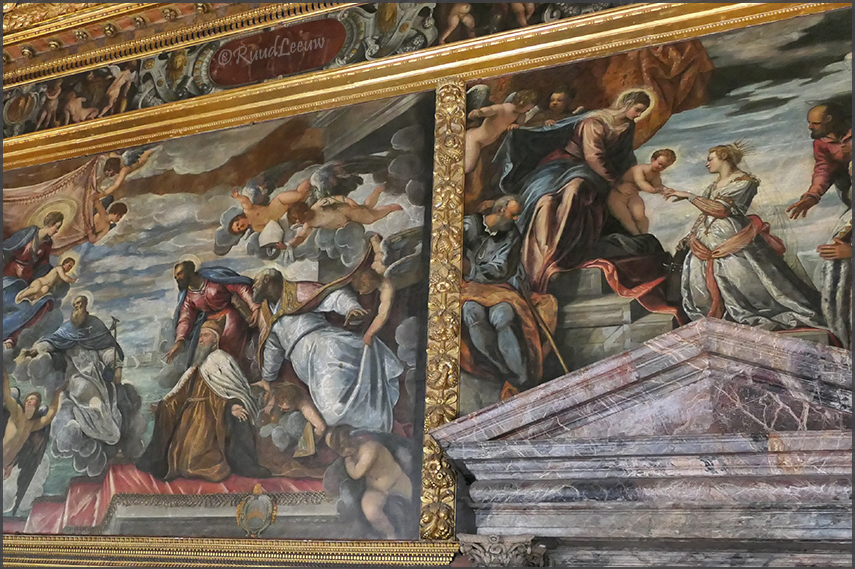
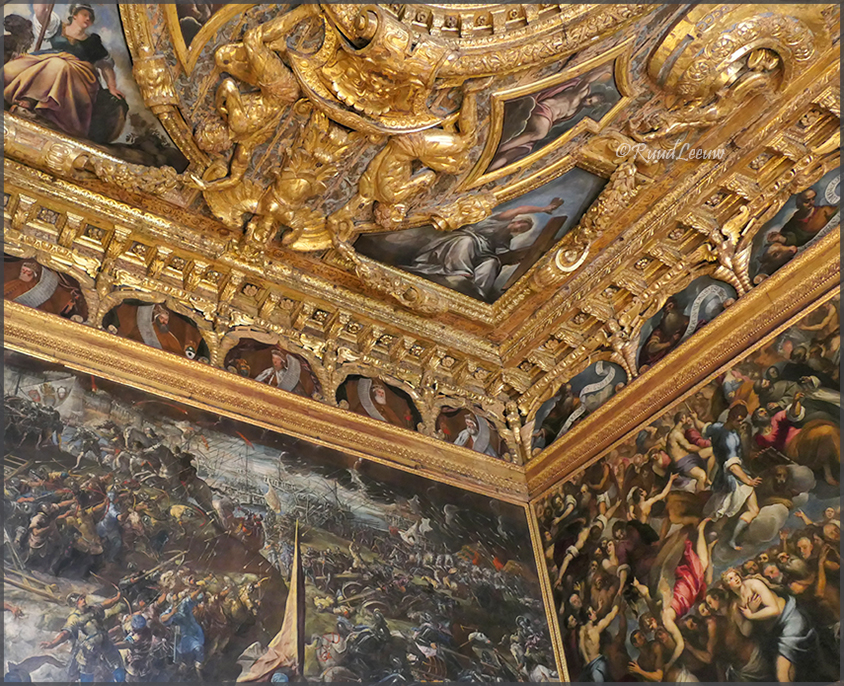
Inside one is astounded by the immense story-telling paintings, on the walls as well as the ceilings!
Left and right: Sala del Collegio (Council Chamber), paintings by Tintoretto.
Tintoretto (born Jacopo Robusti; late September or early October 1518 – d.31May1594) was an Italian painter identified with the Venetian school.
His contemporaries both admired and criticized the speed with which he painted, and the unprecedented boldness of his brushwork. For his phenomenal energy in painting he was termed Il Furioso.
His work is characterised by his muscular figures, dramatic gestures and bold use of perspective, in the Mannerist style. [¬ Wikipedia] |
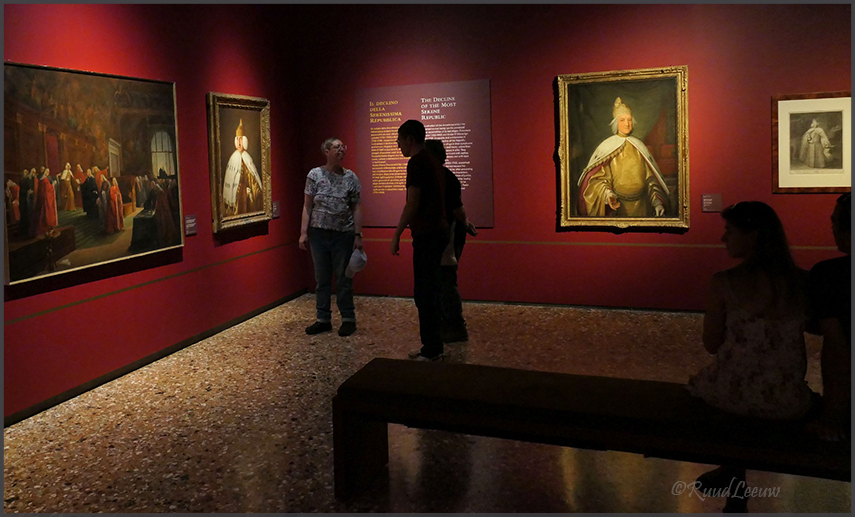
I was forced by the approaching start of the Regatta Storica to visit in haste; next time I'll look in more detail.
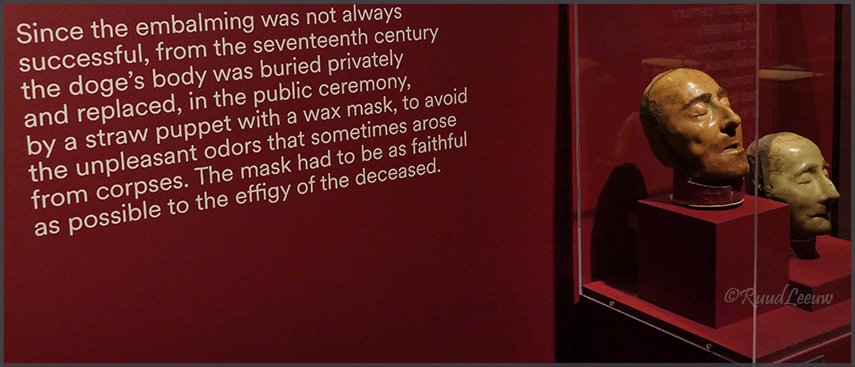
Gruesome, don't you think..?
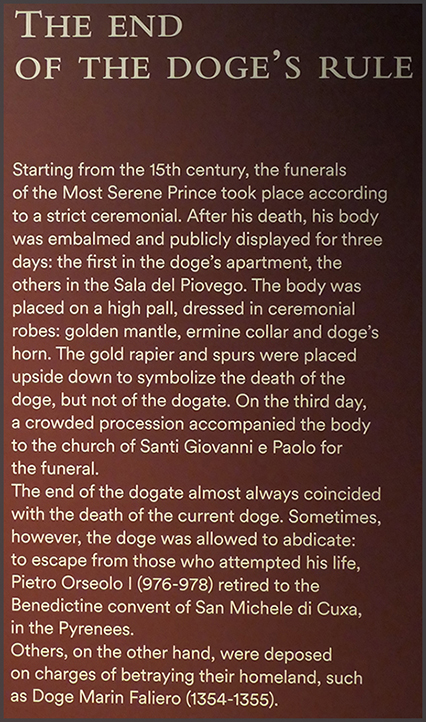
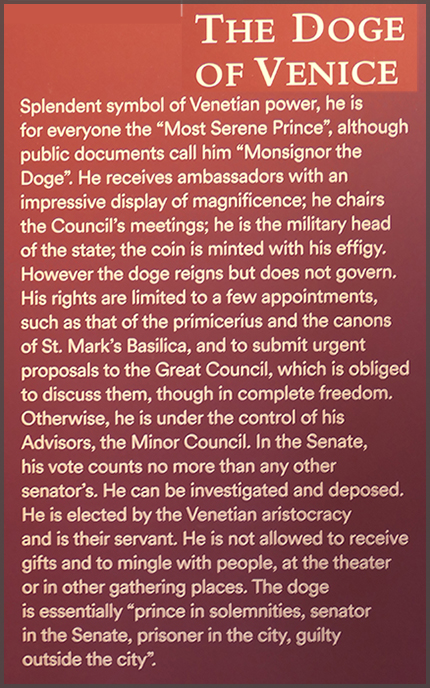
I don't think I will ever learn about all the Doge's here in
Venice, but I would like to learn more about those the most
important, those who played a significant role (e.g. Ludovico Manin?).
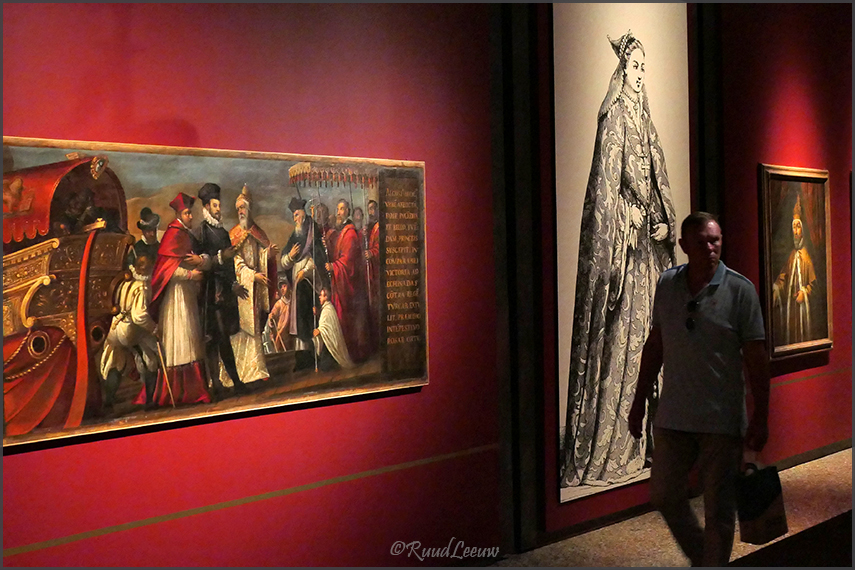
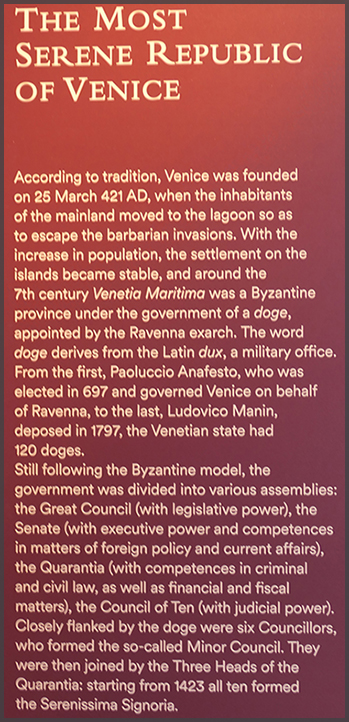
In 810, Doge Agnello Participazio moved the seat of government from the island of Malamocco to the area of the present-day Rialto, when it was decided a palatium duci (Latin for 'ducal palace') should be built.
However, no trace remains of that 9th-century building as the palace was partially destroyed in the 10th century by a fire.
The following reconstruction works were undertaken at the behest of Doge Sebastiano Ziani (1172–1178). A great reformer, he would drastically change the entire layout of the St. Mark's Square.
The new palace was built out of fortresses, one façade to the Piazzetta, the other overlooking the St. Mark's Basin.
Although only few traces remain of that palace, some Byzantine-Venetian architecture characteristics can still be seen at the ground floor, with the wall base in Istrian stone and some herring-bone pattern brick paving.
[¬ Wikipedia] |
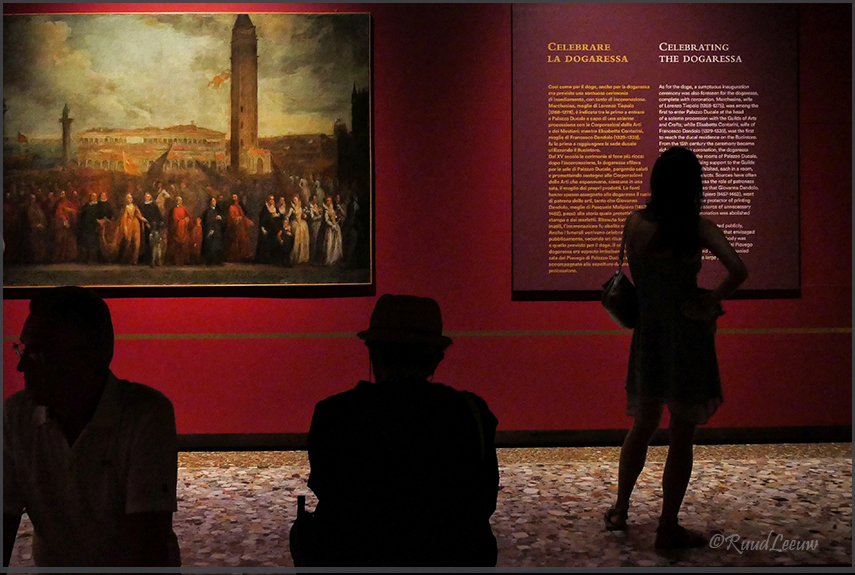
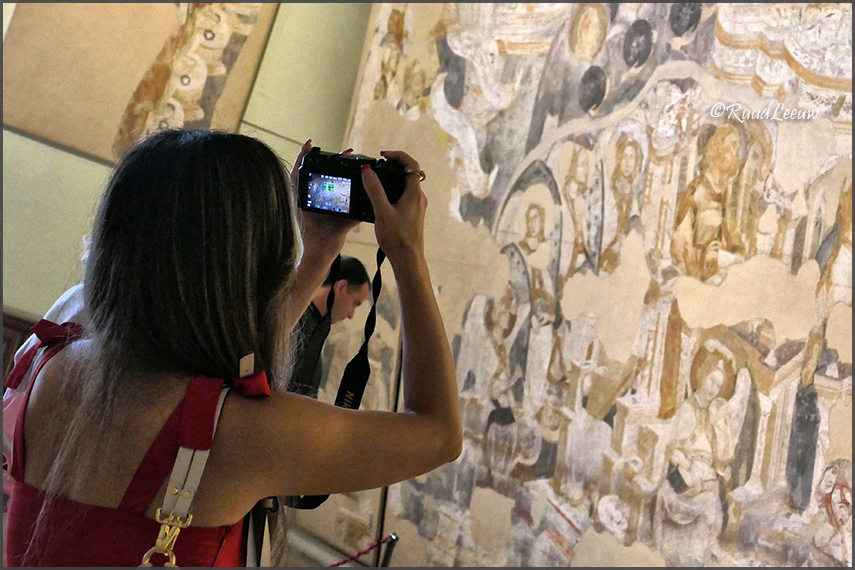
One for my 'LOOK' series. The warm red colours and low light creates a 'serene' atmosphere, I think.
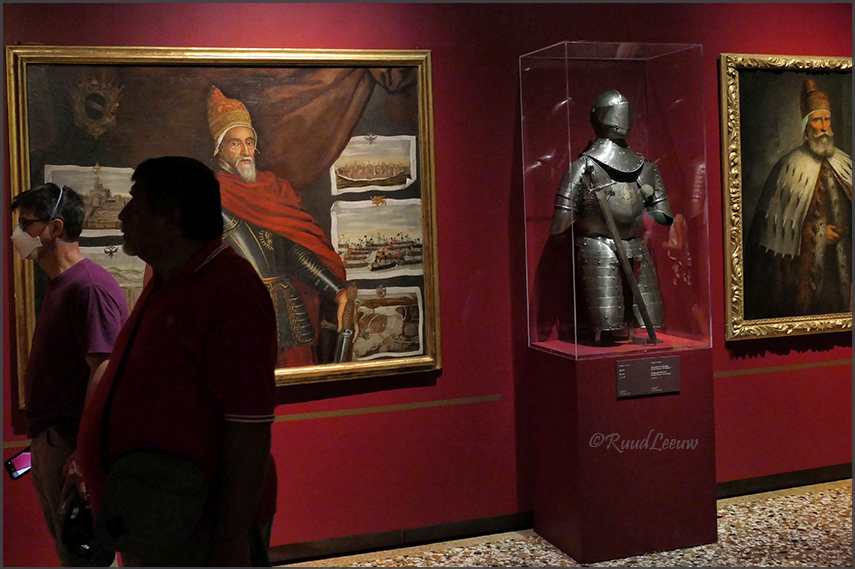
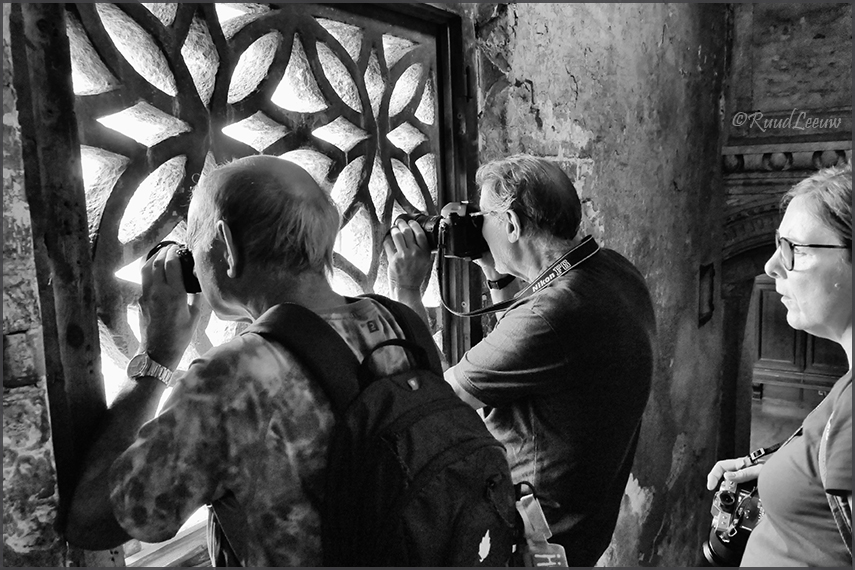
It seems these visitors are looked upon with degree of disapproval..?
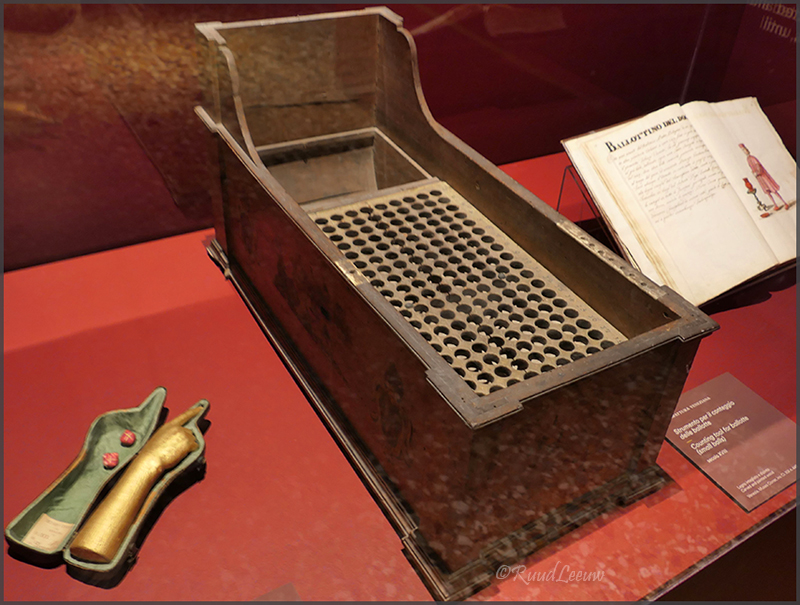
'To ensure impartiality, the elections provided for a complex and meticulous mechanism, where lots were combined with
a succession of ballots. In 1178 the 11 electors, to whom the Assembly had delegated the final vote, passed to 40.
Between 1229 and 1249, they were brought from 40 to 41, to avoid parity of votes, as it had happened during the election
of Doge Jacopa Tiepolo in 1229. In 1268 the mechanism was perfected and it lasted, with some modifications, until the
end of the Republic.'
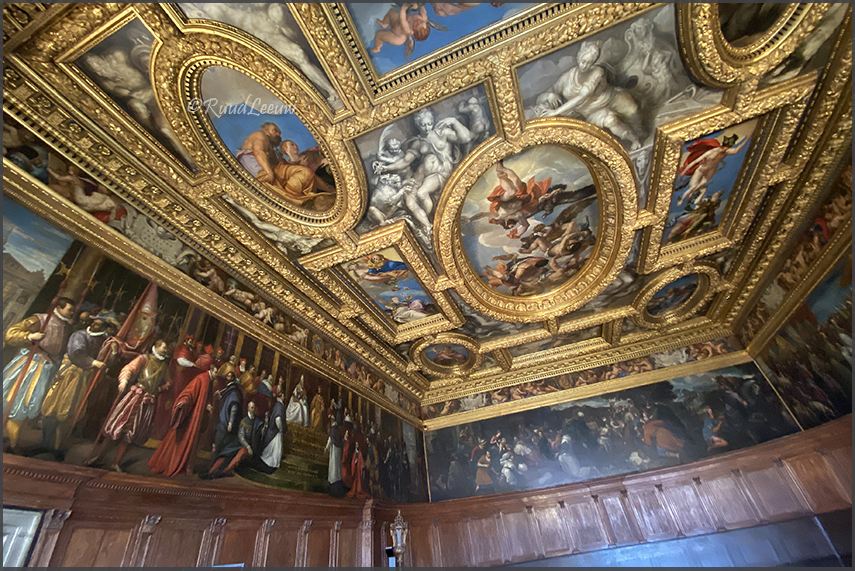
I had hoped that my 'short guide' which I had bought there, would help me identifying some of the paintings.
But, alas, it seems that I have to research a lot more to identify the painters and meanings of these fine paintings.
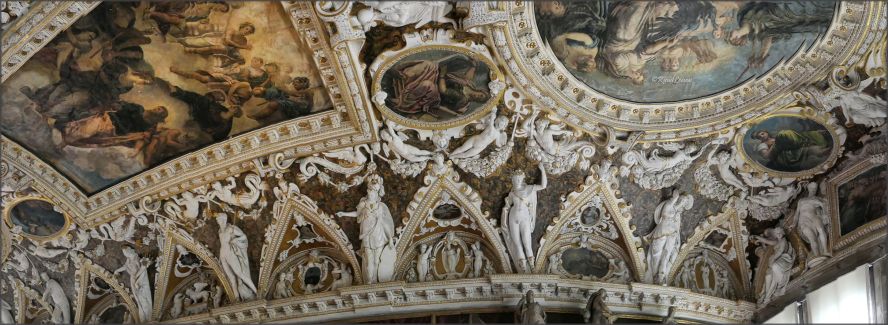
'Sala delle Quattro Porte'
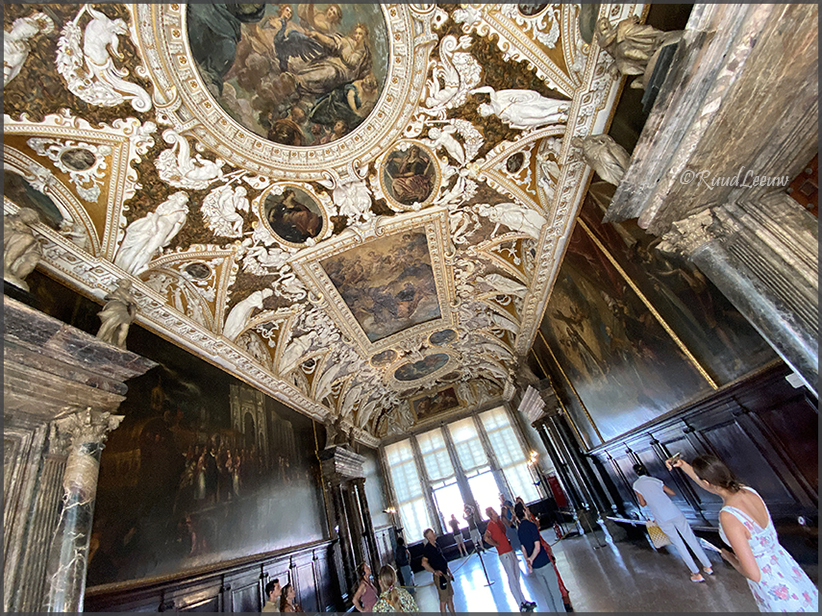
Not quite sure but I think this is the Sala delle Quattro Porte (Room of the Four Doors) - overwhelming!
'Political changes in the mid-13th century led to the need to re-think the palace's structure due to the considerable increase in the number of the Great Council's members.
The new Gothic palace's constructions started around 1340, focusing mostly on the side of the building facing the lagoon. Only in 1424 did Doge Francesco Foscari decide to extend the rebuilding works to the wing overlooking the Piazzetta, serving as law-courts, and with a ground-floor arcade on the outside, open first-floor loggias running along the façade, and the internal courtyard side of the wing, completed with the construction of the Porta della Carta (1442).
In 1483, a violent fire broke out in the side of the palace overlooking the canal, where the Doge's Apartments were. Once again, an important reconstruction became necessary.'
[¬ Wikipedia]
|
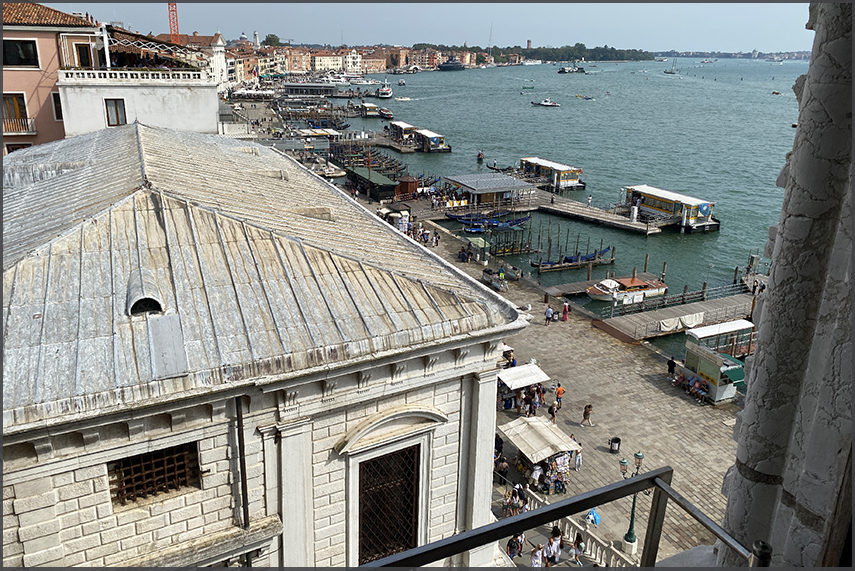
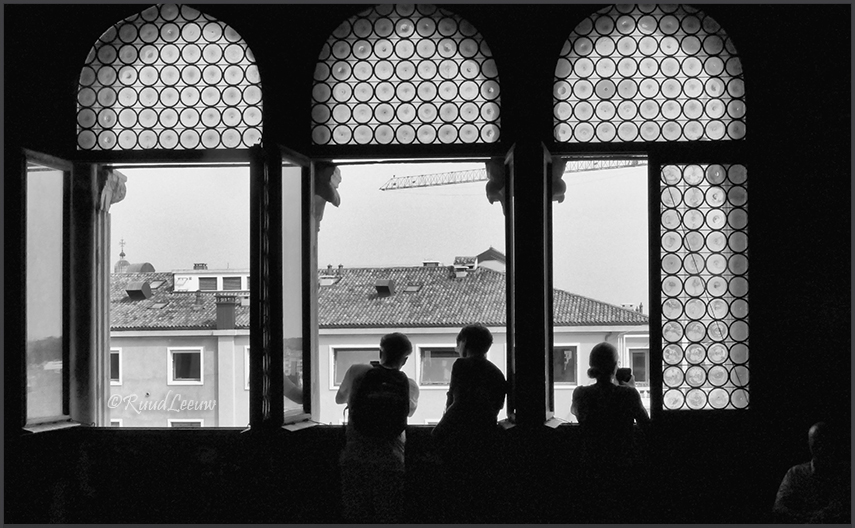
A quick glimpse outside, to a breath of present day reality.
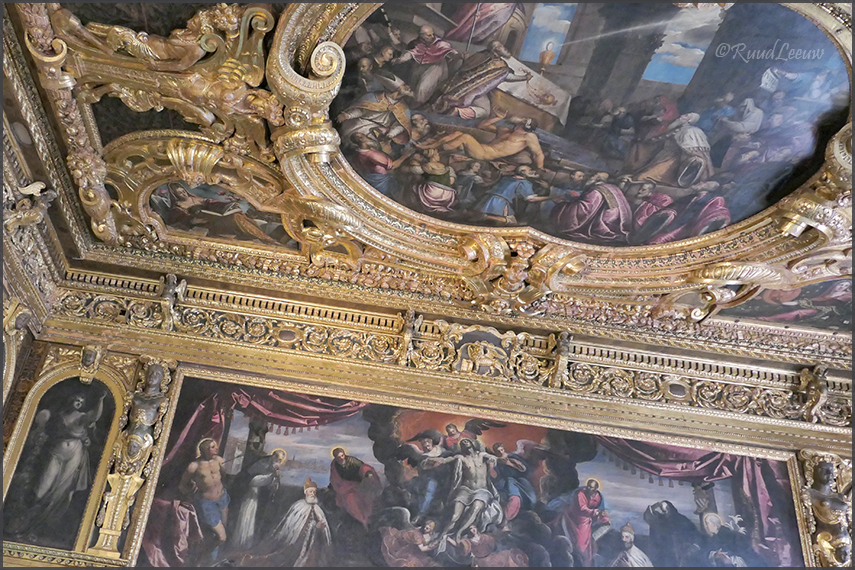
'Another huge fire in 1547 destroyed some of the rooms on the second floor, but fortunately without undermining the structure as a whole.
Refurbishment works were being held at the palace when in 1577 a third fire destroyed the Scrutinio (Ballot) Room and the Great Council Chamber, together with works by Gentile da Fabriano, Pisanello, Alvise Vivarini, Vittore Carpaccio, Giovanni Bellini, Pordenone, and Titian.' [¬ Wikipedia] |
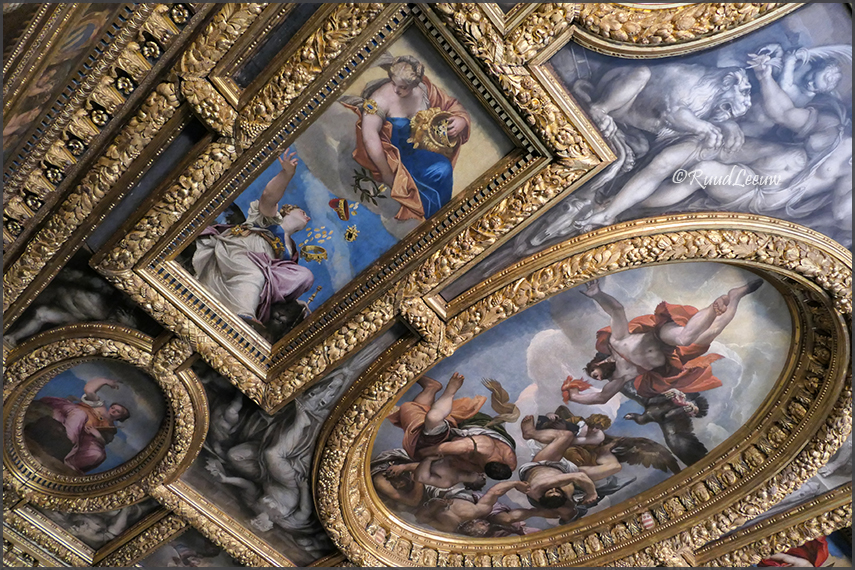
The painting on the left, with coins and Doge's cap thrown up, is 'Juno Offers Gifts to Venice', by
Paolo Callari (a.k.a. 'Veronese'; 1553-54)
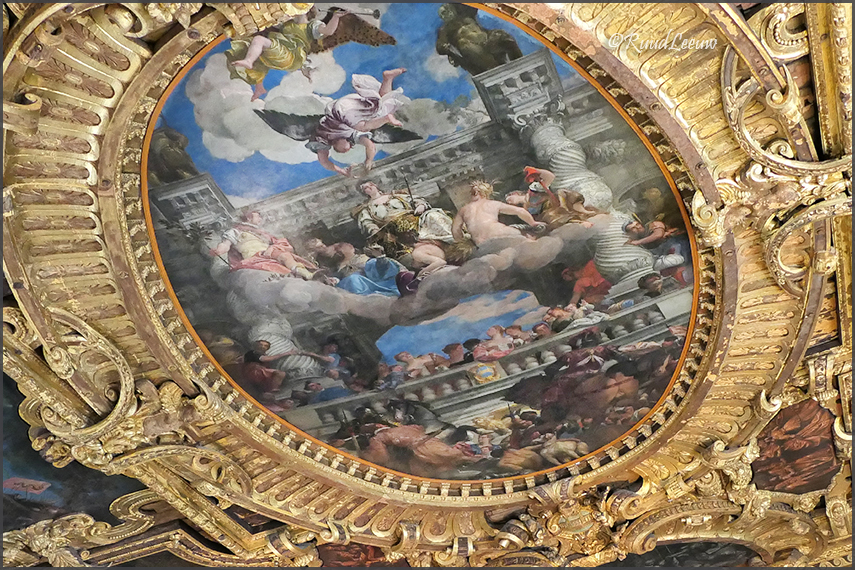
Venezia is most often displayed as a woman.
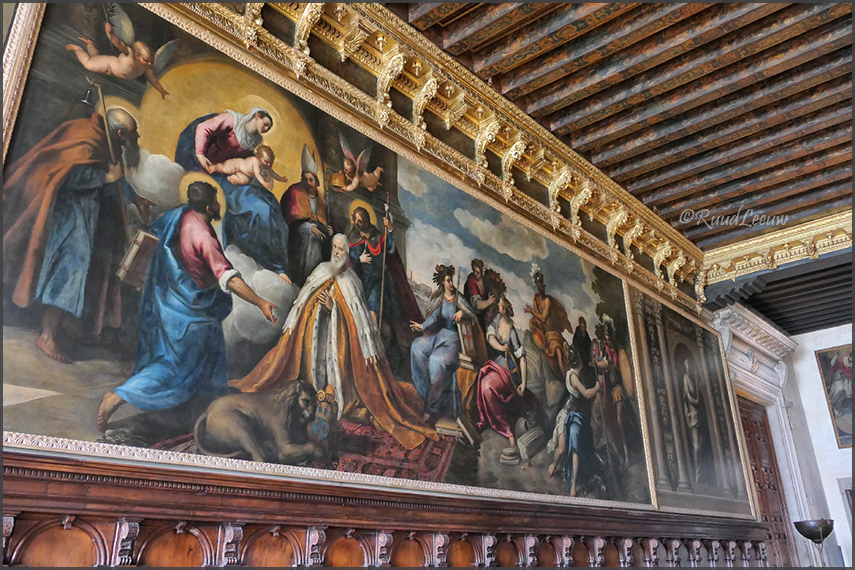
'Doge Angels' (?) on the first floor.
Meeting Room Grand Council. Painting from 1500s (by whom?).
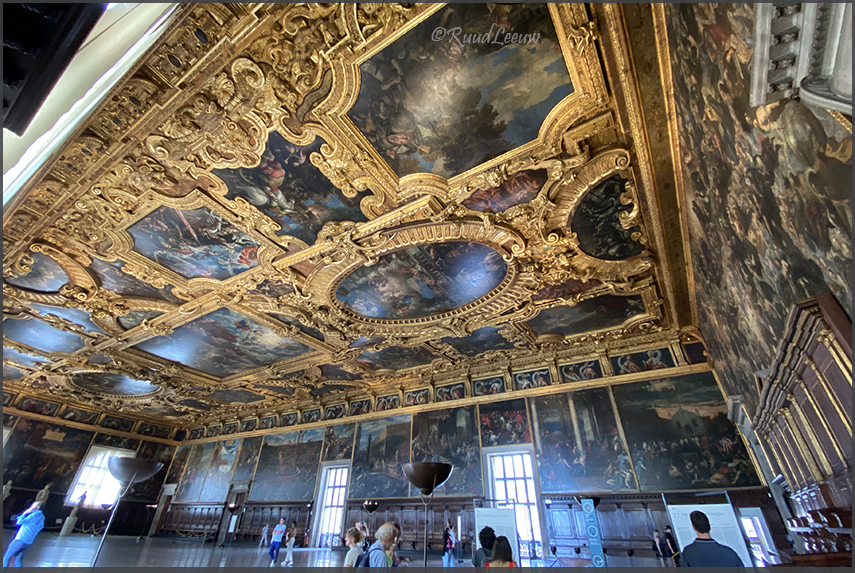
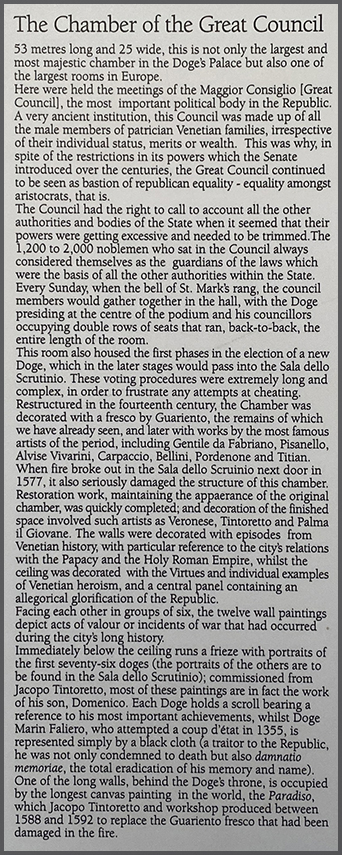
Maggior Consiglio, its vastness cannot be captured properly on camera. Entrance to the Ballot Room is the far corner.

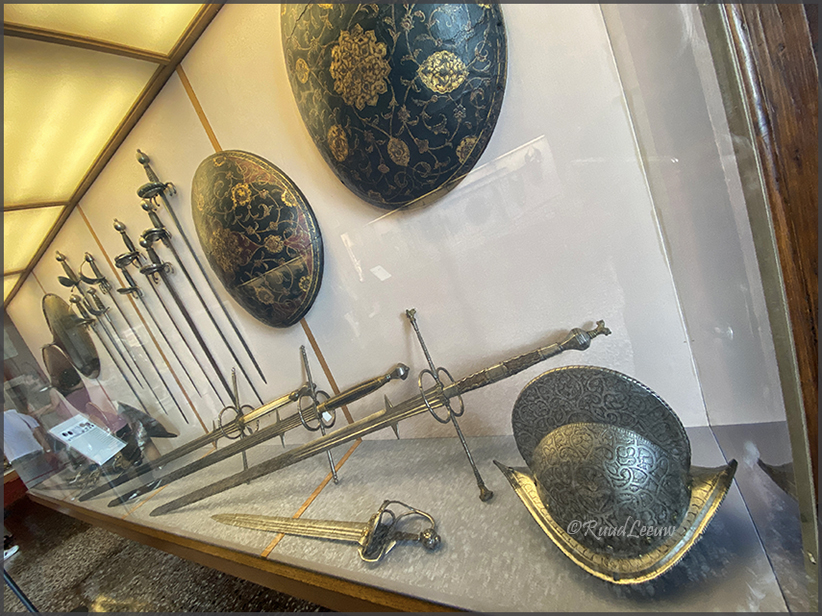
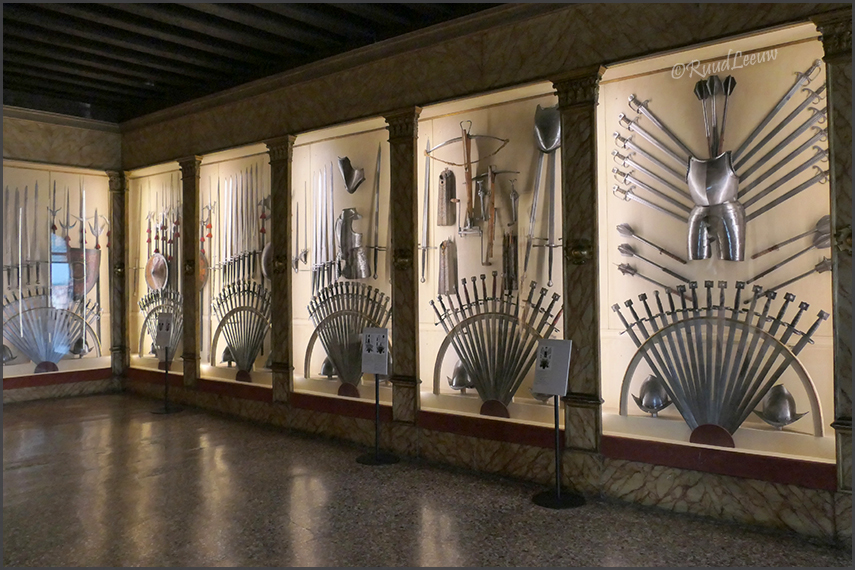
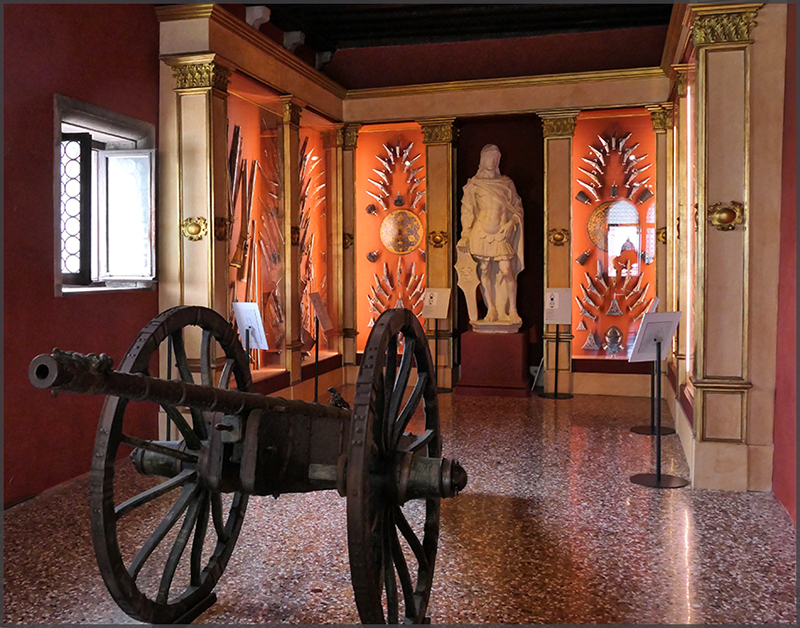
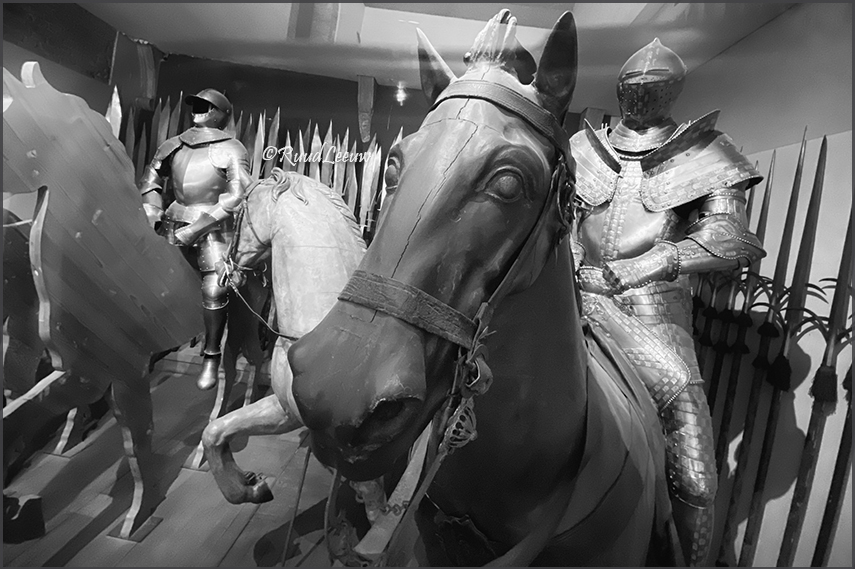
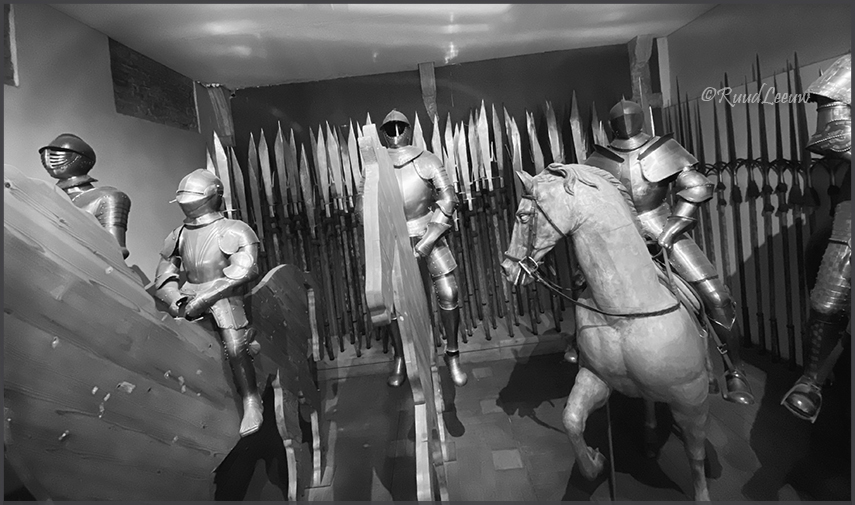
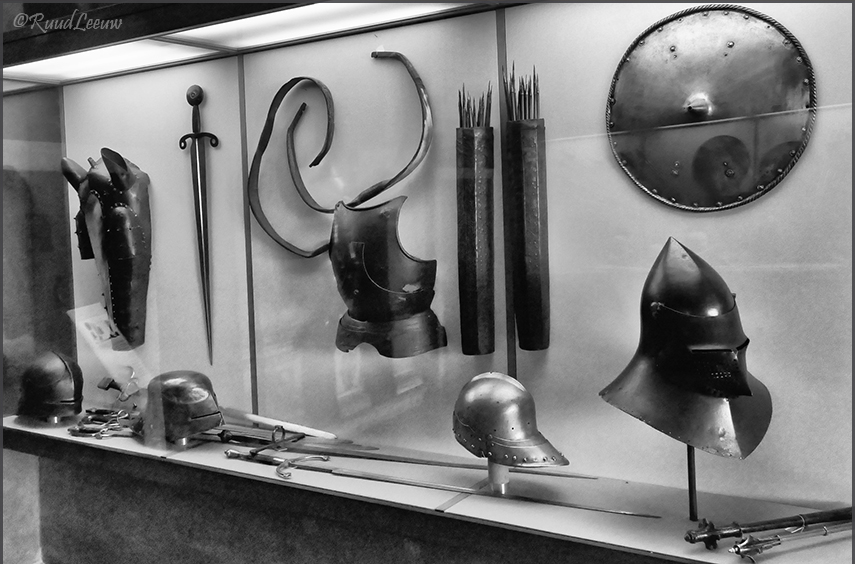
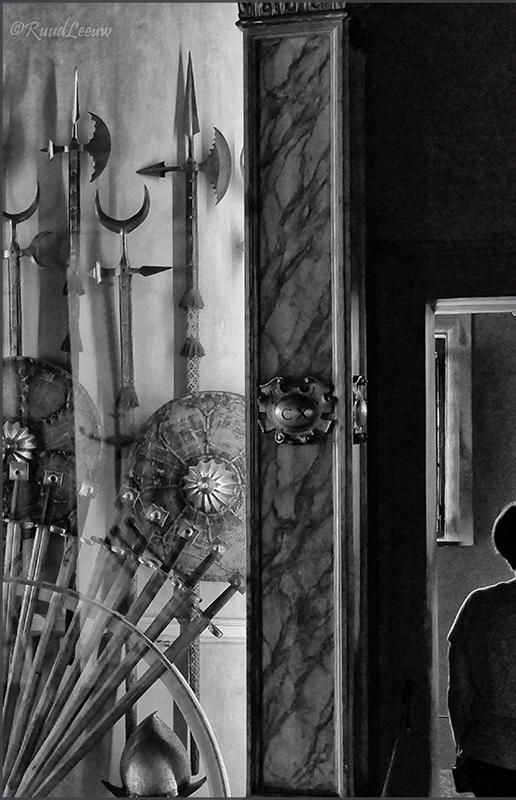
THE ARMOURY
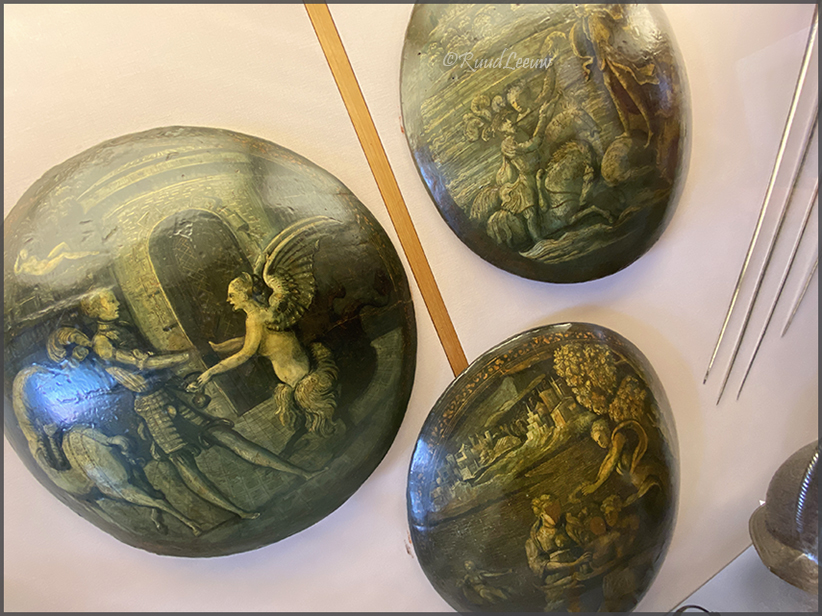
From the earliest times the palace was equipped with a weapons depot (and with armed garrisons in defence of
government activities) which has been documented in this area since the 14th century.
War, rape and plunder..
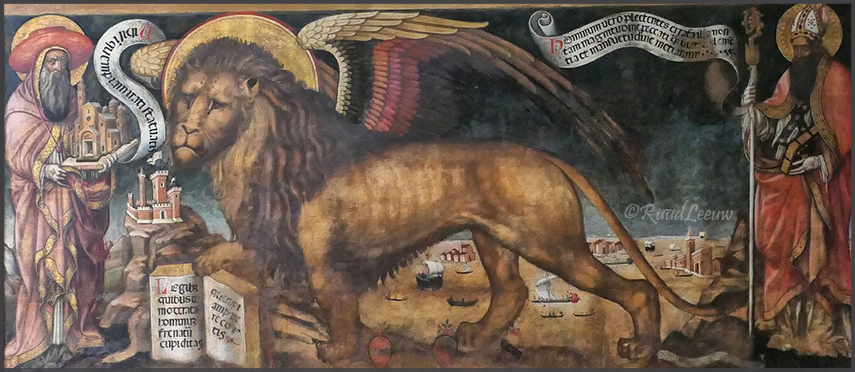
Lions walking..

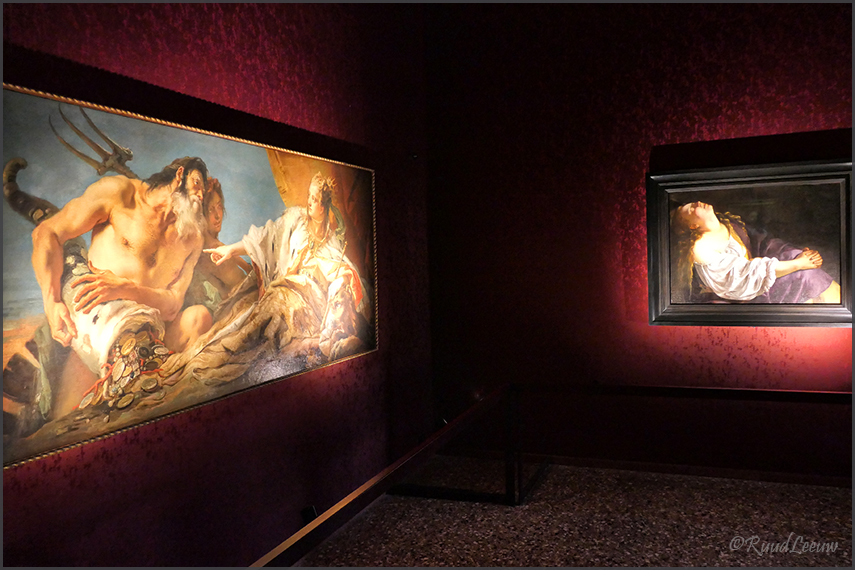
The painting on the left is: 'Neptune Offering Gifts to Venice' (1748–1750) by Giovan Battista Tiepolo.
Two details of a huge painting by D. Tintoretto in the Sala del Maggior Consiglio (Hall of the Great Council)
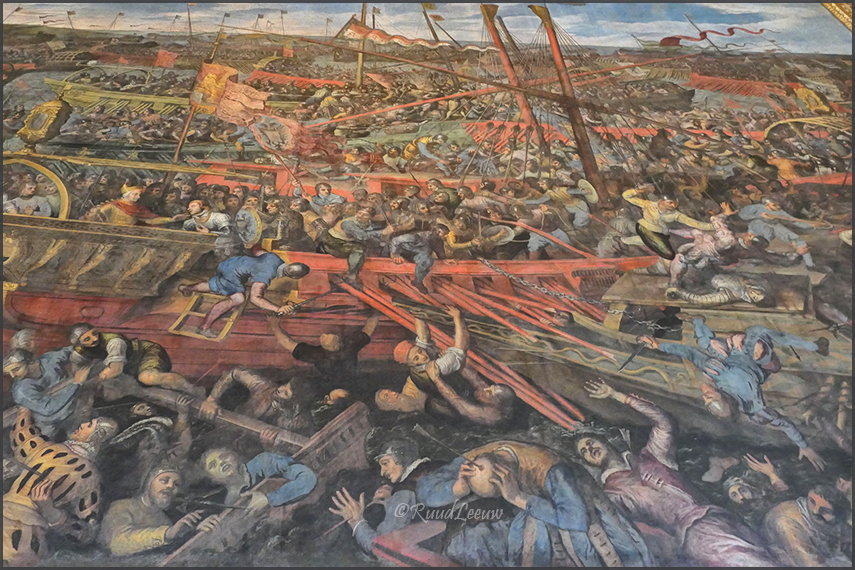
The Venetians had to fight immense battles to establish their maritime empire, some gruesome fighting displayed here.
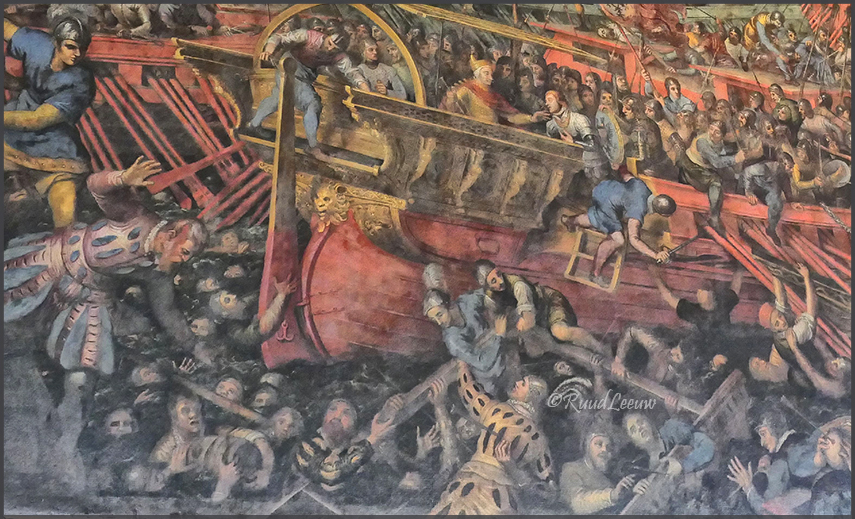
The largest of all the Institutional Chambers is the Sala del Maggior Consiglio, which is decorated with works by many
noted masters. Here, one can see one of the paintings on the south side of the chamber, which overlooks the Venetian Lagoon. This work depicts The Battle of Punta Salvore, and was painted by Domenico Tintoretto (ca. 1605).
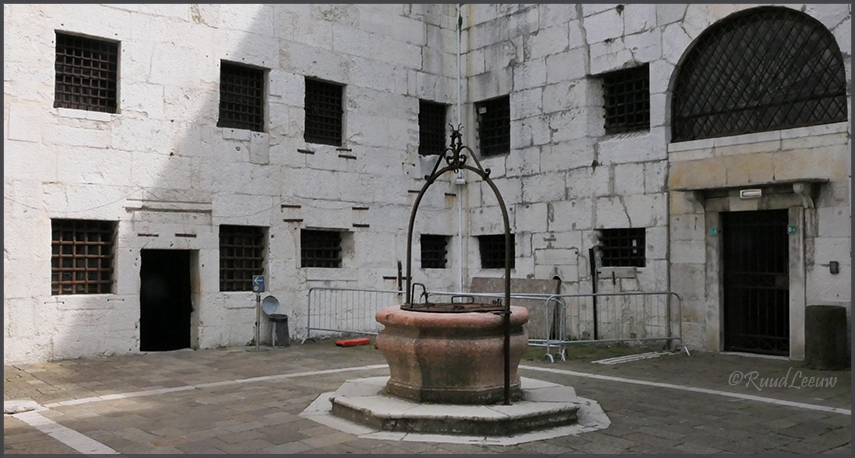
The many historic wells of Venice are als documented on my VENICE 2023 B&W page. Glad to add some more here.
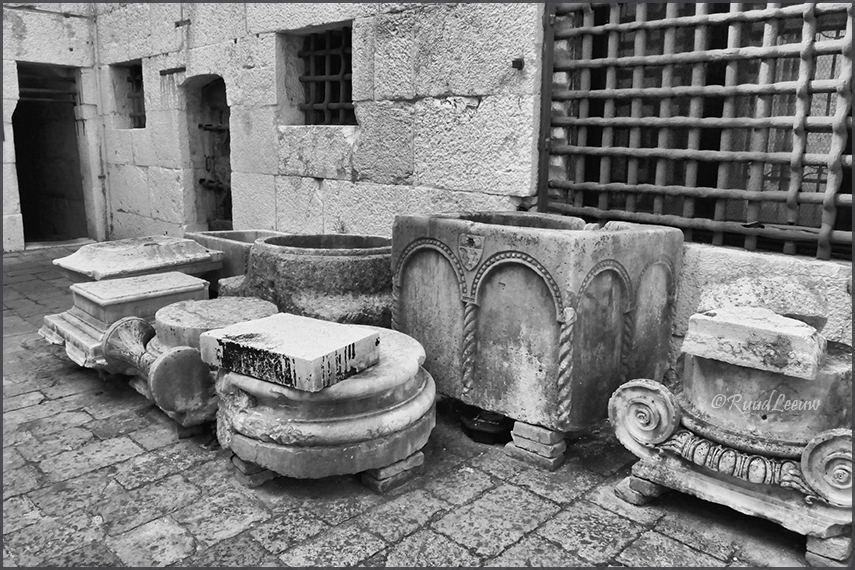
Here is are spare wells and other parts...
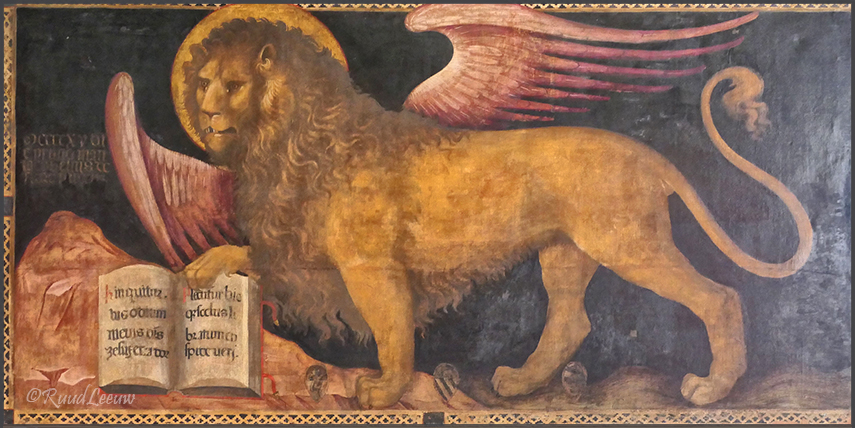
 Photos © Ruud Leeuw